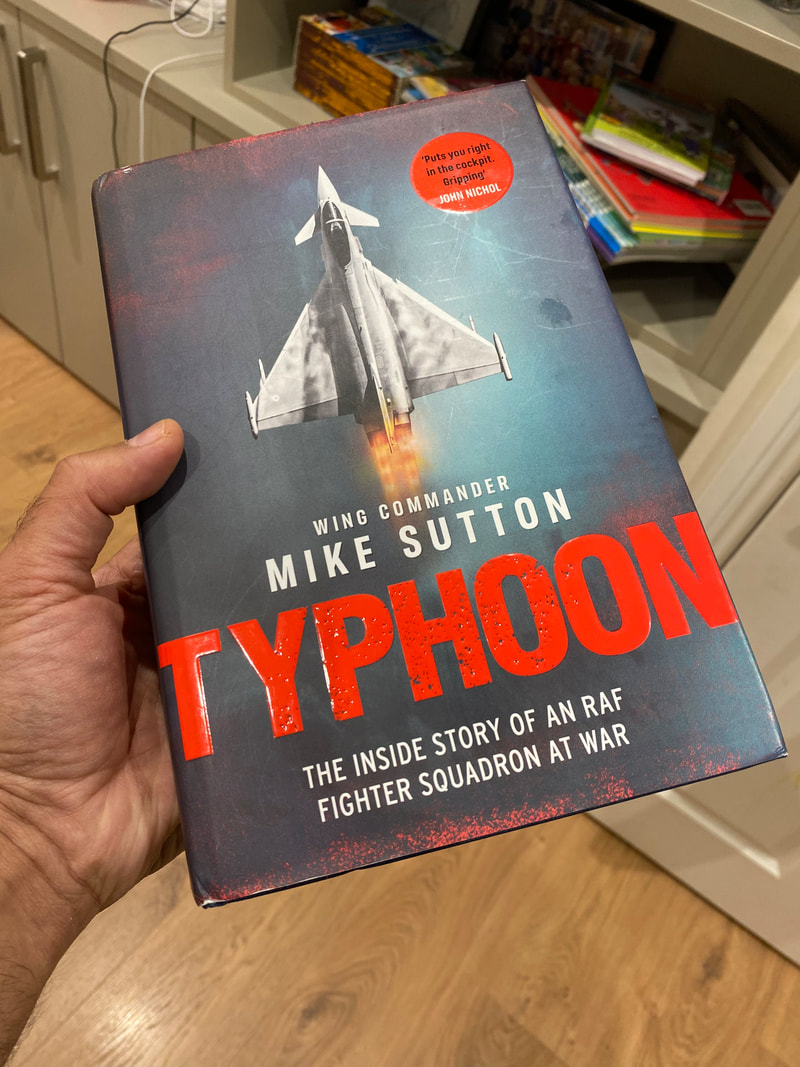
 It has taken some time, but I finally managed to complete reading Typhoon The Inside Story of an RAF Fighter Squadron at War by RAF Wing Commander Mike Sutton (ret'd), a RAF fighter pilot for 18 years. The book provides a rare insight into the high-pressure, high-stakes world of an RAF fighter squadron at war. From the beginning to the end, the book is quite captivating, and provides a detailed and an adrenaline-fuelled, gripping account that puts the reader in the cockpit of one of the RAF's most modern combat aircraft. He takes us on an amazing journey right from childhood to his initial officer training commencing on 9 August 1999, and to his career until now. He deep dives into his career highlight of ending up flying the Eurofighter Typhoon FGR4 — the workhorse of the Royal Air Force’s air combat fleet— in both air-to-air and air-to-ground missions to Iraq and Syria, where his squadron provided critical air support to ground troops. I am delighted that in this exclusive blog interview Mike shares his early beginnings in aviation, being selected to fly the Jag, what it was like to fly, and more! 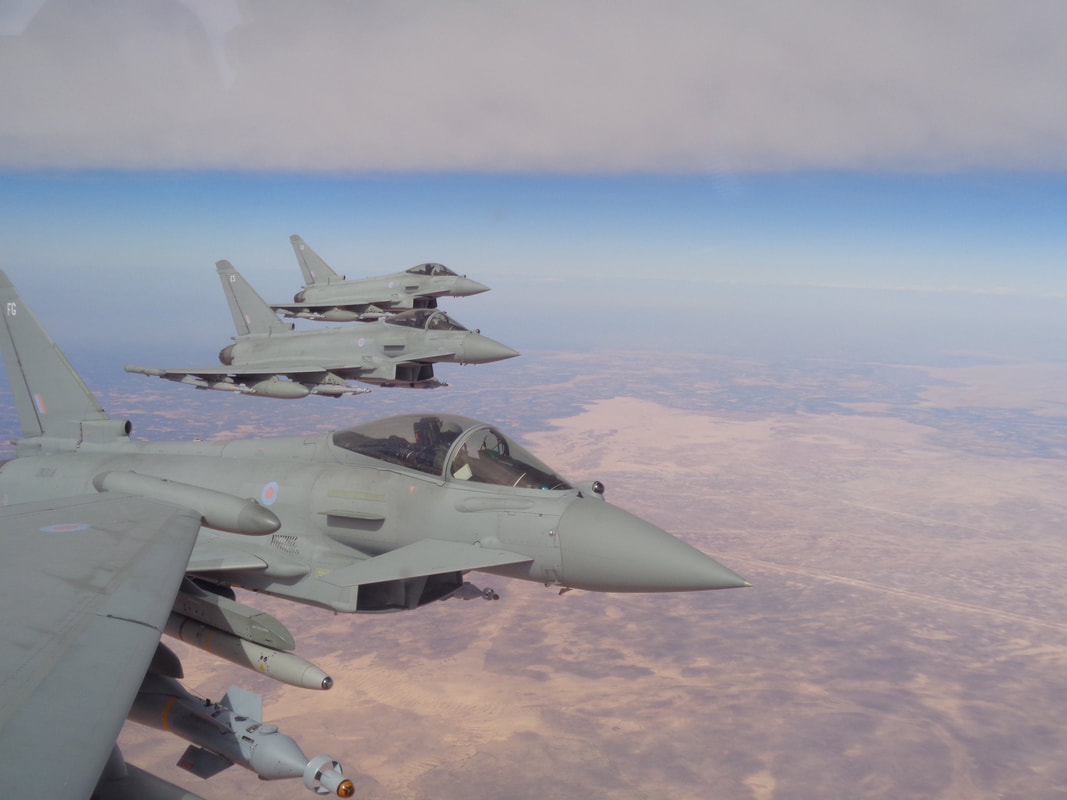 Typhoon four-ship loaded with precision guided weapons en-route to a target: Photo Copyright Mike Sutton Nav Singh [NS]: Mike, thanks for taking time to contribute to my blog. What is your first memorable experience of aviation? Mike Sutton [MS]: Thanks a lot for having me here! Like a lot of kids, my first real interest in aviation began with the thrill and excitement of being a passenger on a commercial jet. Back in the days when you could, my brother and I were invited to the cockpit on one occasion. It was a night flight and I distinctly remember the orange glow of hundreds of lights, switches, and buttons all around the flight deck. Outside was pitch black, save for the shimmering glow of Paris far below, and rows of streetlights threading their way into the distant countryside. It was a staggering view. I bet thousands of kids have been inspired into careers in aviation because of moments like that. It’s a great shame that cockpit visits have been stopped. 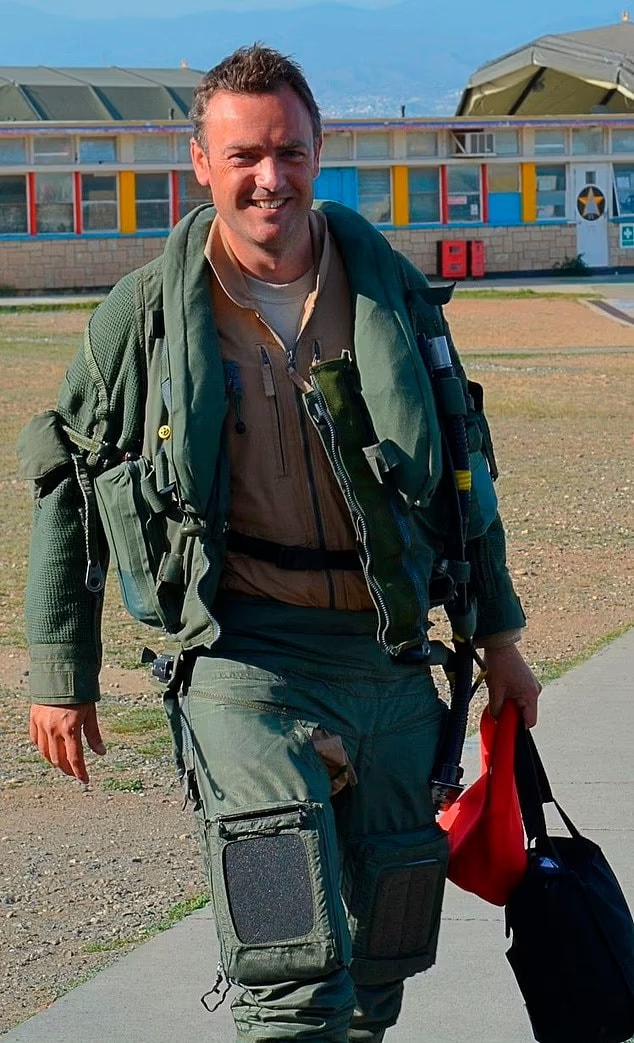 RAF Wing Commander Mike Sutton was commanding officer of the RAF's 1 Fighter Squadron in 2016, and saw action over the badlands of Islamic State: Photo Copyright Mike Sutton NS: Did you always want to be a fighter pilot? How did you get into it as it is quite competitive? MS: I didn’t know much about the RAF when I was growing up. I thought that I wanted to fly, but no one in my family was in the military and the mid 1990s were pre-internet — it was tough to discover information about the role. I applied to the RAF at 17 and was didn’t get a job offer. So, having learned an early lesson in rejection, I went to university and joined the University Air Squadron. These organisations are a great way for people to explore a potential career in the RAF without signing up. I learnt how to fly the Bulldog in formation, at low level, at the hands of some fantastic RAF instructors. I then reapplied for a job — this time with a bit of flying under my belt and a fraction more life experience — and luckily made it through the net. Selection involved several days at RAF Cranwell comprising of computer aptitude tests, mathematics, interviews, group exercises and a full medical. It’s a pretty involved process. Every year thousands apply and only a few dozen make it from the application stage into the RAF as pilots. 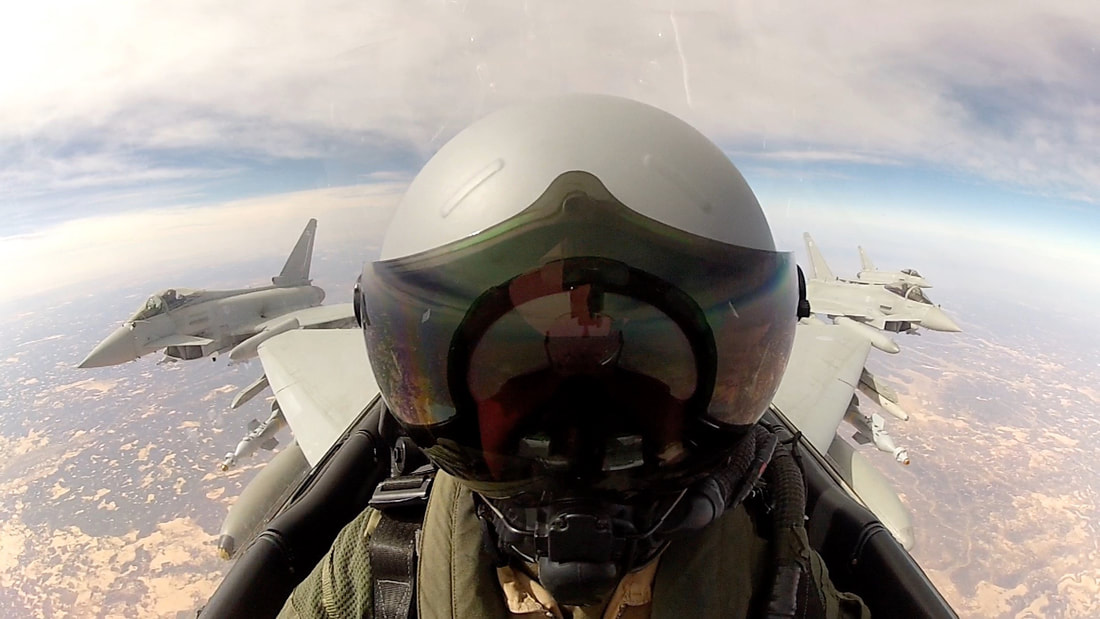 Selfie. Fourship ingress to attack an IED factory: Photo Copyright Mike Sutton NS: What goes in your mind during a mission to target the enemy? What do you think about? MS: Complete and absolute focus on the task, pure and simple. In a single seat jet like the Typhoon, you are completely immersed in flying the aircraft and ensuring that your radar, weapons systems, and formation are perfectly configured to conduct a strike. It’s a very involved and considered process that begins with the rules of engagement and ensuring that there will be no collateral damage. It takes pilots between five and seven years of full-time immersive training before they even make it to their first squadron. They then must pass a lengthy phase of simulator and live flying training learning how to fly and fight that frontline aircraft in all the disciplines — air combat, intercepts, air defense and strike, using all the different aircraft systems such as the radar, targeting pod, datalink, and the various weapons. This is at day and night, in large formations, and in unfamiliar airspace. Only when you have proven yourself highly competent in all of these skillsets are you considered for an operational deployment. 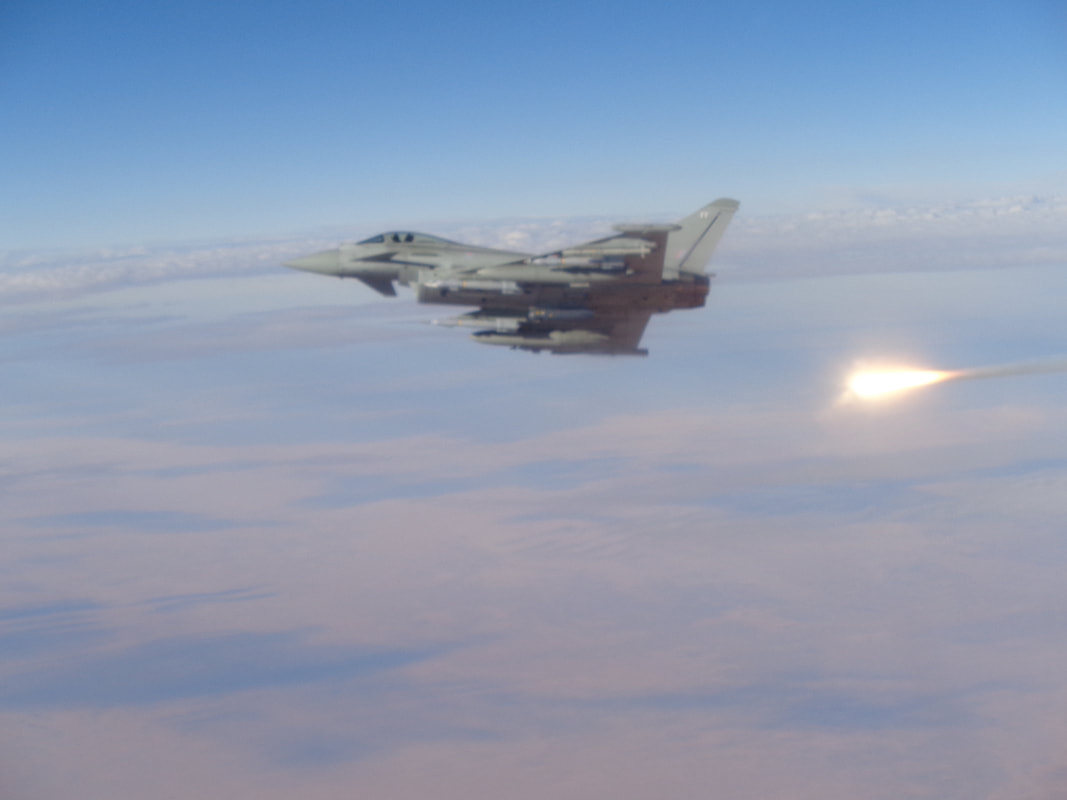 Typhoon testing its 'flares' (infra red counter measures): Photo Copyright Mike Sutton NS: What tactics do you use to take your mind away from work after a mission? MS: When I left the RAF, I was asked what hobbies I had. ‘Hobbies! I joked; I hadn’t had any time!’ Days are invariably long on a fighter squadron, and you are out routinely out of the country on operations and exercises for six months of the year. People try to keep themselves fit and are normally juggling family life too, of course. An operational mission could last for eight hours airborne, so the whole cycle including planning, briefing, writing up reports was normally well over 12 hours. After that lot my first thoughts were normally about grabbing some food and getting some sleep! If I had some spare time I’d normally go for a run or head to the gym. As the squadron leader, I also had responsibility for the management of the pilots, engineers, and support staff — about 135 people in all. So, there was a fair amount of report writing and the normal process of meetings and management to keep a fighter squadron ticking along. Now I’m out of the military, I’ve found time to start playing sport again which I’m really enjoying. 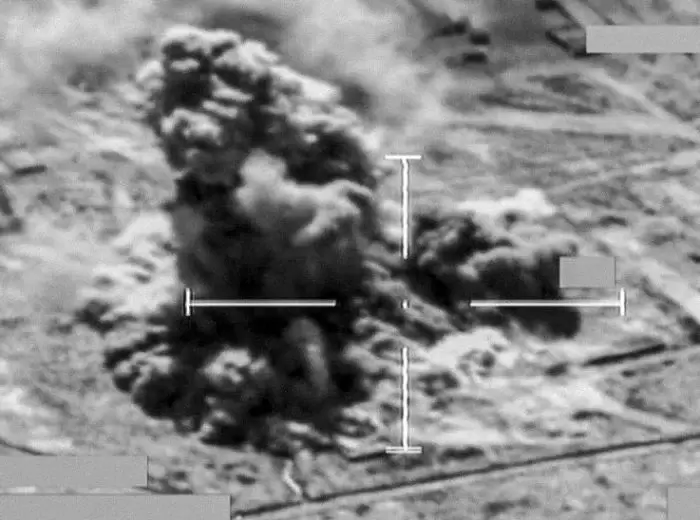 Huge secondary explosions from the IEDs within the building cause an enormous column of smoke. Photo Copyright: Mike Sutton 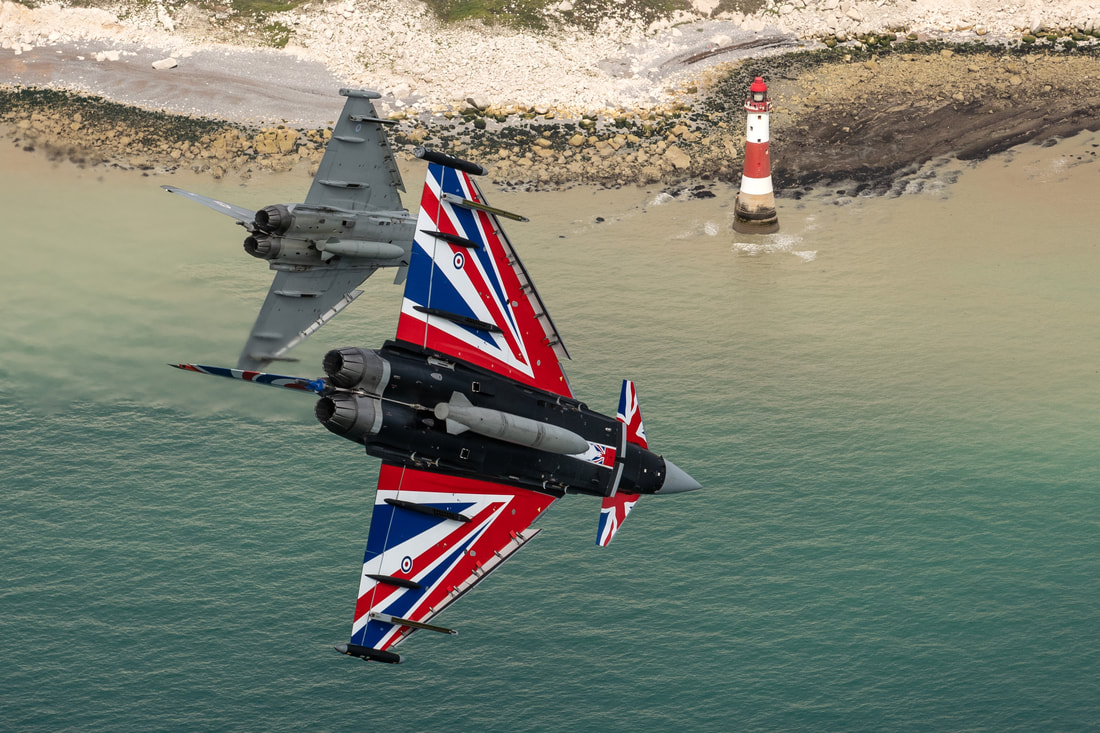 RAF Typhoon jets fly over the white cliffs to conduct valuable training in October 2022. Photo Copyright: Flight Lieutenant Donovan, RAF 27 Squadron. NS: In 2015, as a RAF Typhoon multi-role fighter, you were part of the Red Flag exercise - what were some of the challenges, as the Typhoon [as you have quoted] is not optimized to fly across the Atlantic? MS: All combat aircraft are a compromise. Their designs try to strike a balance between range (fuel load), survivability (defensive systems) and potency (maneuverability and weapon load). Some are optimized to one more than the other — for example a bomber such as the B-2 Spirit Stealth has great range and payload but is not maneuverable. To get agility — an essential characteristic for a fighter — you normally have to compromise on weight, and that means having a fairly limited fuel load. Hence why most fast jets can only fly for a few hours and have to be able to conduct air-to-air refuelling. For long missions, or for deployments across the globe we would routinely take on fuel from a dedicated tanker aircraft. The RAF uses modified Airbus A330 aircraft that stream fuel hoses from their wings. The fighters need to position behind these and connect a probe on the fighter into the basket at the end of the hose. This is pure hands and feet flying — it is a such a dynamic process there is no computer assistance whatsoever. As the tanker’s wings flex in turbulence the hoses can whip up and down, so connecting in poor weather can be pretty tricky — and even harder at night when the process is conducted in total darkness. NS: Do you still fly [commercial or private etc.], and knowing that you are not in active in the armed forces, how do you keep fit and motivated now? MS: I’m still involved with the military. I fly for a commercial, civilian company who are contracted to provide operational readiness training for the military. In practice this means that we act as ‘the enemy’, conducting radar and communication jamming, and pretending to act as hostile aircraft for frontline air forces and navies to train against. This involves working with a lot of NATO countries and travelling around Europe and the Middle East. There are a lot of former fighter pilots in the company so there are shades of the previous role, although without quite the same pressure as before! 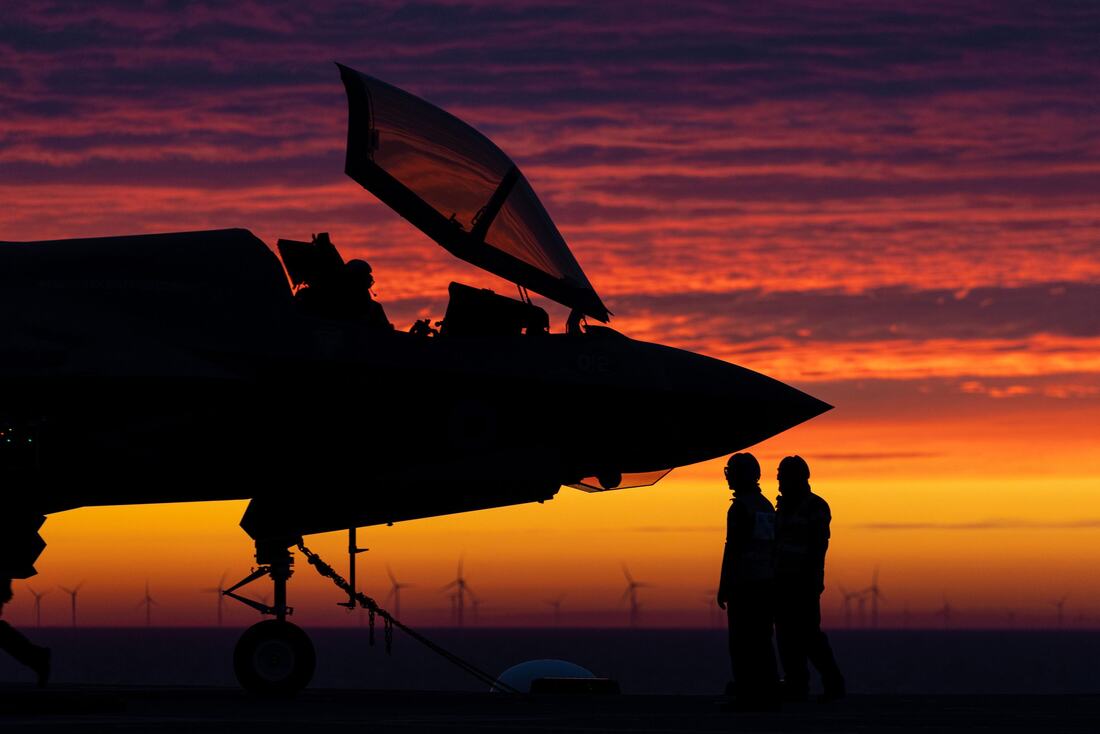 "The relaxed handling of a Typhoon enabled the pilot to concentrate on fighting — and in the world of air combat, where a battle can be won or lost in a fraction of a second, this marginal gain was a total game-changer,' said Wing Commander Mike Sutton. Photo Copyright AS1 Adams @ RAF Marham NS: These days it is all complex things like simulated Long Range AMRAAM, and not the old school skills of "rushing around at down low level and dropping bombs. Essentially, low level mud moving" to "multi-role" flying. What that in mind, is a non-stealthy aircraft still survivable in your opinion? MS: 100% there is a place for non-stealthy aircraft. Low observable jets have a key role in modern warfare, but they are expensive and have a particular skillset against certain target sets. Their low observability also means that they are compromised in other ways — for example payload. As an example, the F-35 Lightning II carries far fewer missiles than the F-15 Eagle. If you look at modern air forces, they aim to have a blend of 5th Generation ‘stealth’, and non-stealthy jets too. The fundamental issue actually concerns how forces should be balanced with capabilities, and this includes other assets such as drones, intelligence, cyber, etc. To use a slightly clunky medical analogy, a robust health service needs brain surgeons and GPs, as well as nurses and administrators. 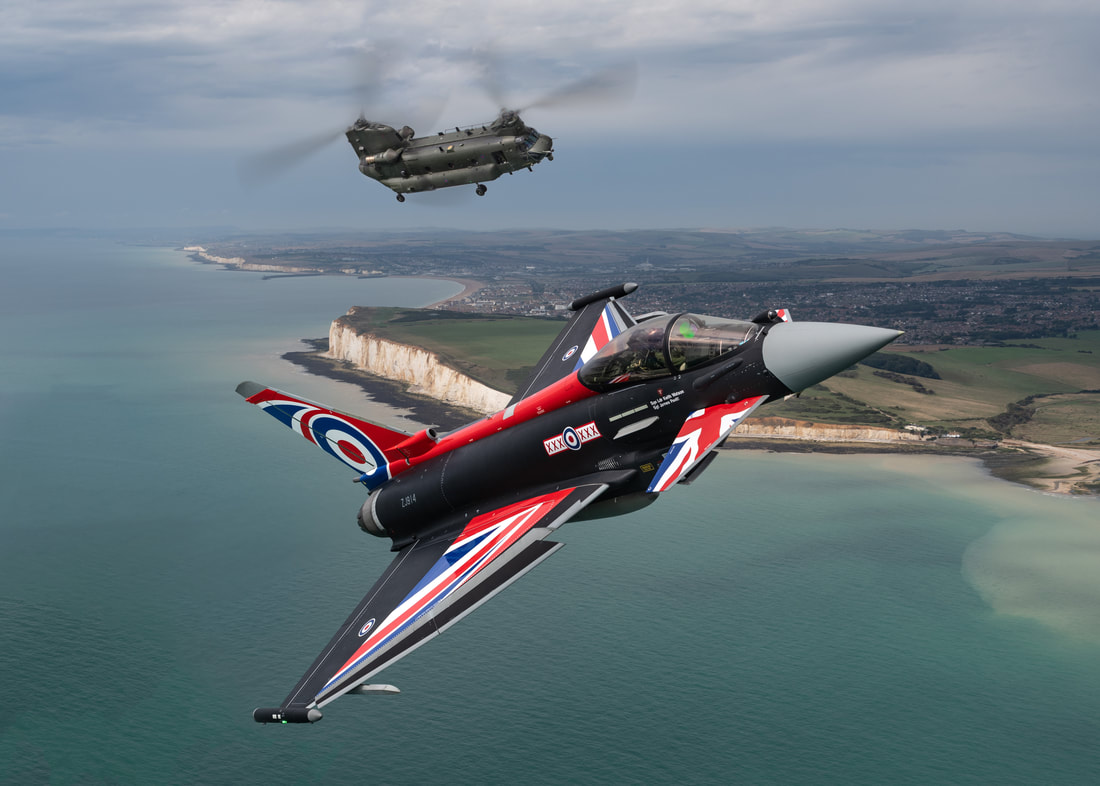 A RAF Typhoon jet and a RAF Chinook helicopter fly over the white cliffs to conduct valuable training in October 2022. Photo Copyright: Flight Lieutenant Donovan, RAF 27 Squadron. NS: There are reports that the Tempest fighter jet will replace the existing Typhoon combat aircraft in service with the UK Royal Air Force by 2035. What are your thoughts on this? Where do you see the future of the typhoon in the RAF? MS: The Tempest looks great. It is a sixth-generation asset and aside from the tactical capability that it will offer – enabling us to compete in the 2040s and beyond — the very development process has huge spin-offs for industry and the strength of our sovereign capabilities. The number of programme sub-contractors already runs into the hundreds and many of these companies will be involved in developing novel high-end technology that will have benefits to the civilian engineering sector. I expect the Typhoon to continue for years to come. It is one of the best multi-role fighters in the world and is in its prime. The other thing to note is that the development of sovereign fighters is the only area of defence where the Treasury makes money back. People often quote the cost per airframe but forget that with exports the UK actually generates revenue in the £Billions from overseas aircraft sales. NS: I read your Telegraph piece and one thing would be good to know for readers: why do you think air forces are not good at explaining their role, or the timescales and efforts required to set the conditions for success? Is it challenging to explain the complexities of actual warfare – aside from when someone is actually sent on a mission? MS: It’s a great question, hugely multi-facetted and not a new issue. As a historical example, the bomber command crews during World War Two have never been awarded a medal despite being killed at a rate far higher the infantry fighting at the Somme. In the modern day, one aspect is that during ‘peacetime’ it’s very easy to take risk on the military capabilities you maintain. Despite the fact that forces have been actively involved in overseas operations for the last three decades, the conflicts have largely been ‘wars of choice’ rather than wars of national survival. So, it is easy for politicians to salami slice and cut militaries, with populations at home not really noticing. You only really need a strong military when the balloon goes up, and the very survival of your state is threatened. Then it is too late to start building up – as we are witnessing with the current brutality being suffered in Ukraine. An air force pilot takes years to train, and years more to be truly useful as an instructor and tactics expert. NS: Considering the geo-political eggshell situation the world is in now [Ukraine, Israel-Palestine, Yemen, Iran etc., and with threats from Russia and China …], investment in capabilities is desperately needed! There has been talk of the Global Combat Air Programme [GCAP], headquartered in the UK, which will see the development of a 6th generation combat aircraft with Japan and Italy due to be fielded in 2035. But considering how ridiculously SLOW things get going in the UK, how optimistic are you on the GCAP programme? MS: GCAP will invariably delay, but I do not see that as a particularly huge issue. There is value in the sovereign development process, and the end product will be superb. Until then we have a great force mix of F-35 Lightning II and Typhoon aircraft, which is as good as anything in the world. NS: An incredibly important conversation that people in the armed forces [as well as the same with submariners, astronauts and airline pilots, or other professionals that are exposed to danger] is having to deal with risk and death because the danger is on 24/7 all the time. Can you share the worst possible situation that you have ever experienced as a fighter pilot and how did you resolve or manage it? MS: Fighter pilots are invariably pretty composed people. We are good at coping in high stress environments and not reacting emotionally — I’d say that the other side of this coin is that we are pretty good at bottling issues up, which is not necessarily a good thing. Every fighter pilot will have used up some of their nine lives and have their own stories to tell — be it close calls with other aircraft, being targeted by threat systems, or suffering serious aircraft malfunctions. Many too, of course, have paid the ultimate sacrifice. It’s hugely positive that mental health is increasingly being acknowledged as an important issue, and that societies are moving towards providing better systems and care for veterans of conflict who need help. NS: Mike, thank you very much for spending time to share your thoughts. It has been an absolute pleasure having you on my blog! MS: You are welcome. The pleasure is mine. Thanks a lot, Nav! 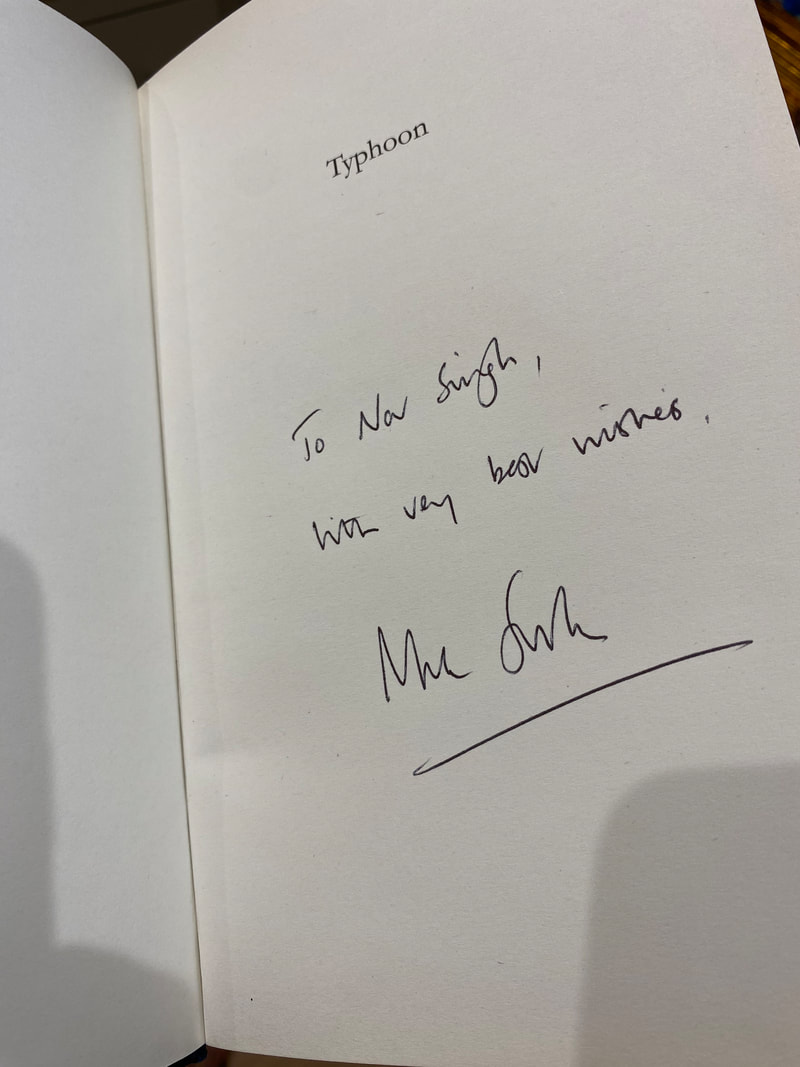
0 Comments
I have just finished reading The Old Bold Pilot — a Pilot's Journey by captain Shakti Lumba and captain Priyanka Arora. “Ladies and gentleman, boy and girls…sit back, relax and enjoy the flight!” You’ve heard the announcement from the captain, but have you ever wondered what it's really like working in the front in the cockpit? These days, passengers are now prohibited from entering the cockpit during flight. Some aircraft are also equipped with CCTV cameras, so the pilots can monitor cabin activity, and some aircraft have extra gates to prevent anyone from entering the cockpit. Industry veteran captain Shakti Lumba — a pilot with over 40 years experience, who retired as IndiGo's vice president and had before that headed Alliance Air as well as being a union leader, has recently penned his memoirs to present to the lay reader a peek into Indian aviation through his personal journey. In this book, captain Lumba once again takes you beyond that locked door to see what the aviation industry is really like, and was like in India, and what real airline pilots do while you’re invited to “sit back, relax, and enjoy the flight.” Captain Lumba shares intimate details with typical humor and candor, and some interesting details, too that have not been heard of before. As captain Lumba describes it, this book is ‘many years of writing and six decades in the making’. It comes highly recommended! 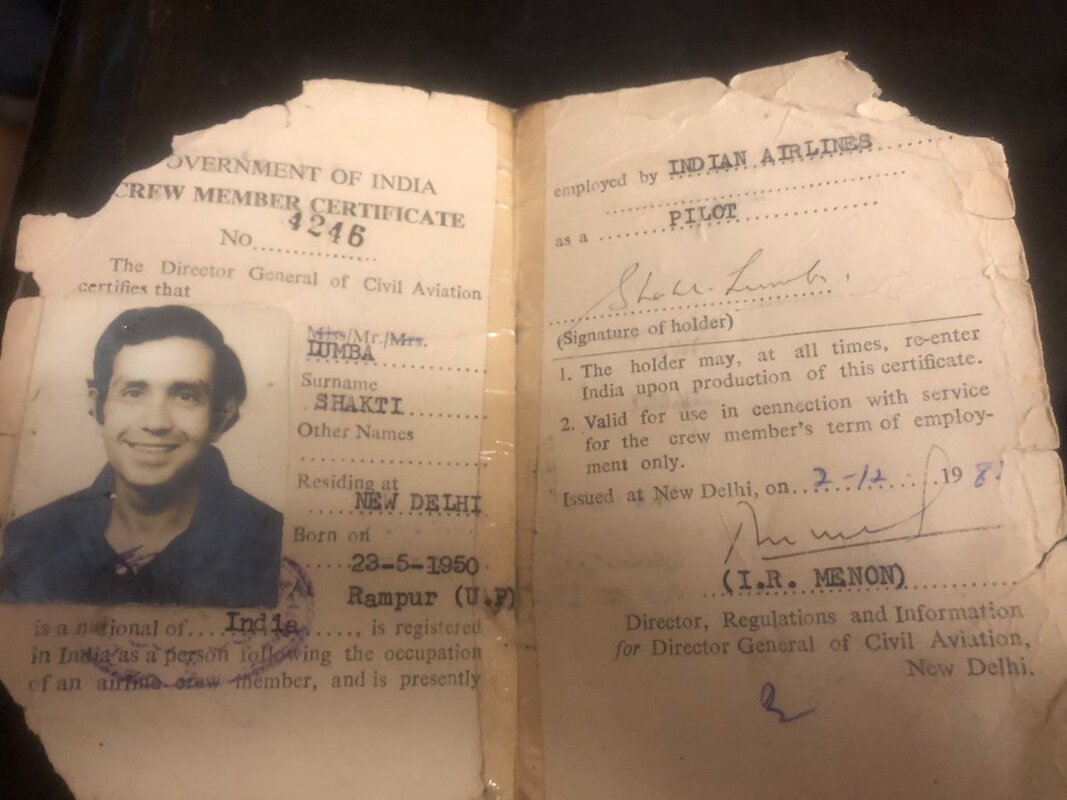 Captain Shakti Lumba's original pilot's license for Indian Airlines: Copyright Shakti Lumba Captain Lumba, thank you very much for the time you have taken to do an interview with me about your work and life. I have read your book with interest, and it is remarkable that you have written this book from memory and the notes on your iPhone, as all your original flying logbooks and personal notes were destroyed by termites (sorry to read about that!). So, thanks for your time. It is the first time I have come across a book about aviation in India, and that written by an Indian. There may be others that I have not come across; so, excited that I have got my hands on this! 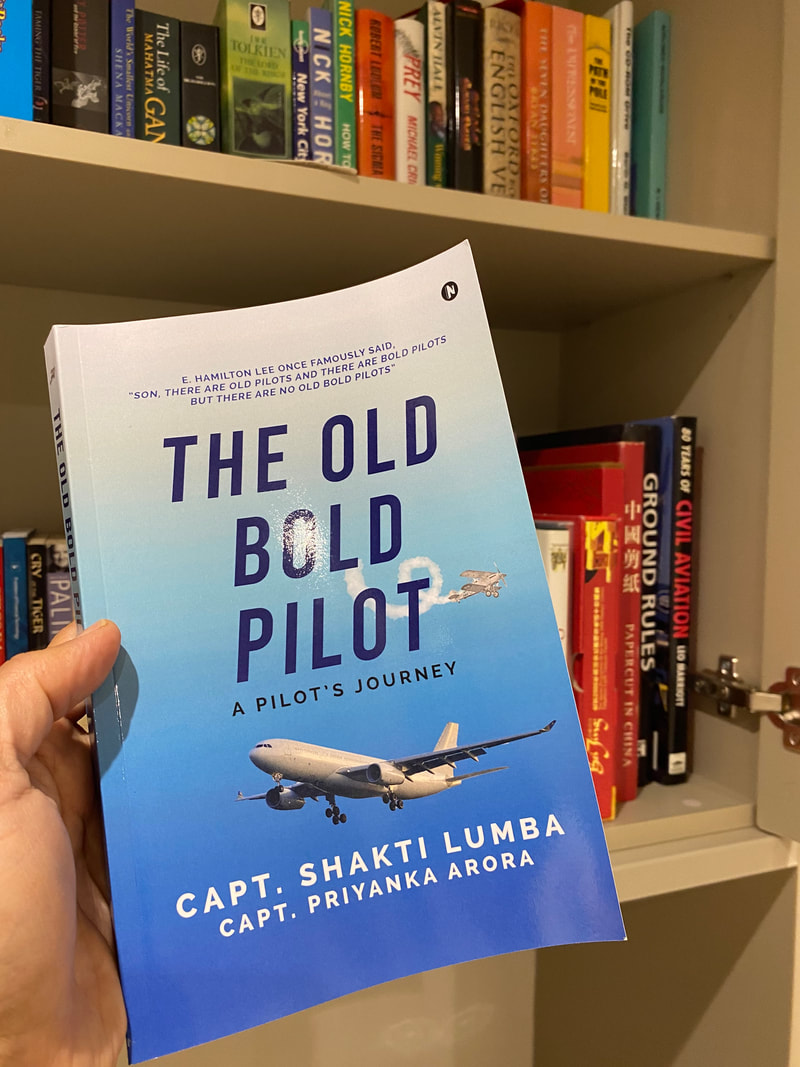 Glad to get my hands on this book! Nav Singh [NS]: You are quite known for your passion, knowledge, and deep opinions about everything related to aviation and the safety, but what is the root cause of that? Where does this constant thirst for answers come from? Shakti Lumba [SL]: Nav, firstly, thank you very much for having me on your blog. It is an absolute pleasure, and glad you enjoyed my book! My passion for aviation started when I was two years old after my father sadly passed away and my mother – making sure that I did not become sad – told me that he had gone to live in the sky with the stars! From there on then, I vowed to fly and bring him back. For me, the thirst for aviation related knowledge started with reading fiction about aviation. Works such as Biggles, Richard Bach, and Ernest K Gann kept me involved until I actually started flying and realised that knowledge was as important part, just as important as the flying skillset. On top of that, the thirst for knowledge led me to do a lot of reading about the airline and general aviation industry, including flying techniques. RAF AP 129 was my go-to book in regards to building up my aviation knowledge along with books on airline management. Books such as Safe Airline by John Michael Ramsden and Staying Current: A Proficiency Guide for Serious Pilots by Dan Manningham kept me on track. Later during my career, when I got involved with the pilot’s union and represented a pilot in a court of inquiry, which looked into the crash of a Boeing 737 aircraft in Ahmedabad in 1988, it really hit me regarding the the ICAO annexures! As time went, I learnt to fly with the mind and then use my hands and feet to remain safe and professional: the reverse usually leads to disaster! 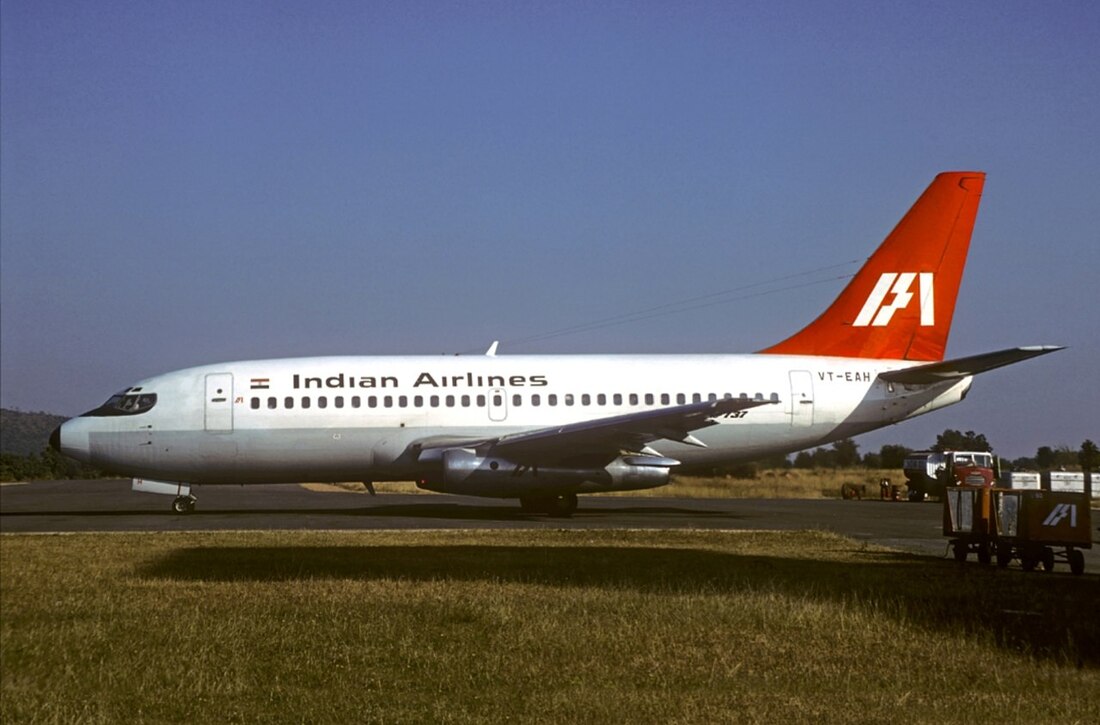 Boeing 737-200, registered VT-EAH belonging to Indian Airlines, seen here taxiing on 13 November 1978. Sadly, ten years later this aircraft crashed on approach to Ahmedabad due to pilot error in bad weather killing 133 passengers and crew. Captain Lumba was involved in the follow-up investigation. Photo Copyright Indian Airlines/Air India NS: You refer to IndiGo as a fledgling carrier…why fledging? SL: During the five years I was with IndiGo Airlines, from a startup in 2005 until I left in February 2010, it was a fledging airline with ambitions to be India’ largest with just over 40 aircraft. Although, in total it had over 300 aircraft on order! Today, I am proud to say that it is India’s most profitable airline, and the largest operator of Airbus A320 family of aircraft. 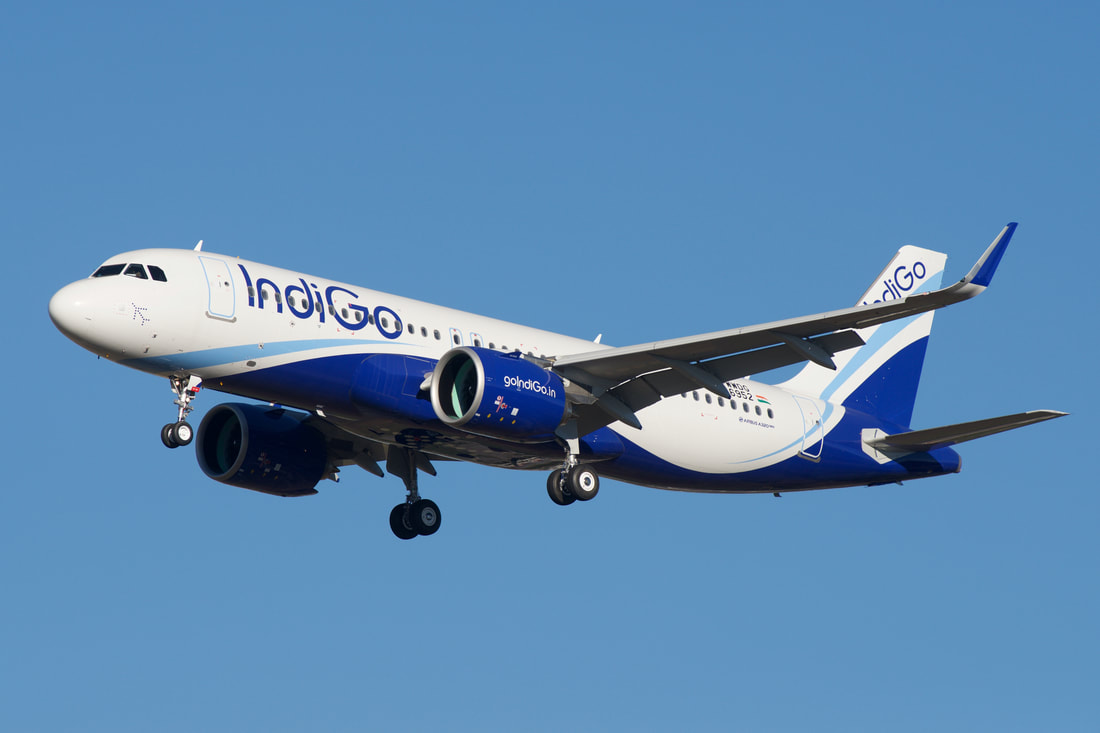 Captain Lumba was the global vice president at InterGlobe Aviation Limited (known as IndiGo Airlines). The company is India's most successful airline, operating 354 aircraft (45 ATR 72-600 and 309 A320/A321 family of aircraft), with 945 Airbus A320/A321 family of aircraft on order!). Seen here is a A320neo (registered F-WWDG, delivered to registration to VT-ITI). NS: You mention in your book about a Boeing 737 flight in 1983 with two captains disagreed and that resulted in an accident (landing gear not retracted) and you say that this could not happen these days, but it does seem to be quite common. SL: They agreed but simply the pilot in command (PIC) forgot to lower the undercarriage, while the pilot not flying realized and kept quiet until the last minute. At about two hundred feet (minimums), he pointed out there was no gear, and the pilot flying flipped the gear lever to extend the gear. The gear came down but as it had not locked down properly, it folded with the airplane settling on its engines. Such an accident is not expected to happen these days because the landing gear unsafe warning gets an input from App/Land flaps and radio altimeter. However, to the aviation world’s shock, it did sadly happen a few years ago– an incident with PIA on flight 8303 in 2020 did exactly that and killed ninety-seven passengers, and studies have shown that it may happen again. That can only happen if there is a total breakdown in CRM, and if the checklist is not diligently followed by the crew or if there is some kind of mechanical partial gear failure. Also, note that a landing without a gear can be done safely provided the aircraft has low fuel and the plane is glided down gently – so it is not so dangerous, but the aircraft will [in most cases] be written off! There was a case of an Indian Airlines Airbus A300 that ran out of fuel after diverting from Hyderabad with flaps and slats stuck after a missed approach. The captain made a what we call a “gear up dead stick landing” in a paddy field. In that incident there were thankfully no injuries. So that shows the fantastic airmanship of flying a A300 wide body like a glider by stick and rudder only. It has also been achieved with a Boeing 767 LOT Polish Airlines flight 16 in November 2011 in Warsaw. NS: Now, regarding the Japan Airlines Flight 516 [JAL516] crash in January 2024 – many aviation experts have commented that such an incident could have resulted in fatalities if it had been in another country, such as India for example. This may be due to passengers taking time to get out or taking their belongings etc. – what are your thoughts on that? What would have been the case if it happened in India? SL: Unmitigated disaster: the pre-departure safety briefing provided on Air India for example is totally inadequate for flight safety in my opinion. Meanwhile, the Japan Airlines safety video actually shows passengers how to evacuate and enforces the point not to take hand baggage on case of an emergency. 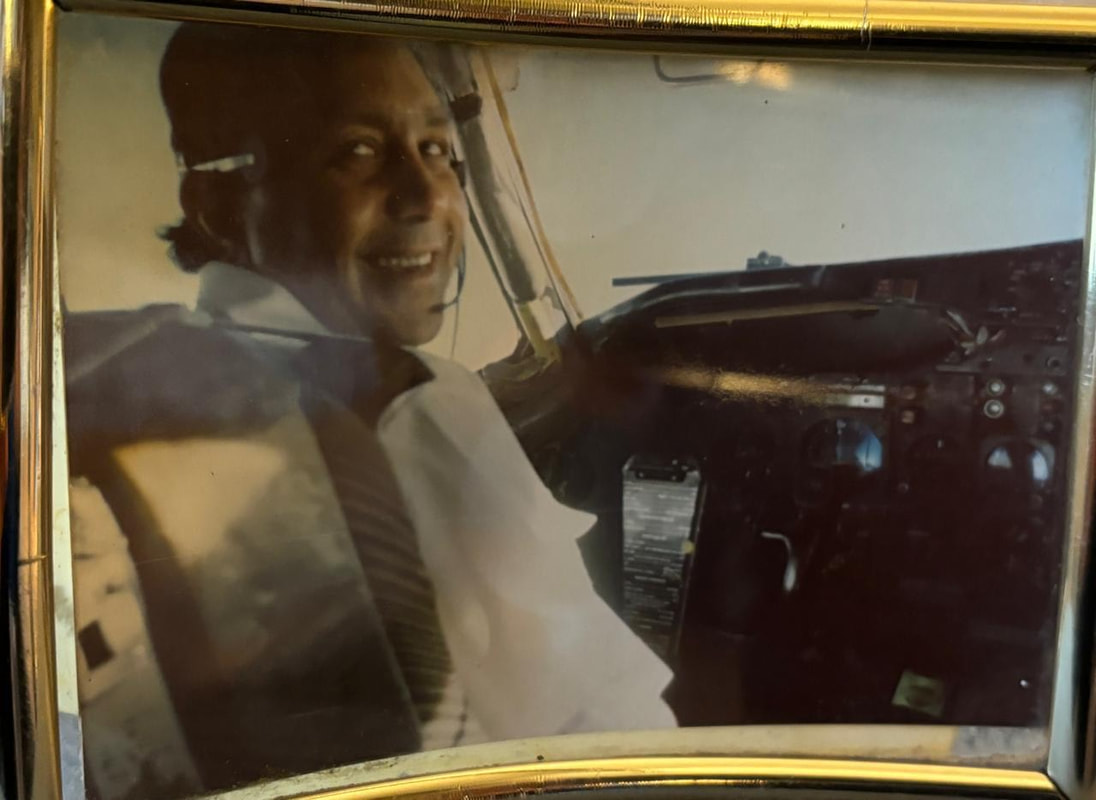 Captain Shakti Lumba in the left seat!: Copyright Shakti Lumba NS: In your opinion, is Indian aviation safe, if not safer in 2024? SL: The Indian aviation industry is statically safe simply because of how that safety is measured. In actual fact, the largest number of aircraft type operated in India is the Airbus A320 family. This aircraft is very pilot friendly, forgiving and can literally fly itself if it has to! In my opinion, there is a clear and present risk of pilots losing their ability of basic flying skills because the operators mandate is to use the autopilot after take-off till moments before landing. In some airline companies, they have a simple rule about engaging the autopilot on the A320: not before 100 feet and only after 300 feet (~5 seconds) after rotation from the runway. This begs the question, “how do you keep up your skillsets of manual and visual flying if the machine is doing everything?” The answer? You don’t. This to my mind is a huge safety risk if the automatic functions and systems fail. Another safety risk relates to the Flight and Duty Time Limitation [FDTL] prescriptive limits as per ICAO which operators schedule pilot to. This includes the maximum flight duty, unlimited daily duty and minimum legal rest time. The recent amendments to FDTL have given some respite but the carriers are up in arms! Therefore, in my opinion, Indian aviation is destined for growth but there is the risk of reduced regulatory oversight and the system working at it limits. Somethings got to give. The issue is increase in wakefulness and lack of sleep. Fatigue has also been identified in several other major aircraft accidents as either a cause or a contributing factor (National Transportation Safety Board [NTSB], 2000, 2001, 2010; Libyan Civil Aviation Authority, 2013). In addition, aviation policies reflect the importance of fatigue in aviation safety. Since 1972, more than two hundred safety recommendations issued by the NTSB focused on fatigue (Marcus and Rosekind, 2017). Moreover, pilot fatigue has been on the NTSB’s most wanted list of safety-related priorities since 1990 (Caldwell, 2012). These policies do not seem to have resulted in a significant improvement; however, as 23% of major aviation accidents between 2001 and 2012 were attributed to fatigue, compared with 21% in a 1980 study (Lyman and Orlay, 1981; Marcus and Rosekind, 2017). A very illustrating example of fatigue and its effect on the safe piloting of an aircraft is provided by the 2010 crash of Air India Express Flight 812, which crashed upon landing in Mangalore, costing the life of 158 of the 166 people on-board. Residual sleepiness and impaired judgement were believed to have contributed to this accident, as the cockpit voice recorder indicated that the captain had been asleep for the first hour and 40 minutes of the 2 hours and 5 minutes flight (Court of Inquiry India, 2010). According to the NTSB, this was the first instance of snoring recorded on a cockpit voice recorder! Therefore, in my opinion, fatigue is a clear and present danger to safety of aircraft operations. NS: There has been quite a lot of discussion about five B777-200LR aircraft, leased by Air India from Delta Air Lines, with oxygen issues as per this link, what are your thoughts on this on-going saga and the strained relations between Air India’s senior pilots & management? SL: For flights over mountainous terrain with limited passenger oxygen in case of depressurization/ 50% power loss, escape routes must be provided in the flight plan so that the pilot-in-command (PIC) can choose a route that is safe so that passengers can have enough oxygen supply without harm. The issue is that Air India does not provide the crew with escape routes in the flight plan and expects the PIC to decide on an escape plan on the fly. Another issue is that Air India’s leadership prohibits pilots from joining a trade union or associations. It is only airline in the country where every airline pilot is dissatisfied because of bad management, corporate bullying and other such actions which do not make it a safe airline to fly with and are not cohesive to safe operations. NS: Competition from Middle Eastern and Asian carriers is stiff, but with your vast experience, what do you think needs to be done to make Air India one of the best airlines in the world again? Are they (the management) doing what they should be doing? SL: I would say that Tata’s style of management is purely production related in order to generate revenue and focus on profits first and is not focused on the customers or their staff – both their internal and external customers. NS: Now, coming to the important topic of fatigue and sleep: we have been reading a lot about pilots sadly dying because of the extensive hours they have worked because of a lack of sleep. Why is this happening a lot now than before in your opinion and what could be done to fix such things that are “ailing Indian aviation” according to analysts? SL: As I mentioned in detail above, airlines treat pilots like bots these days! Poor crew scheduling and poor HR policies and procedures are the biggest headaches for pilots. Just like in any other industry, pilots don’t leave a company, they leave bad bosses! The issue of work/life balance does not exist, and it is not even considered as a human requirement. The management consider pilot reporting fatigue as malingering. NS: Would it be fair to say that your career was more about your passion and dream of flying rather than the money? What are your thoughts about the youth of today who want to enter aviation because of the big bucks rather than the passion of flying (take some Middle Eastern and Chinese carriers for example)? I am saying this because you see plenty of young airline pilots flaunting their newly found wealth on Instagram or Twitter (wearing a Breitling watch, driving luxury cars or showing off about drinking expensive whiskey etc…). SL: Yes, that would be a fair comment to make. For me it was all about passion, as we weren’t paid well, until at least 1996 (!) My salary only got boosted after my negotiation with the pilot’s union. However, it was based on work more, earn more. I was quite busy with office-based work and with that I could only get on average approximately 60 hours at most per month. However, I was content and happy, and I prioritized my happiness, heath and needs over wants. The guys you talk about we called (Equated Monthly Installment) EMI pilots, who loved (or still love!) buying snazzy cars and fancy goods on EMI equated monthly instalments: as their wants increased, so did their debt! 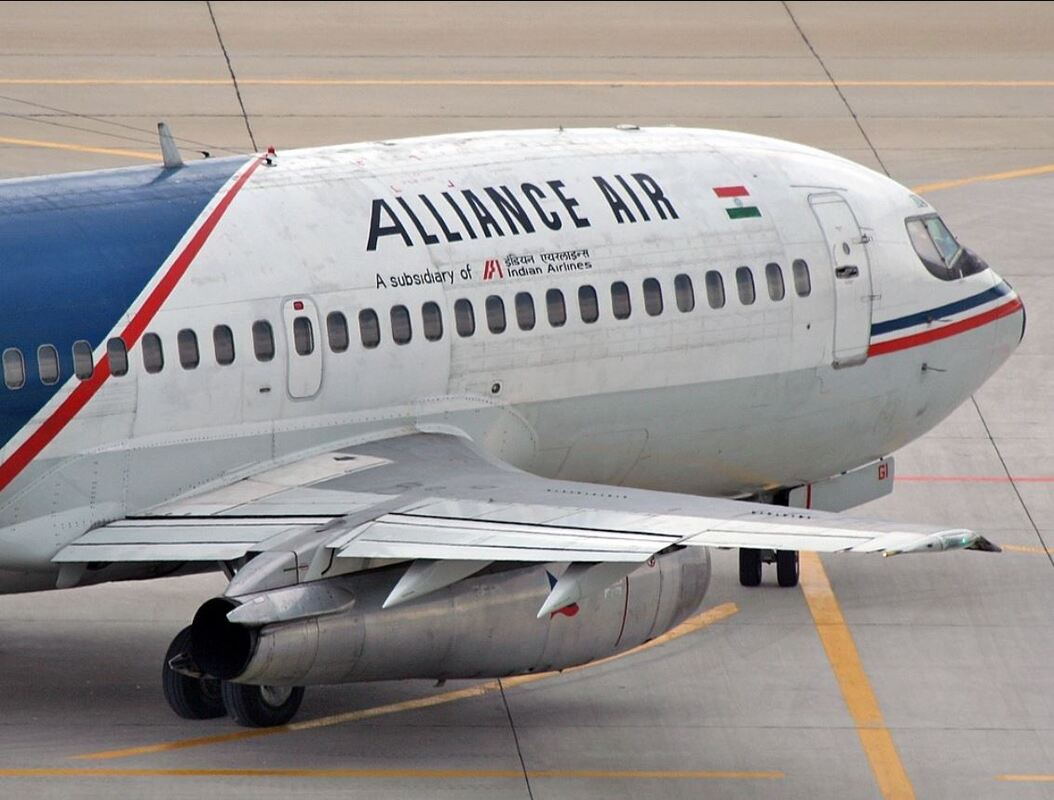 Alliance Air was a subsidiary of Indian Airlines [and later Air India]. Seen here one of the first aircraft in the fleet, a Boeing 737-238 Adv registered VT-EGI. Pictured in 2007. Photo Copyright Peter Marianic NS: You have at first hand seen many colorful airlines come and go (Kingfisher, Jet Airways, Alliance Air [merged with AI], ModiLuft, Vayudoot etc. because of financial woes), what, in your opinion, is the missing secret sauce for India to have a successful world-class airline that can be stable and provide an exceptional customer and safety experience? (i.e., how to make the likes of SIA, EK, QR jealous etc…) SL: Initially, I helped to merge Vayudoot into Indian Airlines: Alliance was a subsidiary of Indian Airlines that I started – it was my baby, like IndiGo. Now, Modiluft was an air taxi service using a Boeing 737-200 and a Boeing 737-200, which eventually became Spice Jet (they are always short of cash, and that is in their DNA!). Sahara, Kingfisher Airlines and Jet Airways went down into bankruptcy due to promoters skimming their airlines after they went public. The secret sauce to having a successful airline is to be well capitalized from start and make low cost as your mantra and your philosophy, and this should not be your strategy when times are tough. IndiGo keeps costs in control and seldom sells below costs and therefore it is quite profitable. Now, with Tata, Air India will bring no profits for at least 10-12 years (yes, you read that right…years!) and for that they do need to get their act together. 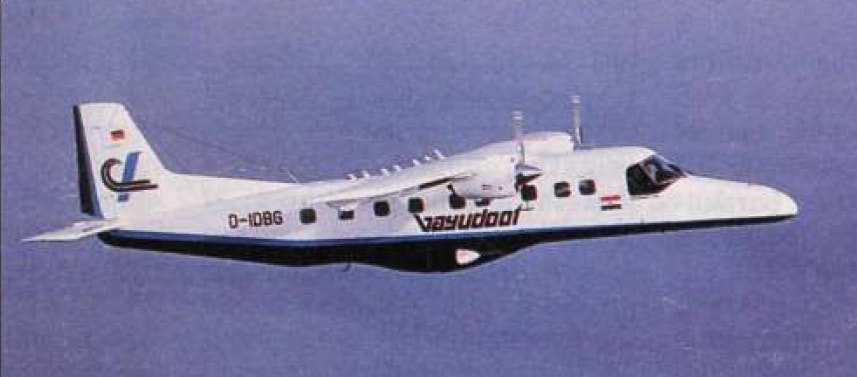 Shakti Lumba was one of the early pioneers of Vayudoot Airlines. Seen here is a Dornier 228: Photo Copyright Vayudoot Airlines 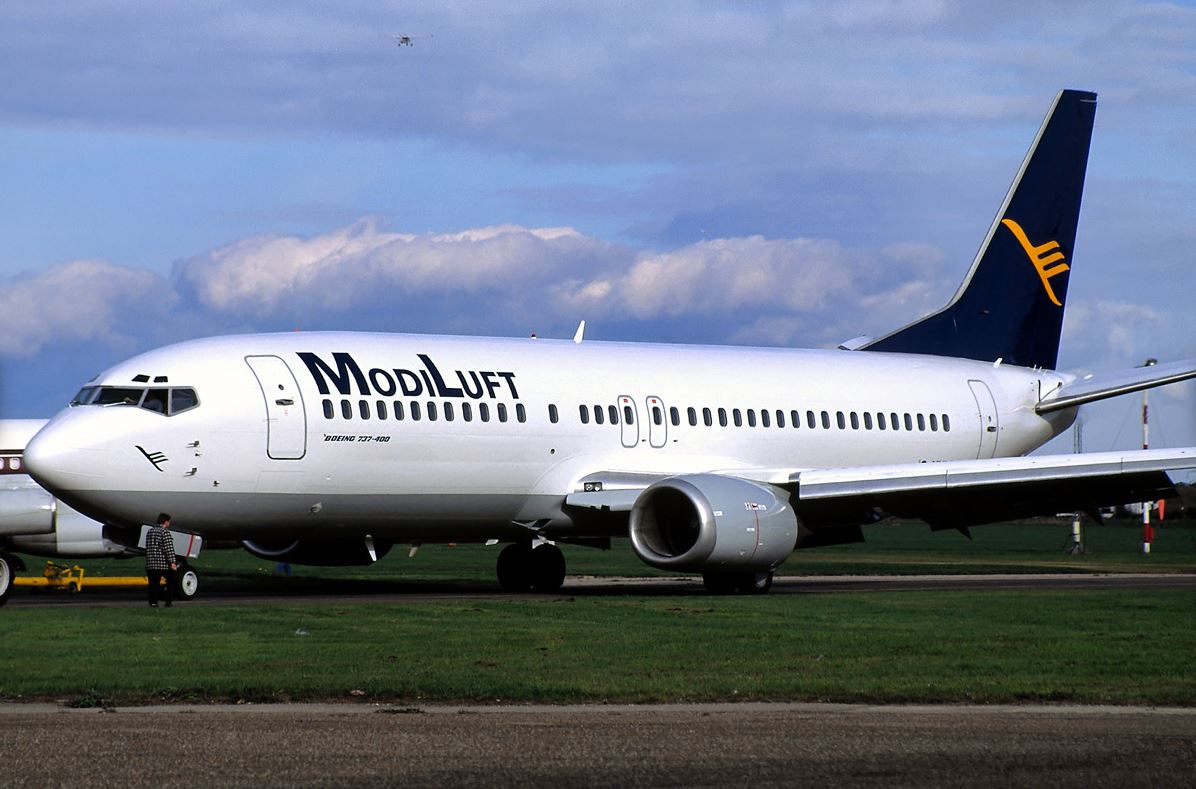 Modiluft Airlines, Boeing 737-4Y0, registered G-UKLB pictured in 1996 at Southend Airport [ex VT-MGE, MSN: 23865]. Photo Copyright David Oates 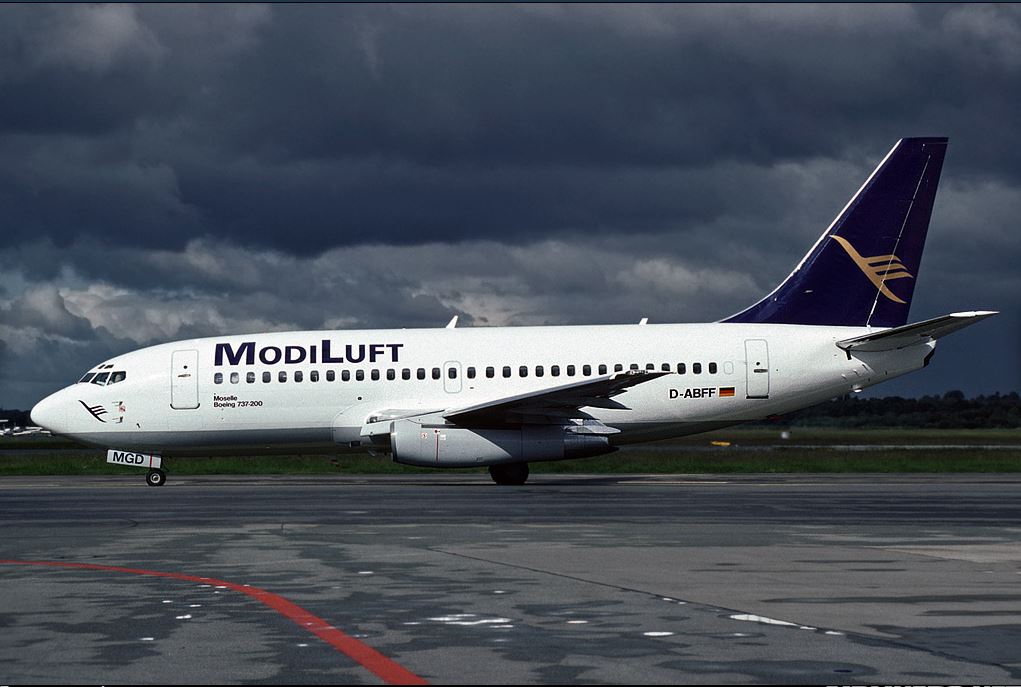 Modiluft Airlines, Boeing 737-230 Adv registred D-ABFF [ex VT-MGE, MSN: 22117]. Pictured in 1996 in Hamburg. Photo Copyright AirlineRoline NS: The merger of Air India and Indian Airlines, coupled with the unviable decision to purchase 111 new aircraft, contributed to the downfall of Air India, said the Minister of Civil Aviation, Jyotiraditya Scindia a few years back. Despite all else, it was clear that Indian Airlines was doing well as a profitable airline, but since the late 1980s, Air India started making losses…so any ideas why were they merged together? And any lessons we can learn today? SL: This merger was a merger of chalk and cheese and would never have worked. Only now it was somewhat stabilizing and then Tata took over. Now they are merging four airlines into two. Regarding the aircraft orders, I was one of the few who supported it. The airline needed new aircraft, or it would have drowned. The kicker in the pack was a very badly negotiated deal by novices. The government withdrew sovereign guarantees, so Air India ended up taking loans at commercial rates up to 16% interest (!). Can you imagine? It is crazy! Knuckleheads, in my opinion. 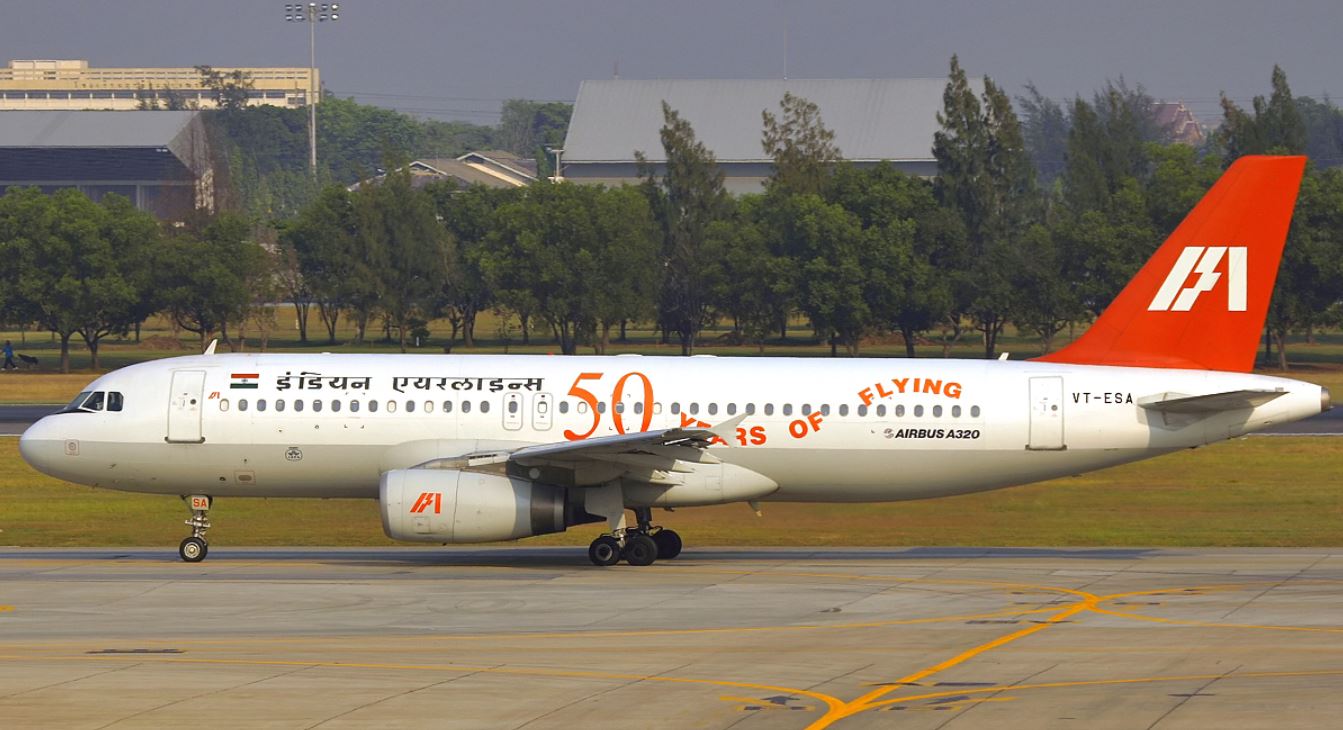 '50 Years of Flying' for Indian Airlines titles. Indian Airlines and subsequently Air India were the only airlines who had A320s with dobule wheel bogies due to India's low pavement classifiction runways in the 1990s / 2000s. Indian Airlines, Airbus A320-231 registred VT-ESA, MSN: 499]. Pictured in July 2004 in Bangkok. Photo Copyright Anthony Jackson 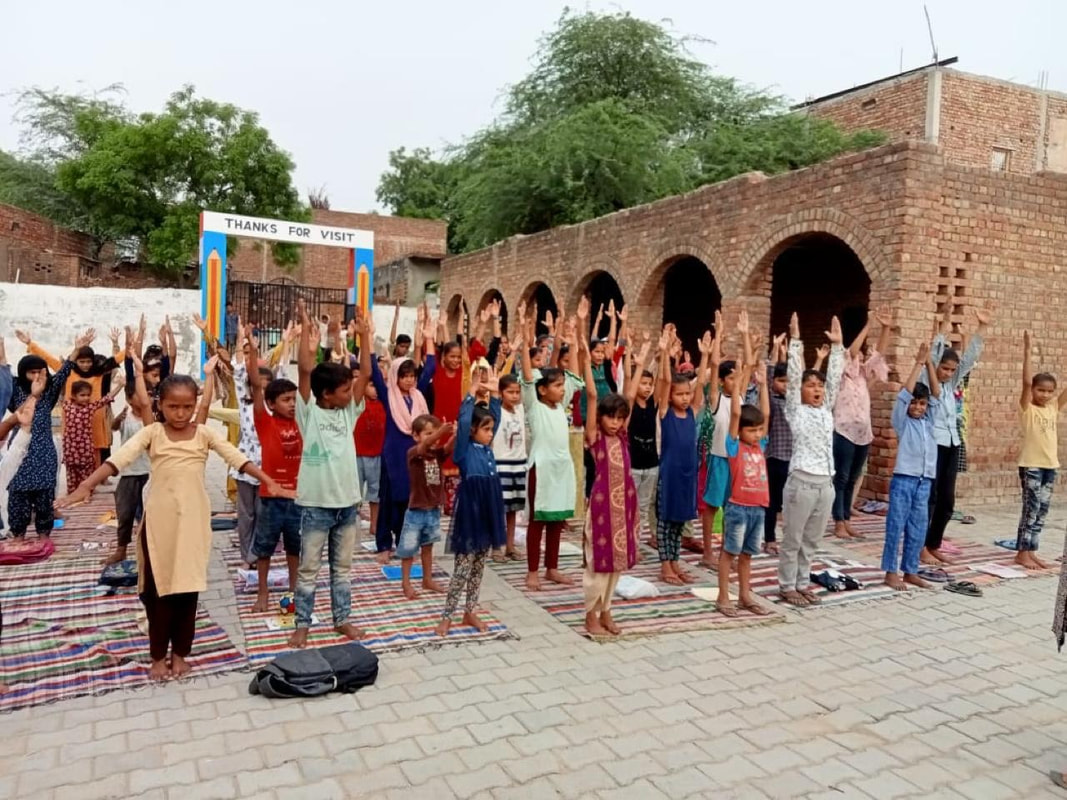 Laksh Farm, India: Photo Copyright Shakti Lumba NS: Please tell us about Laksh farms and foundation, and anything you want the readers to know. SL: Laksh Farms is named after my dearly departed mother. Her name was Lakshmi and my father used to call her ‘Laksh’ which became her pet name. The book describes how I found it and developing it into a successful farm. was a great labor of love – I often say that it is my third startup! My wife and I have created a beautiful natural heavenly place, which we are now proud to call home. It is nestled in a valley in the Aravalli range and has great energy and good vastu (home). It was developed from a total waste land that I bought in 1997 and I turned it into paradise, planted over 2,000 trees, ornamentals, mangoes, chikoo fruit (Sapodilla), citrus and ambles. One visitor described Laksh as “one doesn’t need to die to see heaven. Just visit Laksh farms”. The farm, besides being an agricultural farm with a dairy, chicken, geese, rabbits, is also a farm stay and open for bookings for a farm day. We practice natural farming, and at Laksh we also have the fabulous The Laksh Foundation in Haryana, India. This is a women self-help group and includes the Laksh Foundation Education Society. The education society provides free post school tutorials to around 1,200 kids in five neighboring villages. As a small NGO, organic farm and women’s sewing co-operative, it also began to offer free education to the children of local farm workers, offering them a way to improve their futures – and this is where we partnered with Warwick University, one of the UK's leading universities, with an acknowledged reputation for excellence in research, teaching, and innovation. Warwick worked with the Foundation since the beginning and have helped to shape our teaching programmes over time, until at least the start of the Pandemic. Warwick would send 12 volunteers during the summer holidays for three months for a teach the teacher program. In this program we were able to develop 40 of the brightest kids into educators who teach the kids and also learn to graduate in the Open University program. The foundation is a charitable foundation and is totally dependent on family and friend support. We have a computer lab for students and have tied up a weekly visit by a group of doctors who spend half a day at our village, Mangar, for medical consultation and provision of medicines for poor villagers. Laksh is our small way of giving back to society and nature from whom we took so much till retirement: Laksh is our home and was one of the best decisions I took to avoid the rat race and the hustle and bustle of city life. We are only an hour away from Delhi, Noida, Gurgaon and Faridabad yet set in tranquil settings – so near and yet so far! Bouquets and brickbats as we say. 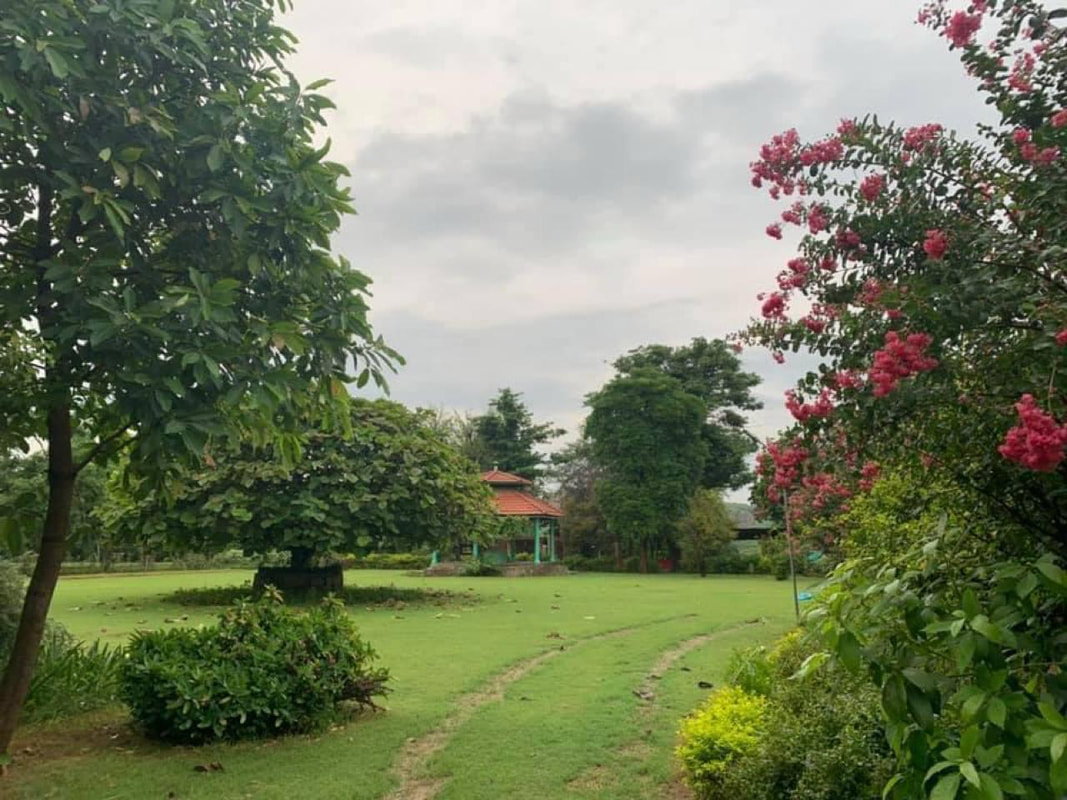 Laksh Farm: Photo Copyright Shakti lumba NS: Has India seen more near misses and collisions than other major aviation hubs/global average? SL: Not at all. As air traffic increases in the limited airspace, incidents of reduced separation are not only common but are not alarming and fall within the very low risk statistical average. There are risk mitigation options, both human and non-human. The whole issue comes under Communication Navigation Surveillance and the Air Traffic Management (CNS/ATM). The most common human factor is fatigue in the cockpit or in the control tower with overworked and exhausted controllers and pilots. We need to bring in more stringent fatigue management and fatigue risk management laws with penalties for aircraft operators & air traffic control (ATC) managers. This is the responsibility of the Directorate General of Civil Aviation (DGCA), which they unfortunately do not take as seriously as other safety regulators because of the commercial pressure from aircraft operators and the Airport Authority of India [AAI] who manage the CNS/ATM. A shortage of pilots and controllers adds to longer duty time, reduced rest and increased fatigue. NS: Who is to blame for such instances? Airlines, airports, or ground staff authorities? SL: In aviation, we don't play the blame game only look for the probable cause and learn from any incidents. NS: How can that gap be filled and who must fill it? SL: The only logical answer is to increase the airspace and improve surveillance by satellites. Air India and the DGCA are under no pressure to bring is proper laws to properly manage the fatigue issues for pilots and controllers. NS: Mr. Lumba, thank you very much for spending time to share your thoughts. It has been an absolute pleasure having you on my blog!
SL: You are welcome. The pleasure is mine. Thanks a lot, Nav! 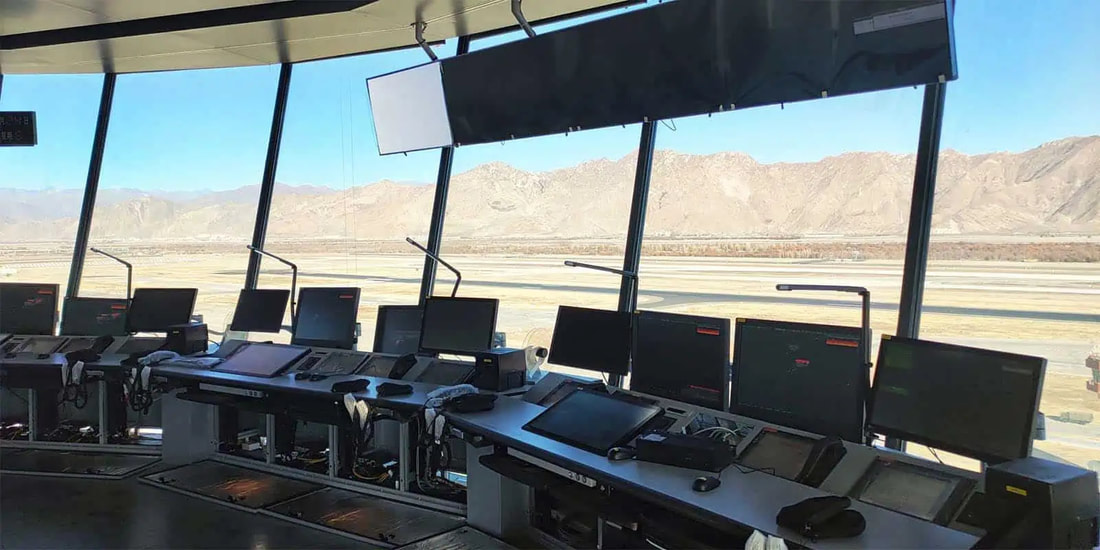 Oberteuringen, March 14, 2024 - IHSE, the leading manufacturer of high-end KVM solutions for the extension and switching of computer signals, announces that it has equipped a high-altitude Chinese airport with a fully redundant KVM solution for fail-safe air traffic control. Over the past few years, IHSE KVM solutions have become an important and crucial element in air traffic control systems in major airports around the world. IHSE systems enable controllers in the visual control room to interact with all tower system equipment located in ground-level equipment room. Air traffic controllers can interact with all essential systems from their personal workstations, switch between them and react instantly to all eventualities. For these security-critical applications, IHSE KVM systems offer increased protection against cyber attacks and a comprehensive redundancy concept for fail-safe 24/7 operation. IHSE KVM systems are deployed by several government aviation authorities and in many major global airports, including Frankfurt, Paris and King Abd al-Aziz Airport in Saudi Arabia. Air traffic management at an altitude of 3,500mAn IHSE system was recently installed in China at one of the highest airports in the world at an altitude of over 3,500 meters - the airport is unnamed. The extraordinary location presented the system planners with special challenges and posed complex requirements on equipment and systems that are not generally encountered in lower-level airports. The combination of low air pressure, difficult terrain and geomorphological features, high winds, low cloud and extreme diurnal temperature differences calls for a particularly robust and resilient system. These are in addition to the normal requirements for the highest levels of security and reliability that are essential in air traffic management systems.
The fully redundant KVM system deployed here comprises two Draco tera flex KVM matrix switches with automatic switchover to a hot standby unit in the unlikely event of a failure of the primary switch. For further protection, the installation includes redundant power supplies and redundant fiber optic connections. The IHSE solution creates optimum working conditions for air traffic controllers, who can switch all information sources to the screens directly from their multi-monitor workstations and immediately access all tower systems to ensure safe flight operations. From March 19-21, 2024, IHSE will present its flexible and highly secure KVM solutions for towers, apron control, simulation rooms, baggage handling and passenger information systems at Airspace World 2024 in Geneva. It is an absolute honor to do a question-and-answer session with Hollywood actor Peter Barton. Peter was a famous television and movie star in the 1980s and 1990s. One-time teen idol and even named one of the world's 10 sexiest guys in soaps by Playgirl magazine, Barton acted in many movies and TV shows, most notably as Dr. Scott Grainger in the daytime soap “The Young and the Restless” from 1987-93, as Bill Miller in the short-lived NBC TV series Shirley in 1979 with Shirley Jones, Rosanna Arquette, and Tracey Gold, the lead in another NBC series, The Powers of Matthew Star, for which he won the role over many actors, among them Tom Cruise, and as the good cop gone bad Eddie Connors in the late 1990s US daytime soap Sunset Beach, with Lesley Anne-Down, Kelly Hu, Eddie Cibrian among others. Barton also became involved in the burgeoning teen horror/thriller film genre, beginning with Hell Night (1981) and followed by Friday the 13th: The Final Chapter (1984). We decided to do the interview via voice notes, text messages, and a video call while I was shopping in Waitrose in Ascot, UK [!]. It would have been easier if we did this in person but with Peter being in the US and me being in the UK, we kind of made it happen! 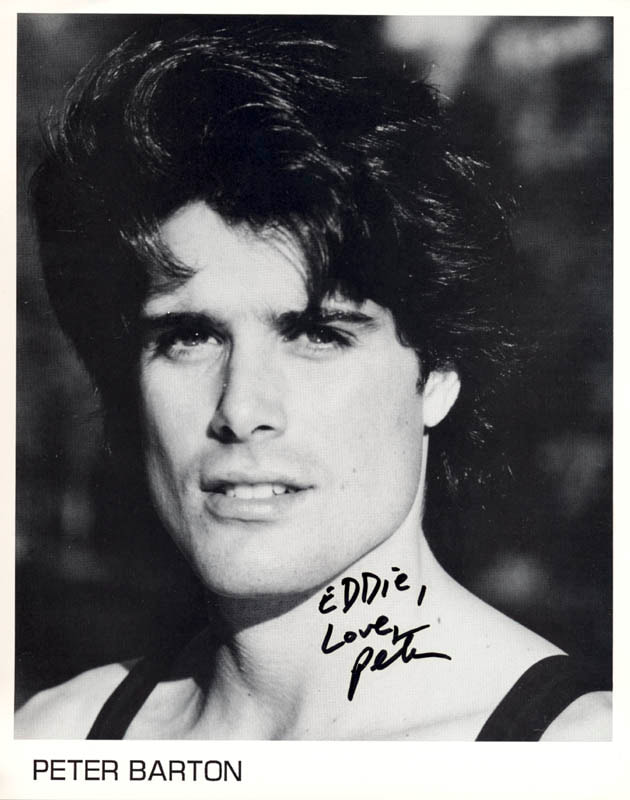 Peter Barton: Photo Copyright Peter Barton Nav Singh [NS]: Hi Peter, thanks so much for letting me interview you. If it’s okay, I’d like to start by chatting about your childhood…what was it like growing up in the 1970s? Peter Barton [PB]: Nav, firstly, thanks for having me here and great to contribute to your awesome blog! I loved the 70s! I loved high school. I loved sports. I went to Valley Stream North High School, which has over the years produced quite a few sporting alumni, including NFL players. I got my first experience with sports when I was playing little league in fourth grade, and I became an all-star from then onwards. When I went to high school I wrestled, pole vaulted and tracked, and I played soccer and football. That's where I got my self-esteem from. Loved it! NS: You are a massive fan of keeping good habits and a very healthy lifestyle. Where does this motivation and will power to keep going come from? PB: I was a kind of chubby lad and started to get flab on me in the fourth and fifth grade – this made me a bit subconscious about that. I didn't like that at all, and even my dad would make fun of me and call me a bit of a “butter ball”! Therefore, as soon as I hit seventh and eighth grade, I started doing weights, and I was weight training using the Charles Atlas inspired method on how to build muscle and was aware that 80% of it is what you eat; so, I started eating well too, and then on I got pretty good at athletics. Since then, staying in shape has been a big contributing factor to me, and it just continued and became a lifestyle. I have always loved running, marathons [5Ks], working out at the gym, weights and so on. NS: Interesting. But why wrestling? PB: Good question! I had a thing for it. I just thought it was just such a gladiator thing to do and a tough sport, and maybe that's why I like gladiator so much! I kind of wrestled all the way through high school and I was good at it. Then I fell in love and wanted to be with my girlfriend at that time, so I kind of moved away from wrestling because it was just so tough mentally and physically...but I don't regret it! The good choice was being around her family...big Italian family. There were like 7 or 8 kids in the family and grandmother lived upstairs and I got that whole family vibe, which I think was a good basis for my life – even though I had my own family and that was a whole different experience. 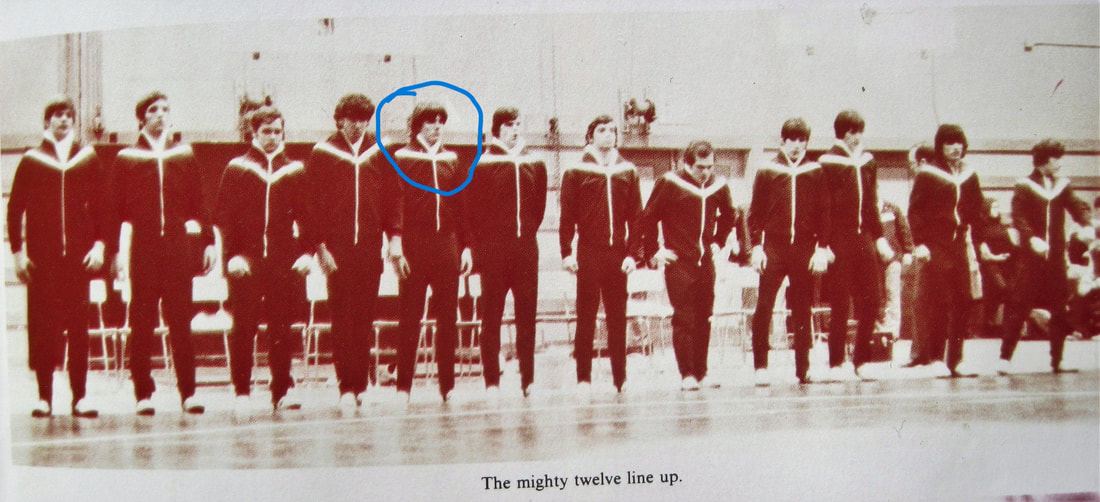 Peter was big into sports from an early age while at school, and was specially into wrestling. Seen here circled in blue during the wrestling season in 72-73: Photo Copyright Peter Barton NS: Although accepted into St. John's University School of Medicine, you changed your mind about attending, and it just before signing up for classes, you decided to pursue a career in modelling and acting. What was the reason behind this? PB: The reason I did not start St John's was because I basically did not have the money. I went to the Dean, and he suggested I defer to a year later and said I would be accepted the following year. My dad had a very successful business in the concrete industry with 25 trucks and basically, I did a little bit of high school but had some personal issues at home. Therefore, I was paying for my own college fees and not using my dad's money, and St John's was so much more expensive than a community college. That’s why I decided that I needed to make more money and I started getting into modelling and acting during the summer without any training whatsoever [!]. Otherwise, I would have just carried on and gone to St John's because the Dean said I can reapply and be accepted the following year. But after doing that for six months, I just thought I can just stay here and carry on with the modelling and acting gig. NS: It is interesting that you actually ended up playing a doctor on the daytime drama The Young and the Restless. Did you have any kind of special training for this role or was a thought at the back of your mind that "I could have done this for real!"? PB: Yes, that is exactly right with the Young & Restless series, when I auditioned for that part, it just seemed to be fate I guess. I went to St John's to go and study pharmacy for five years and then my plan was to apply to a medical school and see if I can become a doctor. So, yes, I always thought that was kind of strange that I got casted as Dr Scott Grainger on the Young & Restless. In the long run, I am so much happier that I got to do it and I did not have to do it in real life because it seemed like it is a really tough gig, as well as acting, which is also a tough gig. However, the more you get into acting the more fun it becomes a pretty great lifestyle. 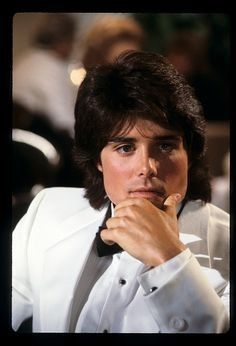 Peter didn't end up being a doctor in real life but ended up playing Dr Scott Grainger on the Young & Restless: Photo Copyright Peter Barton  Peter on the set of Burke's Law: Photo Copyright CBS Action NS: Who had a great influence on your career and life? PB: My mum and dad were the greatest influence on me. My mum, because she was so kind and loving and because my dad had an attitude of "Go and get things for yourself!". Also, I have not talked much about this until now, but I think my acting career would not have happened if I had not met a photographer and artist called Michael O'Brien in December 1978, before I got my first acting part in March 1979. He was a photographer who taught me how to be real and authentic in front of the camera because I was so uncomfortable in front of any camera, even a still one! He used to work me and coach me and say "Just look at me man, don't do anything. Just be authentic". And basically, over the two or three months, I wasn't taking an acting class, but I did a lot of test shoots with Michael, and he became a friend, and he got me way more real and just be truthful in front of the camera. I remember doing one test shoot with Michael in the middle of December 1978. I mean with his skillset; this guy could easily have become a film director. He had that quality in him. He could put you in front of a still camera and get you to be authentic and be yourself. Also, I recall Michael Schoeffling was working with Michael O'Brien. He just had this talent and skillset to make you feel comfortable and be in front of the camera. I wonder if he also did that for Michael Schoeffling. I never spoke to him but would love to know. 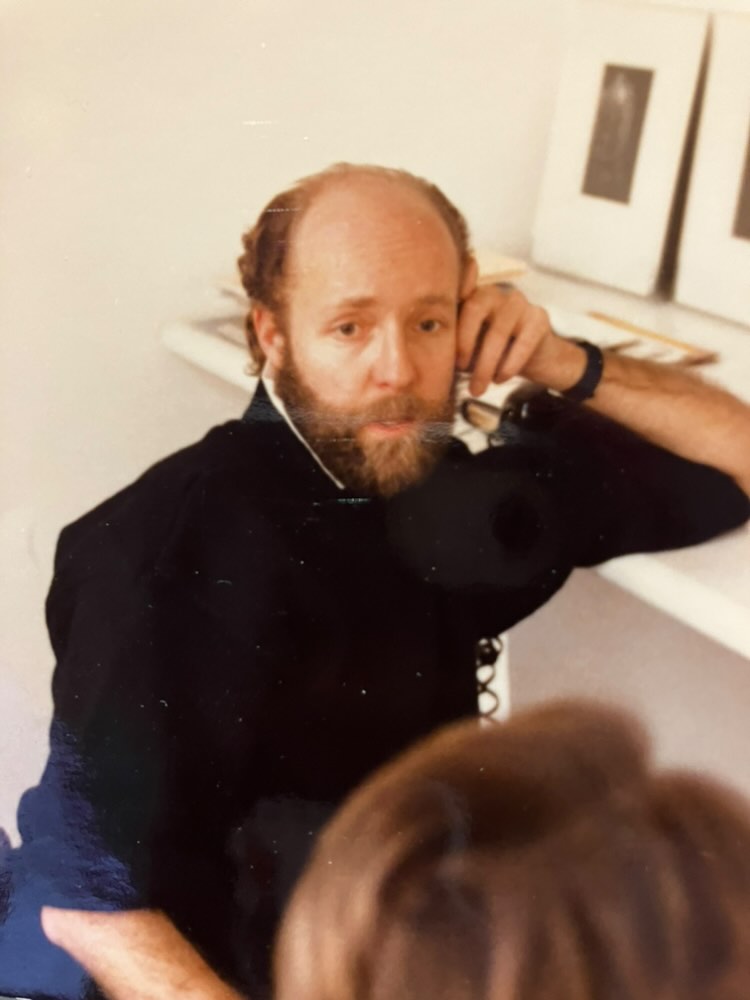 Michael O'Brien, captured thinking in 1979, had a great influence on Peter in his early days of acting and modelling: Photo Copyright Peter Barton NS: Did you have any acting heroes when you were younger? PB: Errol Flynn. When I saw Robin Hood, I thought he was the greatest thing in the world and he was just so cool in that movie. There were so many scenes in that movie that were great. Errol with his crazy, flamboyant swashbuckler stuff, and so many scenes in that movie that just are amazing examples of world class acting. Then I moved onto Jimmy Stewart with his 1946 blockbuster, “It’s a Wonderful Life”, because I just thought it was like unbelievably flooring. You know, just the common man, and Jimmy Stewart, an amazing actor, was so powerful in that movie by doing the right thing – that truly resonated with me about “doing the right thing”. Most recently, I have been watching The Gladiator with Russell Crowe so many times because it is another movie about doing the right thing. I believe that people thrive and excel if they just do the right thing. Life was so kind to me when I just did the right thing in front of me. NS: Do you come from a family who are very dramatic/artistic? PB: My mum was always a lover of Shirley Temple, and she could have become the equivalent of Doris Day or some kind of an actress of the same caliber. Acting was never in the family and nobody even thought of becoming an actor. Nobody in the family even thought about becoming a model. My sister was gorgeous and she kind of never persuaded it either. It just didn't seem in the realm – like growing up in Long Island, you wouldn't even try it in those days. Fortunately, because I needed money for the medical school at St John's, I persuaded it. I actually got turned down by four out of the five agencies. One said yes, and within six months, I was on a TV series. So, never take no for an answer, right? 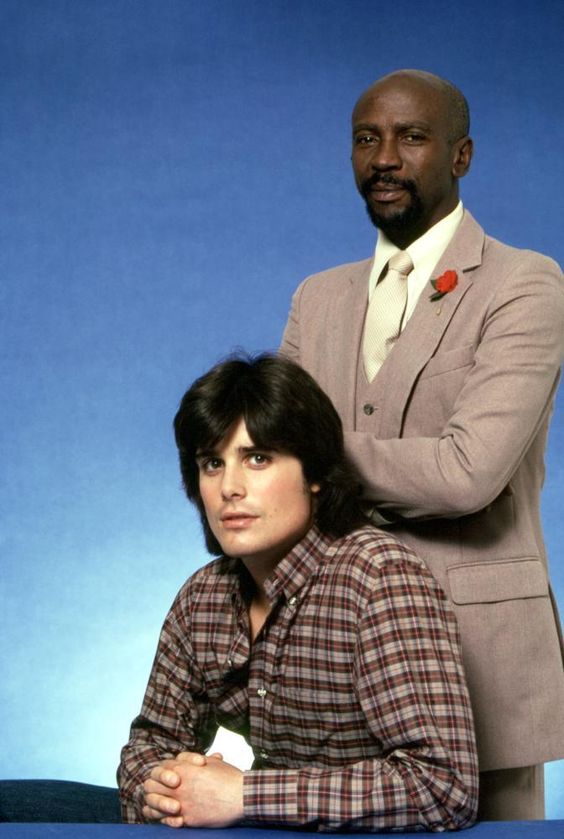 Peter Barton with Louis Gossett Jr. during his Powers of Matthew Star days: Photo Copyright Peter Barton 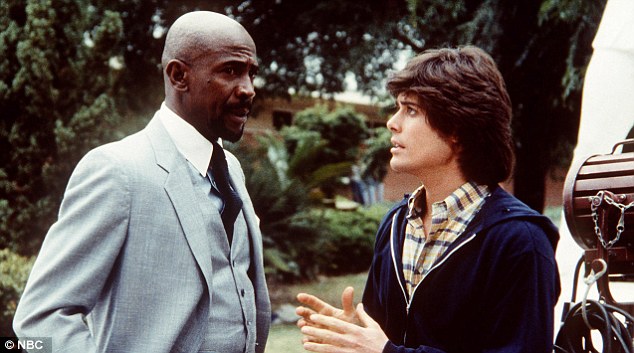 Peter Barton starred with Louis Gossett Jr. as an alien prince in the Powers of Matthew Star, an American sci-fi television series that aired from September 17, 1982 through April 8, 1983 on NBC NS: That’s true. Talking of never say never, any career regrets, perhaps? PB: Yes, so I have a silly regret! Basically, I think I could have squeezed a lot more in my life, but I think I did pretty good. I did have a chance to be on the Johnny Carson show. When I was filming the Powers of Matthew Star series they wanted me to go and do an interview on the Johnny Carson show and I was too afraid. I mean I did take part in a Dinah Shore talk show, and I did take part in other talk shows back then, but I let go of the chance to take part in a classic talk show interview with Johnny Carson in 1982. I probably would have passed out, but I should have done it anyway! NS: But things happen for a reason, as they say. So maybe it was just not meant to be. But what about any favourite TV shows and movies? PB: I watch a lot of Netflix. I am watching House of Cards right now and this show kind of upsets me a bit because it resonates with how our political system works in the US and how our government really is. Also, I admire Mark Walburg’s work and watch his stuff because he picks these great characters and parts to play – a bit like a Jimmy Stewart character. Now with the House of Cards, to me that just turns my stomach, you know? Kevin Spacey and Robin Wright in their characters are just so gross, and I don't know why they'd even want to portray characters like that because it just makes you look so creepy. But on the other hand you have someone like Mark Walburg who I love watching and anything he does! It is self-evident of how he takes care of himself. But I just love his roles from "The Departed", "The Shooter", and many others. I mean he plays these roles where you have the common man or the underdog is stuck in a really bad position, and where the government is out to get you or whatever. He never falters about doing the right thing, and just like the Powers of Matthew Star character which I played, where the character helps the common person, it helps to resonate with me. Jimmy Stewart also has this ability to act and showcase how to humanize and help the common person. With the parts Walburg and Stewart pick, they always exemplify how they live it in their life, too, which is crazy. It is amazing how that habit and ethical way of “doing the right thing” carries into their personal life. 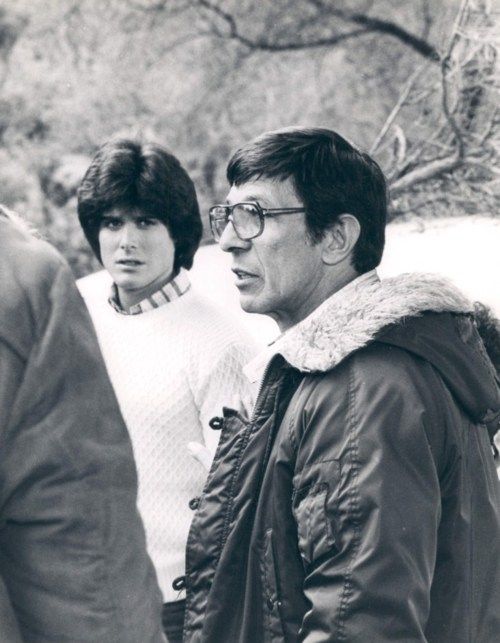 Peter on the set of Powers of Matthew Star with Hollywood legend Leonard Nimoy: Photo Copyright AP NS: You have had some significant roles in your career, such as playing the lead role in The Powers of Matthew Star, with Louis Gossett Jr. [a role you won over many actors, among them Tom Cruise!]; Burke's Law with Gene Barry; and the soap opera Sunset Beach, where you played good cop gone bad, Eddie Connors. How do you prepare for your roles? PB: Mostly when I was young, for me it is just my personality that when I read stuff it resonates with me. So that goes all the way back to the first role that I did with Shirly Jones, it was kind of a thing. That storyline and narrative of conflicting with dad, and the storyline of Powers of Matthew Star was again where parents were killed and the main character I played conflicted with parents and tried and come of age. I loved that character, which was essentially an alien who had telepathic ability to move objects with his mind. Working with Louis Gossett Jr. was great, and someone bumped into him a few years back and he was like “Oh, I would love to catch up with Peter again!”. Even in the Young & Restless, the scriptwriters and producers saw it in me and write in the script "Dad" in the first year. So, I just read stuff and when it resonates with me, I can be authentic with it. Same with horror pictures, too. With Hell Night, at that point I was ready to give up acting because I was only in it for like a year or two years at most, and I was just so stressed out and the whole experience of shooting a horror movie made me a nervous wreck. I didn't even want to do it — they had to get me drunk to convince me! My co-actress for that movie, Linda Blair, she was so kind and nice, and she talked me into doing the movie. When I finished working with her in January, I was then auditioning for the Powers of Matthew Star, and then just continued from them onwards. There were so many times that I did not want to be an actor. The opportunity to act in the movie Friday the 13th came up just between another project, and my agent at that time put me up for auditioning for the part, and I ended up getting the part. I also knew Amy Steal in Part 2 and she encouraged me to continue acting the part in that, too. In my mind, I thought, 'Oh, I'll be in the last one. That's kind of cool. These things are famous.' Little did I know. 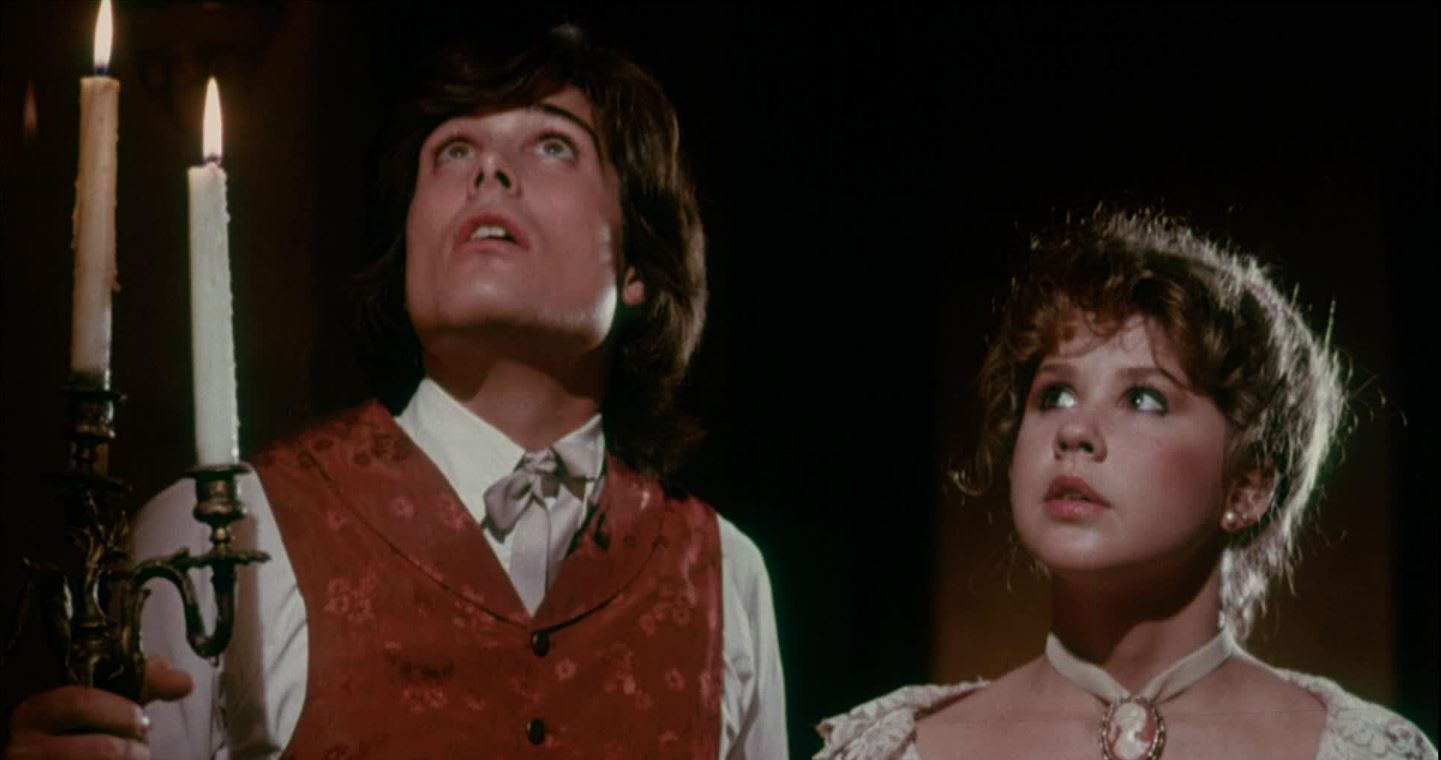 Peter Barton and Linda Blair in Hell Night: Photo Copyright Reuters 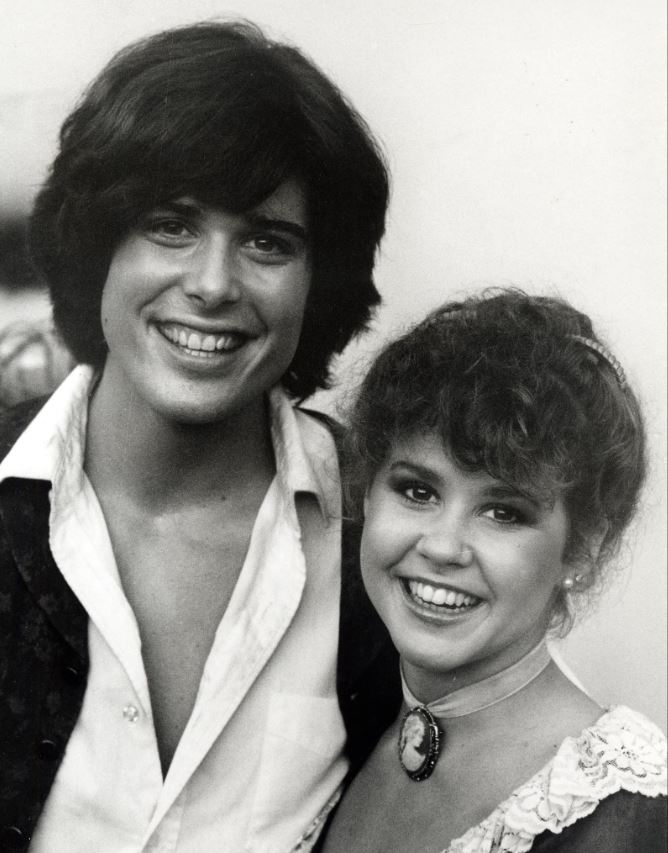 Peter Barton and Linda Blair on the set of Hell Night. Photo Copyright Reuters. NS: In one of our conversations, you have described playing Eddie Connors on Sunset Beach. What was the fun part and why? PB: Playing Eddie Connors was fun because out of all the roles I did, it was the first role where I played a character who was a bit of a jackass! This character was constantly upsetting people and was doing all the wrong things all the time by being selfish. I just thought it was fun because it was a different role to play – just an obnoxious character that say what you weren't supported to be saying. I’d never played a villain before so playing Eddie Connors, and Aaron Spelling just thought that would be fun to see me play a villain. NS: What was it like to working with Aaron Spelling? How did it happen? PB: So, after I left Young & Restless I did not do an audition for quite some time – six years at least! So, when I went to do the audition for Burke's Law and read the script I realised I can play the part because it was another father-son situation. It just instantly resonated with me. I am not sure where the confidence came from, but I was like "Ah, Peter Burke...Peter Barton…you gotta hire me!", and the script looked good partly because of the way the character was perceived. The thing that people don't know is that when I auditioned for it, it was in this big room with about 4 or 5 guys there and I just got nervous and blew the audition. Dennis Dugan, who has made Adam Sandler movies, was the director. I totally blew it, and Aaron [Spelling] came out of the room and he was like "Team, we're going to do it again". He came over to me and asked, "What happened, Peter?". My response was that I was just so intimated with the way it was set up in there and I felt like I could not do anything because the feeling was like as if was in front of 50 people instead of the 4 or 5 folks!". Aaron asked me "What can I do for you? I really want you to get the part, Peter!". My thinking was that if Dennis reads with me then maybe I can do a lot better than I did before. So, with that, Denis got up and performed with me and I got the part for Burke's Law there and then! If it had not been for Aaron fighting for me, I would never have got the part because I just totally blew it. A few weeks into the series, Aaron came back to me and said that the team were very happy with my work. There is an example that if it had not been for Aaron sticking up for me, I would not have got the part because originally, I blew the audition. So, yes, a lot of twists and turns in everybody's career and mine if no different. 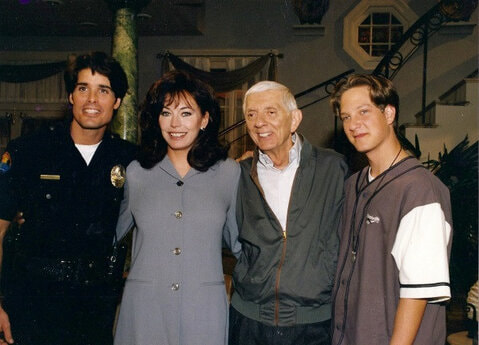 Peter [left] with [L-R] Lesley Anne-Down, Aaron Spelling, and Randy Spelling on the set of Sunset Beach in 1998.  Peter Barton and Tracey E. Bregman on the set of the Young & Restless in the 1980s ©CBScourtesy Everett Collection NS: Your last acting role was in the 2005 film Repetition. Did you ever want to come back to acting, or if offered a role, would you still come back? PB: Yes, my last part was in Repetition and after that I got busy with the joys of parenthood. It has been nothing but pure joy watching my daughter grow up into a young intelligent bright lady. Sure, I mean if there are certain roles out there that I like to do then why not? I would love to audition and go back to acting. NS: On July 16, 2012, a man in Illinois named Ray Fulk died at age 71. Fulk, who had no family of his own, was a fan of yours and your former Hell Night castmate, Lucan star Kevin Brophy. Despite never having met either of you, Fulk bequeathed half of his $1.3m estate to each of you. What was your reaction to this? PB: It sure did come as a surprise! It was one of those things that was too good to be true. When my late dad got the letter and told me that there was this guy named Ray Falk who had left money in his will for Kevin and myself, we could not believe it and thought it was a scam! I called up Kevin, who was working at a normal job as by now he was a father of five kids and had left acting altogether. I knew Kevin for many years, and we worked together in the 1981 movie “Hell Night” with Linda Blair. He never married, had no children or close family and few friends. I would describe him with all due respect as a hoarder. Somehow, he loved our TV shows and considered Kevin Brophy and me to be his friends. He liked the shows in which we acted but never met either Kevin or me. Kevin was in the 1977 TV show “Lucan” in which he played the title character who had been raised by wolves. Ray kept a Lucan poster on the wall of his house many years after the show went off the air. After receiving the letter concerning the bequest, I flew to central Illinois to check it out, and to our shock we learned that this is real. I saw the ramshackle farmhouse where Ray Fulk lived as a hoarder and the empty corn bin where he was found dead. It was quite sad and just weird. It was just bizarre to see that in his will, Ray referred to Kevin and I as “my friends”. We knew he was a fan because he would write letters to us both, but in our heydays, we had quite a few fan letters, so it is bizarre to see this for the first time. I never imagined ever that someone would be so fixated as to share their wealth with complete strangers. The fact that he had no family and considered us as his friends….it just is sad but also shows the loneliness of the man. I also think Ray felt an especially close, perhaps even telepathic, connection with me, probably because of the connection of “The Powers of Matthew Star”. That’s why I think my life is just so bizarre because these connections and things have happened. 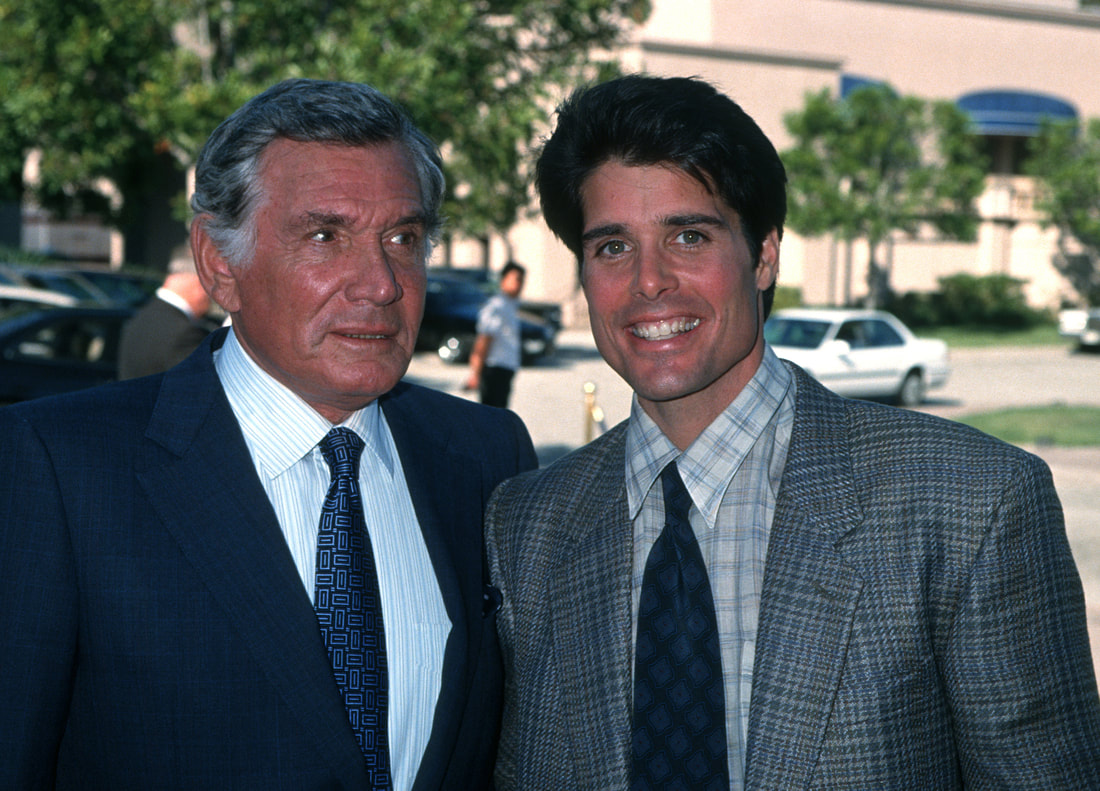 Gene Barry with Peter Barton on the set of Burke's Law: Photo Copyright Reuters. NS: Finally, you mention soccer. Any team you support? Why soccer?
PB: Now, I was loving football and I didn't like the varsity coach and all my friends were on the soccer team. My skills were not that good because I never played soccer in 11th and 12th grade and I was a fullback, because I was kind of big, 160-165, you know? I would just tackle people and had the physical strength to stop people come down the wings! I enjoyed watching the Olympics, the Football World Cup, and I had a lot of English mates who would watch the league in the England. So, I guess that's where the interest came about. I don't have a favorite UK team, sorry! NS: Peter, thank you very much for spending time to share your thoughts. It has been an absolute pleasure having you on my blog! PB: Awesome. The pleasure is mine. Thanks a lot, Nav! 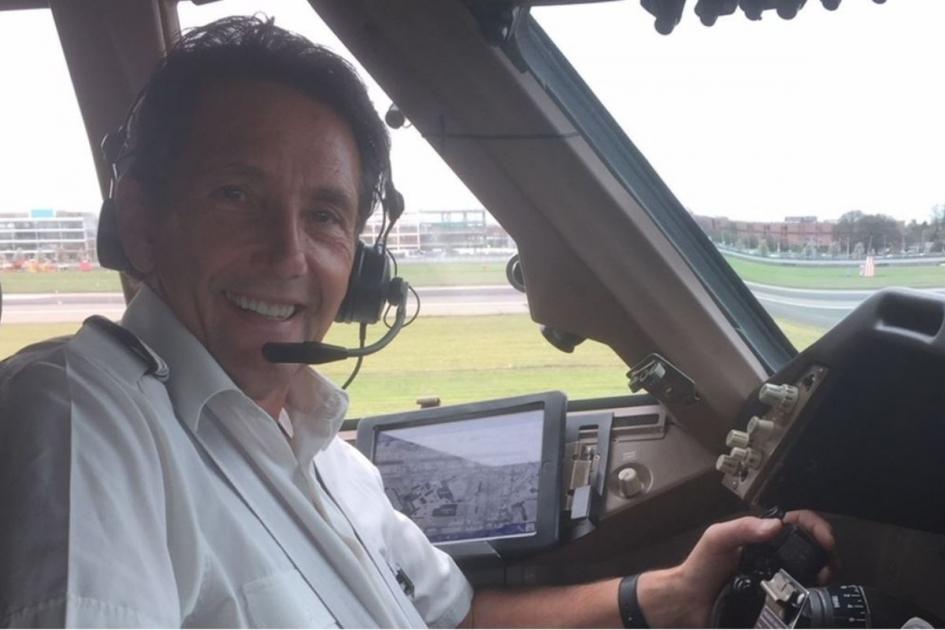 Captain Nick Eades Retired British Airways pilot Captain Nick Eades—the world's most experienced Boeing 747 pilot with over 30,000 hours on the type—published his memoir in 2021, Self-Improver. I had the chance to do a Q&A with Nick, including about his 40 years in aviation and how the industry has changed since the day he decided to become a pilot in 1979. During the Covid-19 pandemic, Captain Eades decided to write this autobiography of his life in aviation, from starting his career in aviation as a self-improver, right from the bottom because he didn’t have the money to attend a flight school. Hence the name of the book goes by the same name. The book is full of interesting antidotes, from when he was cleaning and loading aircraft to flying U2 on their Joshua Tree Tour. Here he reveals some interesting truths. 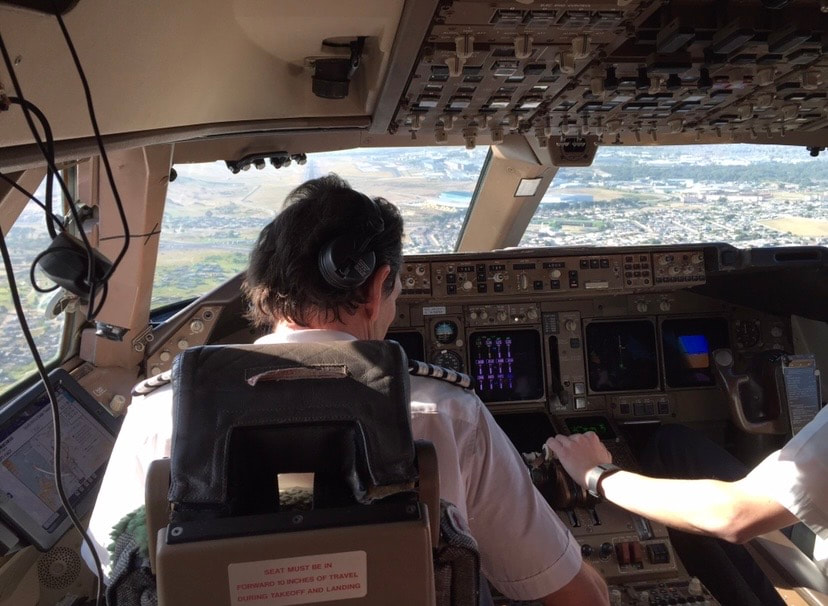 Captain Nick Eades at the controls of the Boeing 747-400 Nav Singh [NS]: Nick, thank you very much for your time. Now that you have retired to a writer's life, you must miss all that travelling and glamour [except the time zones and simulator checks!], do you? Nick Eades [NE]: Thanks for having me having me here, Nav. I flew for 50 years. In that time, I flew over 30,000 hours on most types of aircraft, from open cockpit biplanes to executive jets, and of course the 747. I am now totally happy for others to enjoy the skies and I simply love my new career of writing and hopefully producing aviation themed books and television programmes. NS: The 747 has over 6 million separate parts, so, as a 747 pilot is it true that you need to know practically everything about the aircraft?, and how long did it take you to learn and know about the aircraft inside-out [even things that are perhaps small but important…. technical and non-technical]? NE: Interesting question! Things have changed drastically over the decades. When I did my initial classic 747 course in 1987, we were taught by a mixture of ground instructors and self-learning ‘Carousels’. Basically, we attended “chalk and talk’ lectures and then sat in a mock-up of a 747-flight deck and watched a series of slide presentations of the aircraft systems. We were also given an audio cassette to listen to at home and in the car. Of course, we were also given a full set of technical manuals. At the end of the course, you were very familiar with all of the aircraft systems. The entire course lasted approximately three months. However, a very experienced training captain at the time advised me that it takes a minimum of five years to be fully competent on the aircraft. After 34 years on the 747, here I was still learning! My last course on the Boeing 777 had a two-week ground course that was fully self-taught with no instructor lead training, except for a few hours in a fixed base simulator. At the end of each course, I knew a lot more about the 747 than I did about the 777! 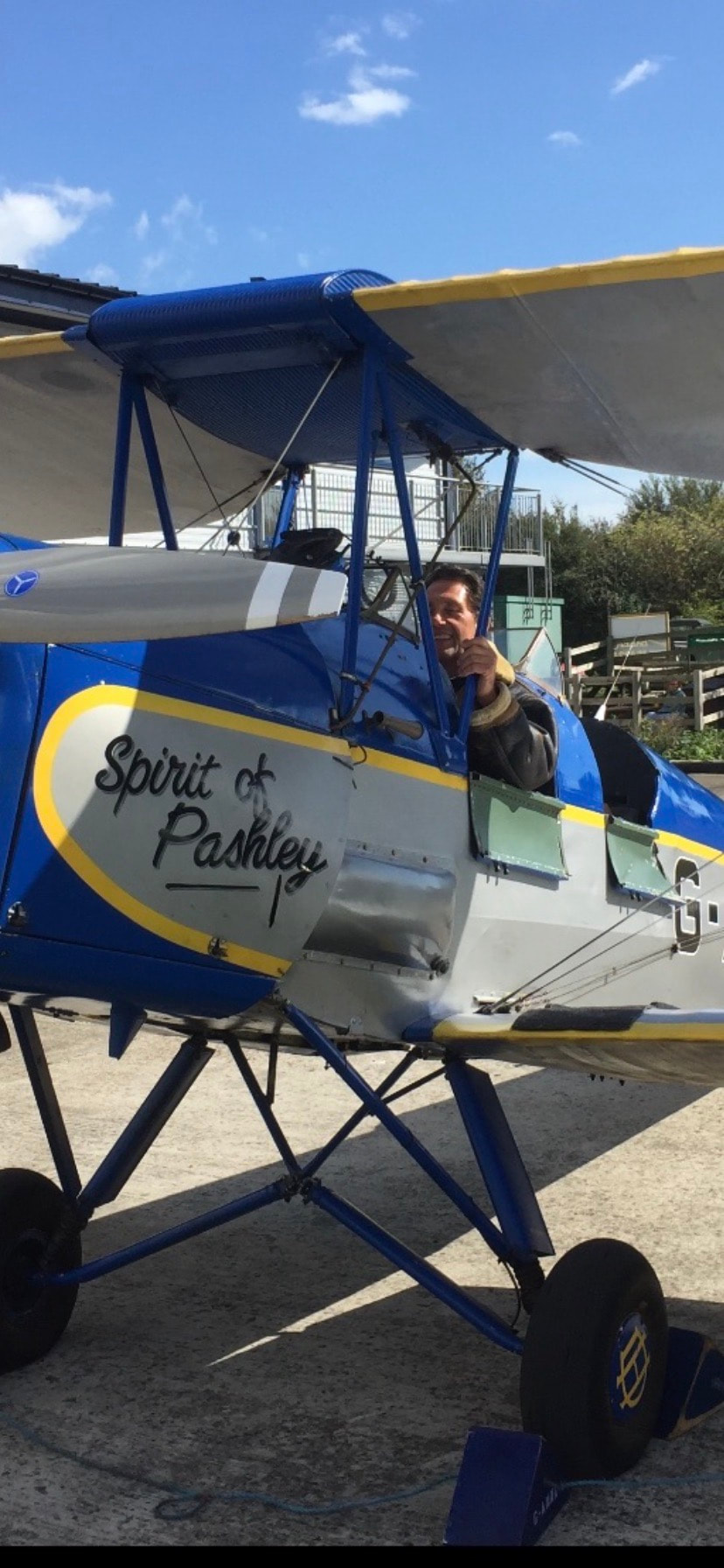 Captain Nick Eades sitting in the cockpit of the Tiger Moth named "Spirit of Pashley". NS: As you’ve written in your memoir, you couldn’t initially afford to attend a flight school, so you became a self-improver. That is not easy these days because the cost of getting a license is expensive, and not many airlines offer sponsored cadet schemes. However, are self-improvers really looked down upon by the airlines? NE: Another excellent question. The basic cost of getting a commercial license is approx. £125,000, plus another £20-25,000 for a type rating on something like an Airbus A320 or Boeing 737. Today you can only achieve your Commercial Pilot’s License [CPL] by attending an approved school. The airlines today do not mind if you are “self-funded” or sponsored, as both trainees have gone through the same system. This is very different from the way I qualified. In the past you had to achieve 700 hours flying time to sit the flying exams. There was no formal training as such. A pilot first achieved a Private Pilot’s License [PPL] and then built up the hours. A good way to do this was to become a flying instructor, a course you could take after you had achieved 150 hours. So, in answer to your question, today’s airlines are very happy to take on self-funded pilots as it saves them the cost of initial training. In my day, a lot of pilots looked down on “self-improvers” as they had not completed an approved training course. Some captains even refused to speak directly to me, instead insisting on communications through the flight engineer (!). NS: Is it true that airline pilots spend as much time in the simulator as they do in the cockpit? NE: No, they don’t. I was flying 900 hours a year in the real aircraft and only eight hours a year in a simulator. NS: Wow, only eight hours a year! So, according to you, what makes a good airline pilot? NE: A combination of manual dexterity, intellectual flexibility, and emotional empathy, combined with a good sense of humour. NS: That is quite interesting. What would you say is the best and worst parts of being an airline pilot? NE: The best part is the incredible variety and sheer pleasure of flying. Combine this with being paid to see the world then you have a very heady mixture. The worst part is the endless night flying, time changes, and of course the dreaded six-monthly simulator checks. 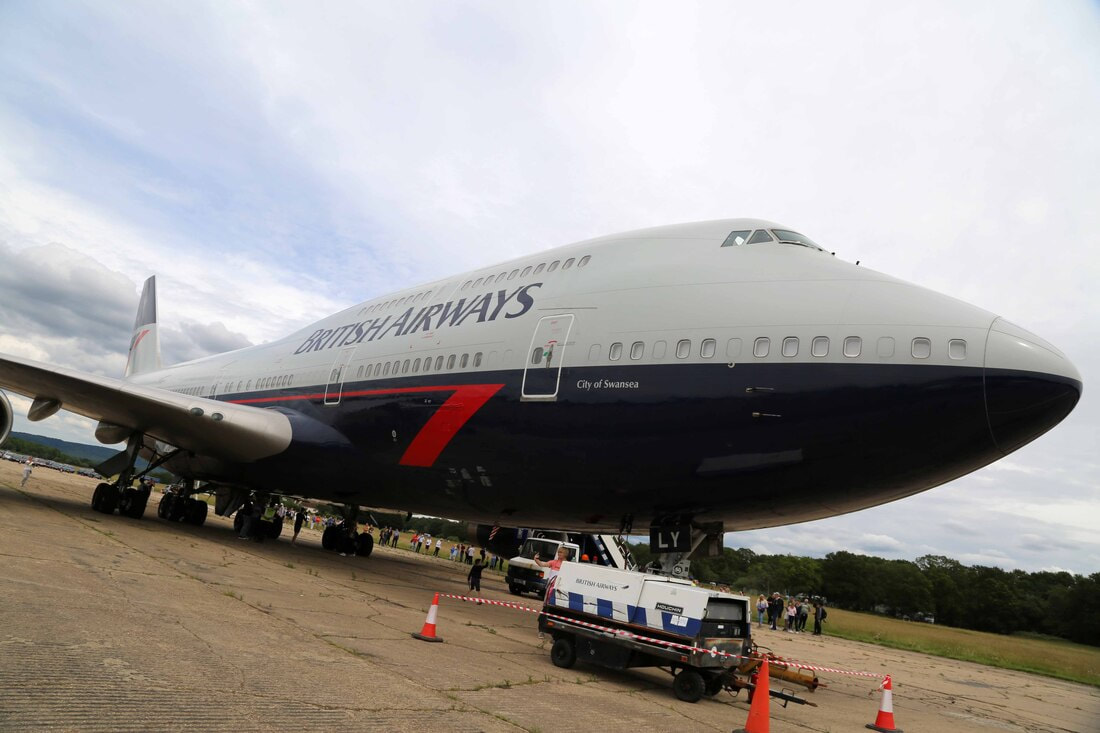 A Boeing 747-400 parked at Dunsfold Aerospace: Photo Copyright Nav Singh NS: Talking of simulators and training, do aircraft versions differ much? Can you name some differences between the old 747-400 and new model 747-8 model, for example? NE: The main difference is that the 747-800 is ‘fly by wire’. In other words, you fly the aircraft through a computer. The 747-400 was one of the last aircraft that the pilot, not a computer, actually moves the control surfaces. NS: Very thoughtful to say the least. Now, to me, the 747 looked like what in most people’s opinion a plane should look like [or at least it did when I was a kid plane spotting at Heathrow!]. In your opinion, could they have kept the 747 going with more efficient engines and aerodynamic wings or it just wasn’t possible? NE: No, the 747 was actually designed on the back of a cigarette packet in the 1960’s [!]. Sadly, a four-engine aircraft is no longer commercially viable. Engine technology and reliability is so advanced today that flying in a twin-engined aircraft today is statistically safer than flying in a four-engine aircraft 40 years ago, and of course a lot more financially efficient. NS: One of the world’s most famous and challenging approaches was to the former Kai Tak airport in Hong Kong [Madeira in Funchal is probably similar, but nothing beats Kai Tak!]. Can you share what it was like doing angled approaches at Kai Tak? NE: I flew into Kai Tak on many occasions. Obviously, the approach and landing onto runway 13 with the famous “checkerboard hill” approach was exciting, especially in a 747! You literally flew towards a red and white checkerboard on a hill and when you reached a certain point you executed a turn to the right. You the picked up the IGS (Instrument Guidance System), which guided you literally through the skyscrapers until a last steep turn at 200 feet to line up with the runway. It was a tremendously challenging and exciting approach and landing because the runway ended up in Hong Kong Harbour, and for those unlucky enough to get wrong, they actually ended up in the harbour itself! The beer that night somehow always tasted sweeter! NS: Even for pilots who fly the latest Airbus or Boeing aircraft, nothing beats flying the 747, or comes close to it! What was it really like flying the 747? I mean the sheer size...things like lining up on the runway [some have compared it to steering a double-decker bus while being sat the top deck!]. NE: On my first day at The Cranebank Centre, the former British Airways training facility near London Heathrow Airport, the instructor pointed to an office block at the other side of the carpark and asked us to look at the very top of the building. There, above the final row of windows, was a blue plaque. We were asked what we thought it was there for? Everyone could not believe it when we were told that was the height of the tail of the aircraft we would shortly be flying. My first take off was as exciting as my last one 34 years later. We would taxi out, looking above everything else and feel an immense pride in flying this incredible aircraft. You could instantly tell that every other pilot was jealous and wanted to in the seat you were currently occupying. Turning onto the active runway, I always watched the face of my co-pilot as they pushed the throttles forward, waited until the engines were stable, and then announcing, “Setting Power”. Almost without exception the smile on their faces grew wider as the aircraft accelerated down the runway. My last grin was as large as my first one. It was quite simply the ultimate flying machine. NS: Now, with all the buzz about AI affecting many industries, including aviation, is it really going to effect on this industry? I mean, planes have had autopilots for decades and have to some extent been on “artificial intelligence” since the 1980s at least. NE: This is a hot subject in aviation and has been over the past few decades. There is a great article called “Children of the Magenta Line” written in 1997. This details pilots’ tendency to blindly follow the magenta line on the new computer screens in modern aircraft at the expense of everything else. In other words, pilots were losing their natural ability to manually fly and navigate the aircraft and over relying on automation. This has resulted in a number of accidents that, arguably, would not have occurred if the pilots had retained their manual flying skills. That is why I personally hand flew the aircraft on very suitable occasion and always backed up the computer’s predictions with a rough prediction of my own. If the two varied by any significant amount I would stop everything and start again. NS: For some pilots, no doubt money is a good motivator to keep on going and flying, and perhaps they move to places such as China or the Middle East to earn very tempting high tax-free salaries that are unheard of in the UK [$350K tax free in some cases!]. What was the motivation in your case to stay at one airline and one aircraft type for majority of your career? NE: I had a very varied and interesting start to my career and had all the excitement and trauma condensed into a very short period of my career. When I joined British Airways, I found a lifestyle and aircraft that I loved. Life is not always about money, and I was lucky enough to be paid a reasonable salary, which allowed me to have great lifestyle balance. 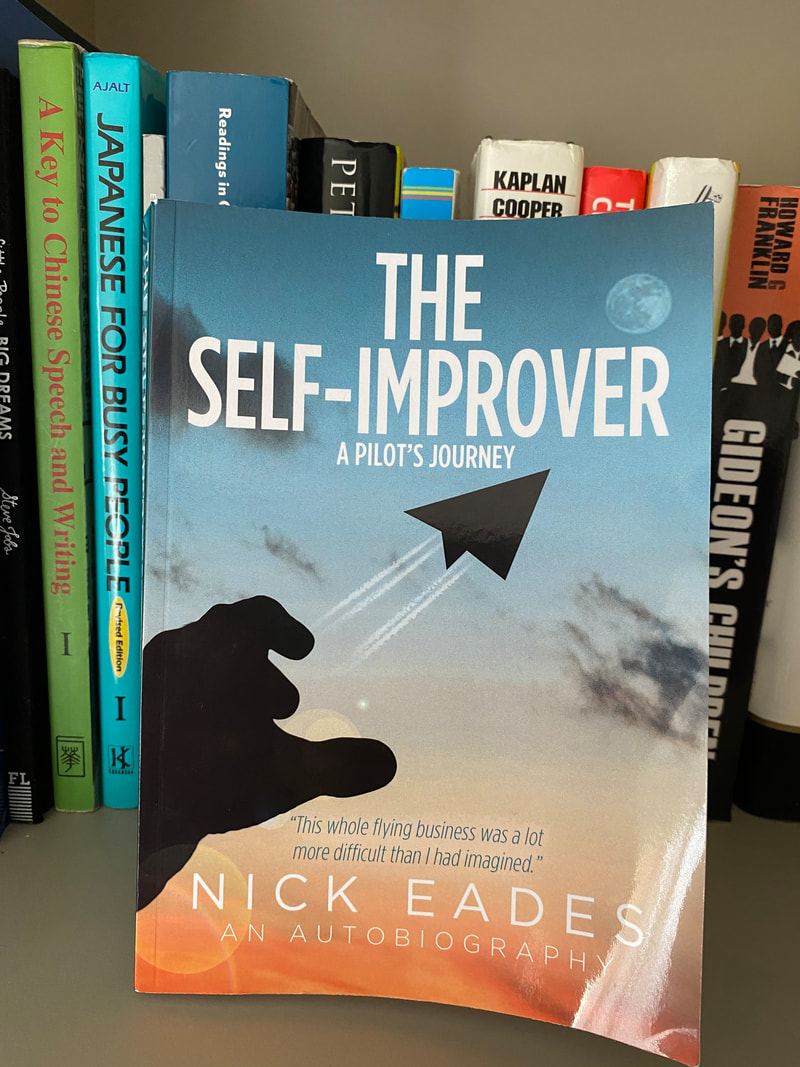 NS: Now, we have read a lot of myths about the brace position, can you please elaborate why the brace position is not included as part of the safety demonstration prior to take-off but is only written/illustrated in the safety card? I always wondered that because various airlines have created in-flight safety videos but have never seen the brace position being demonstrated.
NE: The simple answer is that it would be impossible for a cabin crew member to demonstrate the brace position without actually being in a seat. If they were in a seat nobody could then see them, except maybe a few people sitting next to them! The brace position was actually changed a while ago to reflect the differing seating options on today’s aircraft! NS: Nick, thank you very much. It has been an absolute pleasure having you on my blog! NE: Pleasure is mine. Thanks. Thanks again to Nick for spending time to share his thoughts, and for being kind enough to autograph his book for me. And before [or during!] your next long-haul flight, you may want to read Nick’s book! Click here to purchase a copy. 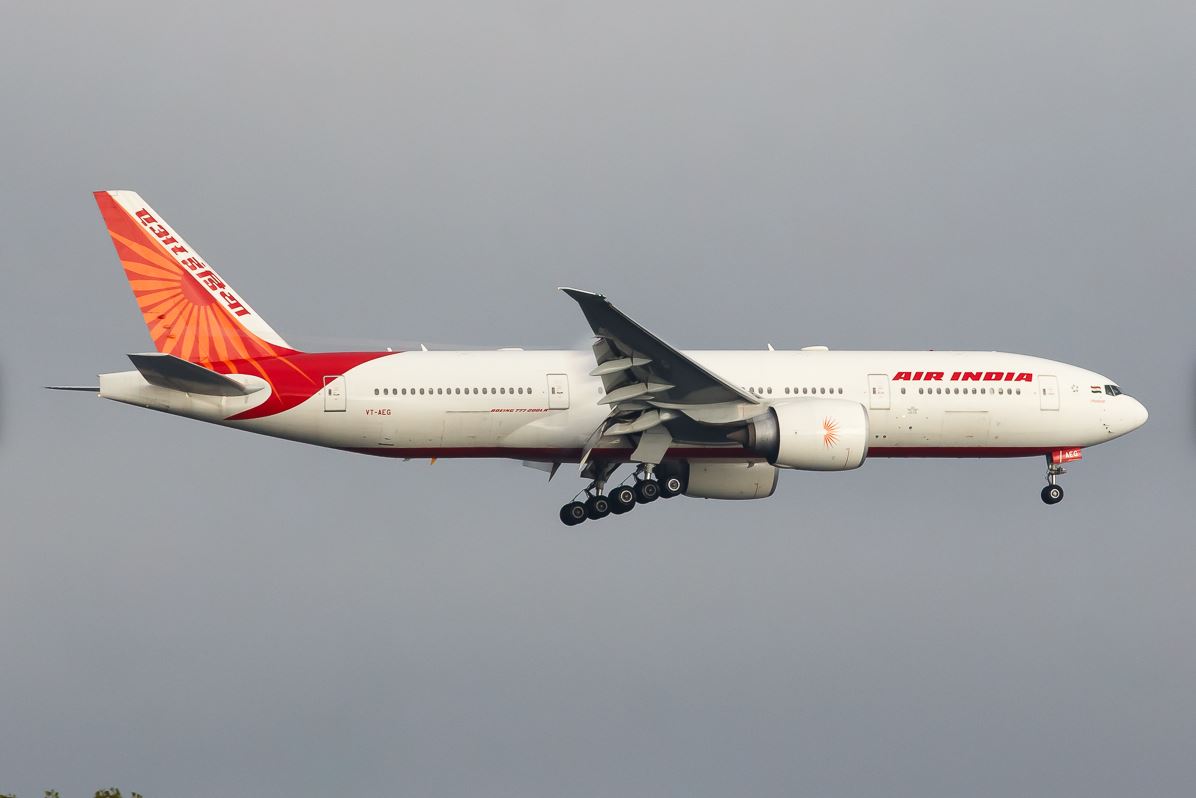 Seen here is an Air India Boeing 777-200LR [Registration VT-AEG, MSN: 30440, one of the aircraft leased from Delta Air Lines - Ex reg N706DN]] on final approach. Photo Copyright Trevor Carl. Since I published my second blog article on the 25th of January – where I highlighted some exclusive insights relating to a whistleblower Air India captain, who cannot be named for legal reasons, raising concerns about passenger and Boeing 777-200LR aircraft safety [claiming they're flying illegally and could be left without oxygen if the cabin were to suffer a sudden decompression] – I have the following updates: COMPLAINTS SENT TO THE DGCA BY THE WHISTLEBLOWER CAPTAINThe whistleblower captain has sent a series of complaints via emails in 2024 filed with the Directorate General of Civil Aviation (DGCA) dated the 2nd of January, 27th of January, and the 7th of February. In these complaints, he painstakingly explains to the DGCA that he was “illegally terminated from Air India”. He further “requested multiple times from the DGCA to hold a fair and just enquiry to be conducted based on the principles of natural justice, pertaining to the safety violation”, which he believes is being done willfully and deliberately even though Air India officials have been cautioned since January 2023. According to the DGCA, they conducted a comprehensive investigation into the alleged violations. "Since the investigation prima facie revealed non-compliance by the airline, a show cause notice was issued to the Accountable Manager of Air India Limited", said the DGCA. "The response to the show cause notice was duly examined with respect to the laid down stipulations under the relevant statutory provisions and the performance limits stipulated in critical documentations laid down by the Original Equipment Manufacturer (OEM)", it said. Of paramount importance to the whistleblower captain is that he wants to understand “why the DGCA hasn’t taken any corrective action against Air India to stop operating those illegal flights”, which was the primary subject of his complaint [because he believes this is a cause of extreme danger to the lives of passengers and crew on these leased Boeing 777-200LR aircraft while flying between Indian cities and San Francisco [SFO]]. The whistleblower captain states that Air India is "misusing the privileges of the Air Operator’s Certificate on a daily basis, which is a license by the granted by the DCGA to legally operate a commercial airline. Misusing privileges of license on a daily basis warrants a serious review of the situation”. HOW IT ALL STARTEDI have also read with interest some highly sensitive and confidential information relating to this matter shared by the whistleblower captain. From these documents, some things can be made public, especially in relation to how this situation got to where we are today. On the 22nd of January 2023, the whistleblower captain raised a voluntarily safety report by writing to the various heads of departments of Air India via an email regarding this critical issue. Prior to this date, he did extensive research into this important matter. While his research was on-going regarding the same issue, on the 30th of January he was scheduled to operate a similar flight from SFO to Bangalore. On that day, for the route which he was assigned to operate as the PIC (Pilot in Command), he was presented with at least three flight plans, one after the other. These were presented by the flight planners at the IFD [Integrated Flight Dispatch] via the flight dispatch office in New Delhi. However, he felt he had no choice but to reject all of the flight plans because “he was duty bound towards the safety of his passengers and crew, as these flight plans were planned in a manner which was not only illegal but also fatal for the passengers and crew in case a depressurization emergency were to take place on certain segments of the route”. Therefore, he insisted that a safe and legal routing be offered by the flight dispatch department between SFO and Bangalore. Now, because of the change in the routing demanded by the whistleblower captain [PIC in this case], the flight dispatch office had to figure out an alternate route beyond the job of automatically printing out the everyday flight plan routings. It is a standard procedure to get a flight plan before any flight; however, the issue here is that getting alternate flight plans for this reason is not a regular occurrence. Sometimes an airline will have a standard route it uses for a flight – mostly on short domestic routes – and these routes will be saved in a database on the aircraft’s Flight Management Computer [FMC]. The FMC is an advanced computer system that plays a key role in providing flight guidance and control to the aircraft and is a critical component of the Boeing 777 aircraft which contains navigation and aircraft performance data. The FMC works in conjunction with other systems, such as the Flight Management System (FMS), the autopilot and auto – throttle etc., to ensure safe and efficient flight operations. Ultimately, the FMC is responsible for calculating and displaying essential flight-related information to the pilots, including routes, speeds, altitudes, and vertical and lateral navigation. It also controls the autopilot and auto throttle systems, helping to maintain the aircraft’s stability and performance during various phases of flight. Therefore, each flight route is planned based on several factors, including options for speed, altitude, fuel consumption, alternate airport/route, weight etc. Under normal circumstances, some of these things may of course change pending any requests from Air Traffic Control [ATC], weather, commercial dept. of the airline, such as for example last minute changes in cargo or the number of passengers. Although the standard distance doesn’t usually change; however, with every flight the time taken to fly the same route can change (and therefore the fuel required) could alter, for example it would take longer if you were flying in strong head winds. Airlines require permission to fly through the airspace of each country they pass over. If for any reason you don’t have permission, the route will be altered, and they also try to find the most inexpensive route [compatible in every sense.]. LEASED BOEING 777-200LR AIRCRAFT ILL-EQUIPPED IN TERMS OF OXYGEN FOR THE FLOWN ROUTES As per the whistleblower captain’s extensive research, he noted that his “aircraft was not equipped with the legal amount of stored breathing oxygen to provide passengers in case there was an emergency descent required over Greenland due to vast stretches of high mountainous terrain throughout the continent”. Furthermore, on the day of that flight the whistleblower captain realized the same held true for other route segments which were passing over high mountainous regions such as the Rockies and some parts of China [ especially Kunming airspace] as well. "For these leased aircraft, it is not safe and legal to fly over China's high mountainous terrain, especially around the Kunming ZPKM flight information region (FIR, which is Airway A599 and then Airway A581] which contains the Kunming, Lijiang, Dali airspace" said the whistleblower captain. He noted that “it would have taken a considerable amount of time, which was much more than the capability of Air India’s leased B777-200LR aircraft, which carried only 12 minutes of stored/breathing oxygen on board, to descend to at least an altitude of 10,000 feet or below to prevent passengers from experiencing hypoxia”. 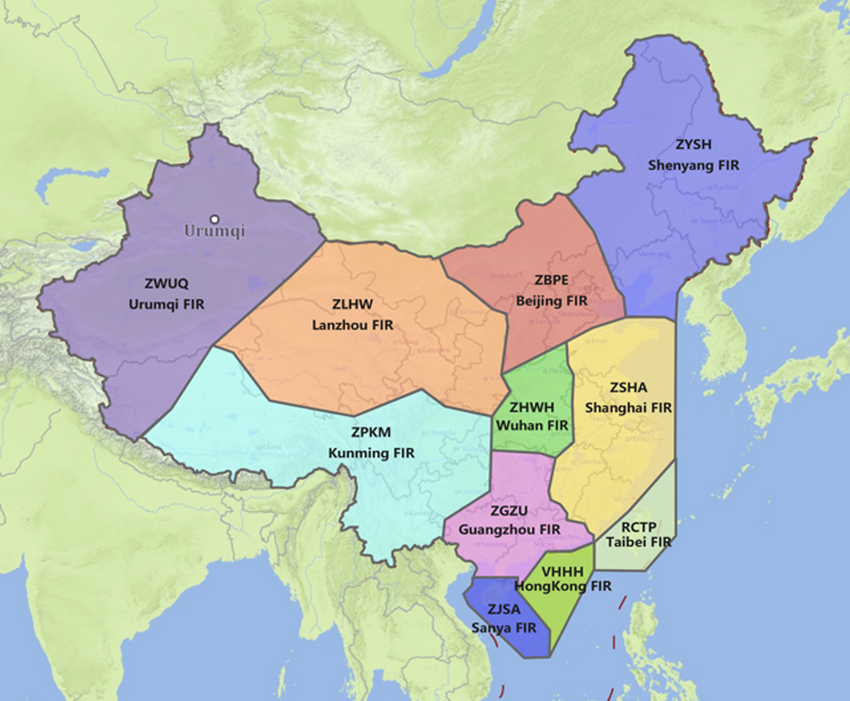 Map of China's flight information regions (FIRs). The Kunming FIR region is the one with high mountainous terrain. Air India's Boeing 777-200LR flights are being used to fly Indian destinations to SFO via the Kunming FIR, Wuhan FIR, and Shanghai FIR regions over China and then onto South Korea and the Pacific Ocean: Copyright ICAO. 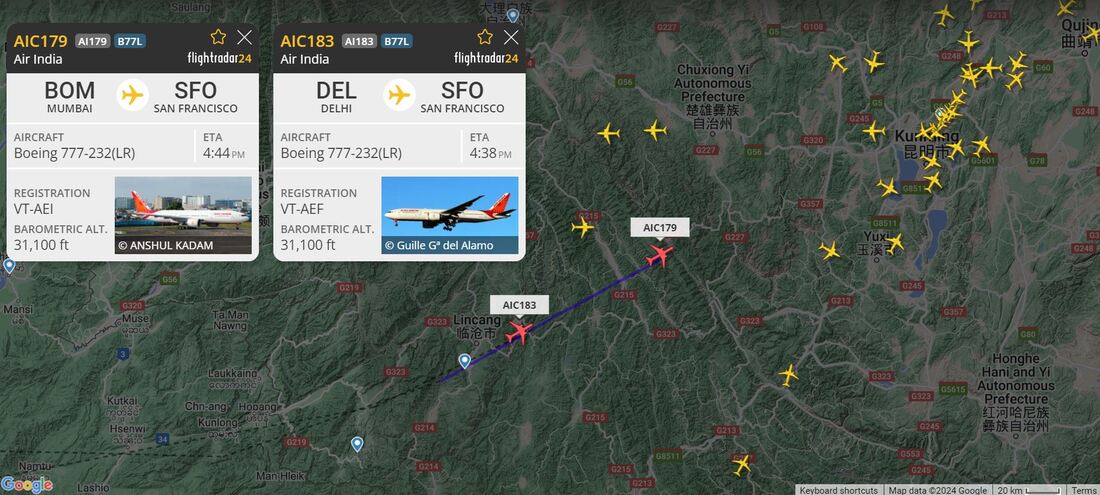 Here is a screenshot of Air India flights AI179 [Mumbai to San Francisco] and AI180 [New Delhi to San Francisco] on the 13th of February 2024 at 13:30 GMT over the Kunming FIR. Both these aircraft are the leased Boeing 777-200LR ones from Delta Air Lines: Photo Copyright FlightRadar24 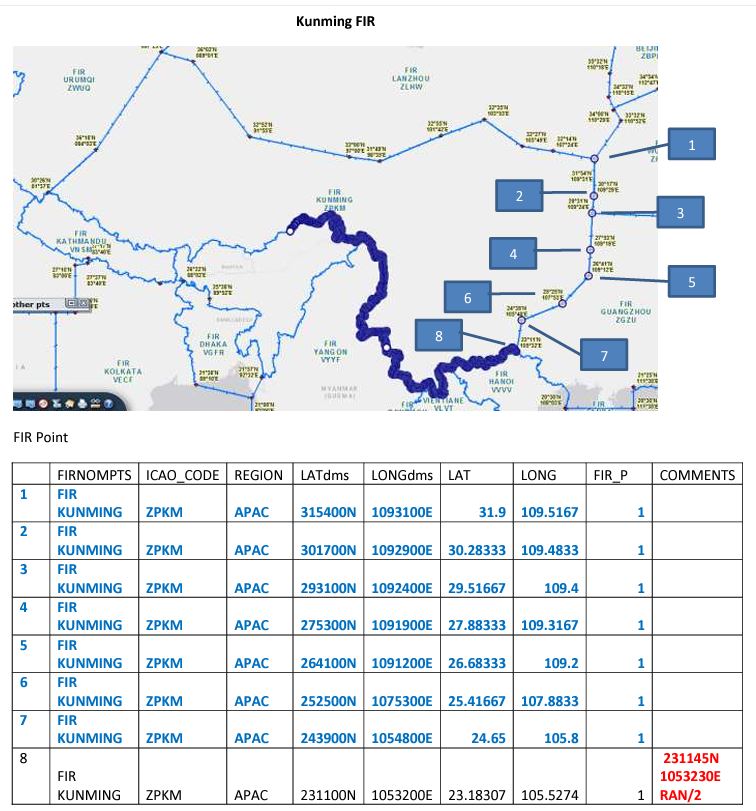 Kunming FIR in detail with coordinates: Photo Copyright ICAO FLIGHT PLANS NOT COMPATIBLEDespite the aircraft not being equipped with more than 12 minutes of stored breathing oxygen, the whistleblower captain, while he was still at the crew hotel in San Francisco, noticed the initial flight plan he was presented with was illegal because it required him to fly the Boeing 777-200LR aircraft with less than the minimum legal amount of stored breathing oxygen over high mountainous terrain, especially the route segment over the Rockies. Fearing for the safety of the lives of his passengers and crew, he requested the flight planners at the IFD to provide an alternate flight plan. Almost seven hours went before the flight dispatch team provided him with a flight plan which was legally acceptable. “This highlights gross incompetence on the part of the Air India flight dispatch team, which is supposed to be of assistance to its operations 24/7 and efficiently and timely produce results, such as providing a flight plan even if it requires a change in routing,” said the whistleblower captain. That was to be the whistleblower’s final flight, and since then he claims, “Air India has illegally terminated me without conducting a proper enquiry”. I wonder if the passengers were ever refunded for this flight. I have reached out to Air India’s press office for a comment but have not received a response. PASSENGER WOES ON INDIA-SAN FRANCISCO ROUTESMind you, this is not the first time an Air India flight from San Francisco to India [and vice-versa] has been delayed. On June 6, 2023, Air India flight AI173D from Delhi [DEL] to San Francisco [SFO] carrying 216 passengers and 16 crew on board was diverted to the Magadan port city in far east Russia following a mid-air glitch in one of the Boeing 777-200LR aircraft engines. All passengers and crew were stranded in the port city for two days, and the replacement aircraft ferried them to San Francisco on 8 June. However, the return flight to Mumbai was cancelled. "Air India flight AI180, scheduled to operate from San Francisco (SFO) to Mumbai (BOM) on June 8, 2023, was cancelled due to an unforeseen technical issue," an Air India spokesperson said. It is a sad state of affairs for an airline that was once known as a world-class luxury brand, especially in the 60s, 70s, and the 80s. By the 1970s Air India had over 10,000 employees in over 50 countries. It was a brand to be reckoned with and had an aura of sheer glamour and excitement. According to the book “Empires of the Sky – The Politics, Contests and Cartels of World Airlines.” by Anthony Sampson, Air India’s founder, the legendary aviator and industrialist J.R.D. Tata was approached to design Singapore Airlines’ inflight services which international travelers speak of highly today. The best of Asian hospitality that Thai Airways and Cathay Pacific are known for today was first embodied by Air India right from the 1950s. However, things began to deteriorate from the 1990s onwards as competition became fiercer, especially from the Middle Eastern and other Asian carriers. Air India began making heavy losses after merging with the state-owned domestic operator Indian Airlines in 2007. It relied on taxpayer-funded bailouts to stay operational, and since then it has sadly been the butt of jokes for bad quality of service. 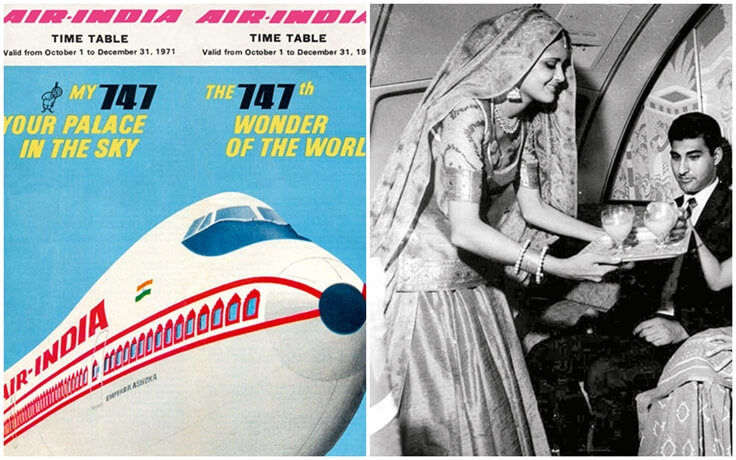 Air India used to be one of the world's most glamourous airlines in the 1960s and 70s: Picture Copyright: Architecturaldigest.in DETAILS NOT CLEARThe captain claims he did not refuse to fly, but instead he asked for an alternate route because he was concerned for the safety of the lives of the passengers and crew members.
A few details are murky and not clear as mud: why did it take the flight planners almost seven hours to provide the captain with an alternate [legally acceptable] flight plan at San Francisco? [note that airlines are used to operating and working in 24/7 time zones for emergencies like this, and the resources are there for back up support.], has this ever happened before with any other airline? More importantly, what exactly has the DGCA fined Air India for? and under what provision of the law (DCGA Civil Aviation Regulations [CAR])? and why has not the order dated 24th of January 2024 against Air India been made public by DGCA? The whistleblower captain “has not had any replies, even after he has applied under the 2005 Right to Information Act”. The whistleblower captain has also asked [I quote] “Why has the DGCA not publicly disclosed the order copy dated the 24th of January 2024, which imposes a fine on Air India, especially to the whistleblower captain, as he is the complainant?” He further states that “the DGCA have released a press note, which is ambiguous and not specific. This order should have been made public to all the stakeholders to learn from it and understand it from the air safety point of view to implement these safe practices in their airlines and know what not to do”. Another veteran airline captain spoke to me on condition of anonymity and said: “It is important to note that whistleblowers play a crucial role in the fight for accountability and a fairer and safer world, and especially in aviation”.  If you ever depart from or arrive at Heathrow Airport in London, you will see an Emirates Airbus A380 model. The 45-tonne model was constructed after the Middle Eastern carrier took over the advertising site from British Airways in 2008.
Built by California-based Penwal Industries, the model 24m long with a wingspan of 26m – a one-third scale replica – and comparable in size to a Bombardier CRJ200, and never fails to impress. The model is built from glass-reinforced plastic covering a steel frame. It was flown from Ontario in California to Heathrow by a chartered Antonov An-124, operated by Russian carrier Polet. Once in London a mechanical ramp, brought in specially from Germany, was used to unload the 10 components. The Emirates A380 replaced the British Airways Concorde Model, which is now placed at Brooklands Museum.  Since I published my blog yesterday – where I highlighted some unique insights relating to a whistleblower Air India captain, who cannot be named for legal reasons, and who raised concerns with the airline about passenger and aircraft safety [claiming they're flying illegally] – a couple of interesting things have happened. Firstly, we heard that Captain Vivek Chhabra, the Chief Flight Operations Inspector [CFOI] has been fired rather unceremoniously by the Directorate General of Civil Aviation (DGCA). Secondly, on top of this, the DGCA fined Air India over US$132,000 for safety violations on some of its ultra-long-haul flights to the US. This has happened, as per my understanding, after an internal investigation carried out by the DGCA. The aviation watchdog slapped the fine on Air India for flouting rules with respect to flights operated on certain long routes over vast stretches of mountainous terrain. "We disagree with the order issued by the DGCA. The issues raised were thoroughly examined by Air India along with external experts concluding that there was no compromise on safety, whatsoever. We are studying the order in detail and will review the options available to us, including our right to appeal as well as taking it up with the regulator," the airline said in a statement. According to the whistleblower captain "if the DGCA had included the complainant (the whistleblower captain) in the investigation, then no stones would have been left unturned. For reasons best known to the DGCA, they have ensured that the complainant (whistleblower captain) has not been a part of this investigation”. 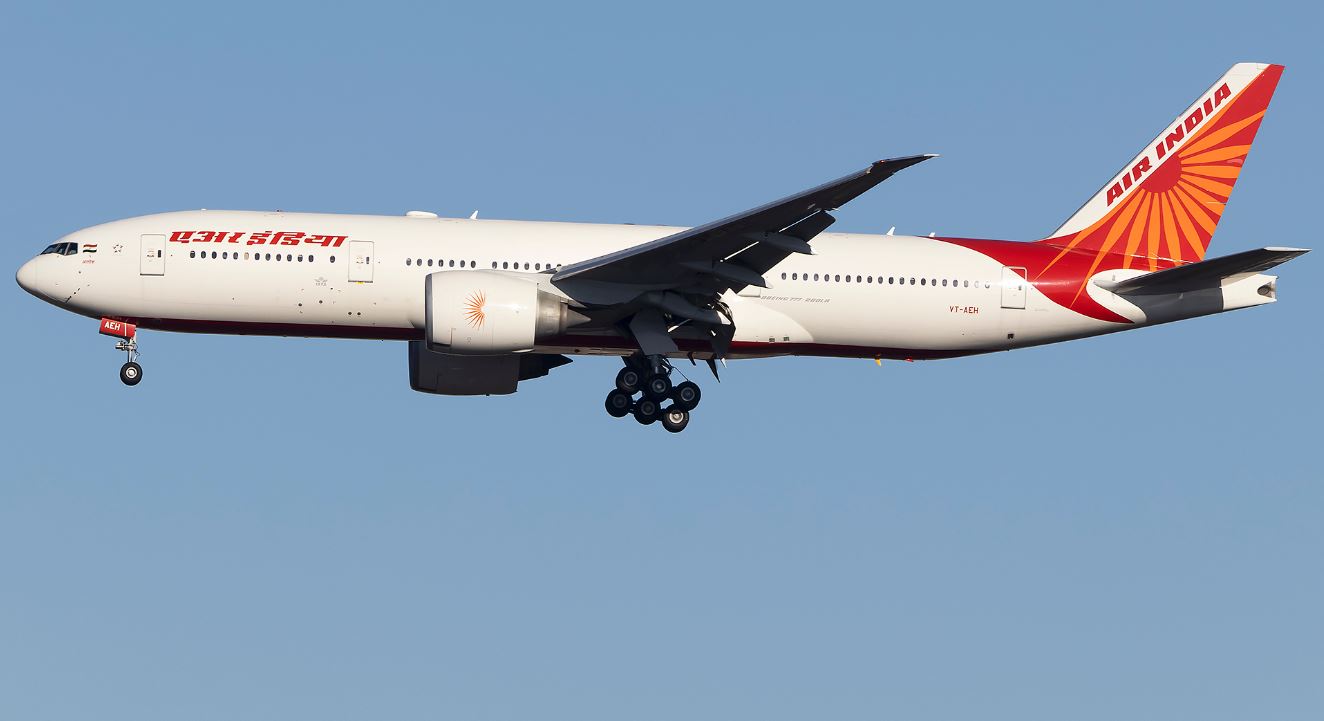 Seen here is one of the five affected aircraft. An Air India Boeing 777-232LR [registered VT-AEH. MSN 39091. Ex-registration N707DN] seen on approach to San Francisco: Photo Copyright Reuters Furthermore, the captain claims he doesn’t think the DGCA has acted fairly, and a proper investigation has not been carried out because he believes a fine is not enough to deter the airline.
He said “considering the grave breaches of duty by Air India, I fear this will enable Air India to essentially go Scott free by paying a paltry amount of over US$132,000, even though the breaches are of a very serious nature and affect the public at large”. He does have a point. Whatever the actual circumstances that led to the sacking of the whistleblower pilot, there are still thornier questions for both the DGCA and Air India about their approach on handling this case. Analysts and experts have been asking for some time whether fines actually change human and corporate behaviour? This is true not just relevant for the aviation industry, but also in healthcare, railways, and any other customer-facing industry. Or is there something else that can be done to make us better human and corporate beings? “The DGCA should have held a full enquiry against Air India and ought to have called me as I would have brought on record the grave and serious issue and further mala fides of Air India in terminating my employment so as to hush up the matter,” the captain went on to say. On whether airlines should be penalised for safety failures, the whistleblower captain said “there is no point – the basic ethos of any airline is “safety first”. However, Air India has proven by this very example [of being fined] that they are putting “safety last”. Profits over safety has made Air India tie itself up in knots”.  Not bad for a 5-year old! Proud dad moment...as soon as she woke up, she drew exactly what she saw in her dream! Only took her around 15 minutes to draw this and using cotton buds and a bunch of paints. Natural talent right there!

India's national flag carrier airline, Air India, which is owned by Air India Limited, a Tata Group enterprise, was once known for its lavishly decorated planes and stellar service but its reputation declined in the mid-2000s as financial troubles mounted. When the debt-ridden airline was officially bought by the Tata Group in October 2021, and officially handed over in January 2022, the airline was saved from almost bankruptcy.
The Tatas paid nearly US$2.4bn after the government made the terms of the debt less onerous for the buyer. The salt-to-steel conglomerate founded the airline in 1932 before it was taken over by the government in 1953. The handover brought to an end a years-long attempt to sell Air India, which has racked up losses worth over $9.5bn. Under its new owners, the airline is looking to restore its reputation at home and abroad as a world-class carrier with a complete transformation of the brand, and the announcement of 500 aircraft orders to revamp the brand, including unveiling a new logo. Inconsistent Service Standards
However, it has come to my attention from various credible sources within the airline that Air India continues to suffer from legacy inconsistent service standards, low aircraft utilisation, dismal on-time performance, antiquated productivity norms, lack of revenue generation skills, and most importantly, a failure of international safety standards. Some may argue [though not proven] that there is still the sense of unsatisfactory public perception.
Even at the beginning of this new year, there have been a few viral videos or posts on social media criticising the lack of quality of service. Shreyti Garg, a content creator, recently shared her not-so-great experience on an Air India flight from Delhi to Toronto on Instagram. She expressed her sheer disappointment regarding the in-flight facilities despite the expensive ticket prices totalling approximately over US$5,580 for herself and her two young children.
In another case in January 2024, a passenger on an Air India flight slammed the airline after it served her non-vegetarian food, despite the packaging being labelled as meat-free. Taking to X, formerly known as Twitter, Veera Jain shared images of the in-flight meal she was provided on-board the Calicut-Mumbai flight. "On my Air India flight AI582, I was served a vegetarian meal with chicken pieces in it! I boarded the flight from Calicut airport. This was a flight that was supposed to take off at 18.40 but left the airport at 19.40," Ms. Jain wrote.
As is the case with quite a few legacy airlines, Air India is no stranger to having a history of outdated core platforms, leading to decades-old legacy systems. These systems fail to keep up with customers' needs for speed and advanced functionality, despite continuing to serve their purpose.
There would be high expectations from some that, if anything, the Tatas would bring in seamless systems and procedures and above all, world-class aviation safety procedures, which is the pillar on which every airline is built on. With the Tata takeover, it is understandable that things will not improve overnight and it is a challenging task for any global airline, especially with a lot of moving parts globally. With the takeover, Tata inherited multiple aircraft which were grounded due to a lack of maintenance resulting from financial issues. Even though Tata started to inject a lot of money to get aircraft operational [in the region of almost US$400 million to completely refurbish the interiors of its legacy fleet of 43 aircraft]; however, there were, and still are, a lot of supply chain issues related to poor quality seats and In-Flight Entertainment [IFE], which will take time to resolve. However, some veteran staff members in the airline, namely airline pilots, have confidentially expressed concern to me that contrary to popular belief, instead of things steadily improving, they believe the airline is heading into a slow spiral of events that would lead it to go from bad to worse. This, according to these staff members, commences with flouting the much revered Tata Code of Conduct [TCOC]. According to a former veteran Air India Captain, who wishes to remain anonymous, "the contracts provided to all Air India staff members after the Tata takeover have been draconian to say the least and in complete violation of their own TCOC guidelines". Safety has taken a back seat since their training facility was suspended for a while, along with the Air Safety Chief by India's Directorate General of Civil Aviation [DGCA] following major lapses. It is important to note that the DGCA is not an independent body but is a statutory body of the Government of India [GoI] that helps to regulate civil aviation in India. Both the DGCA and the Airports Authority of India [AAI] are subordinate to the ministry. The only difference is that the AAI is an independent authority with its own finances and its chairperson and executive directors are appointed by the Public Enterprises Selection Board [PESB]. DGCA, is, unfortunately, an attached office of the ministry of Civil Aviation with very little financial and non-financial powers. Safety Compromised
Thereafter, systemic, and procedural lapses have been quite frequent in the mainstream news. The latest happening in January 2024 of a hard landing incident involving an Air India Airbus A320neo aircraft registered VT-CIQ in Dubai. This was by a captain who was supposedly stood down by an instructor earlier. Thankfully, the aircraft structure held on despite this abuse otherwise hard landings can be highly risky and can damage the aircraft structure and injure passengers. In this case, the instructor was fired for gross negligence.
A particular issue that has come to my attention is of a whistleblower pilot, who cannot be named for legal reasons, and who was fired for reporting a serious safety matter to the airline leadership that he believes is endangering of passengers and crew lives on a daily basis. According to an article in the Economic Times in November 2023, "The Indian civil aviation ministry and the DGCA will look into a complaint filed against Air India by a former senior pilot alleging that the airline operated Boeing 777 planes to the US without having the required system of emergency oxygen supply, according to sources. The pilot, who had served as a Boeing 777 commander, complained about the practice to the ministry and the DGCA on October 29." If the whistleblower pilot is correct, then it is quite concerning that the DGCA hasn't done anything since November 2023 and are basically sitting on a strong piece of evidence. According to information from Air India sources, the chief flight operations inspector of the DGCA has a conflict of interest in this investigation since his spouse flies the same aircraft as a captain in Air India. The Economic Times article further states that an Air India spokesperson says, "The matter in question is multi-dimensional and has already been examined by Air India and external experts." 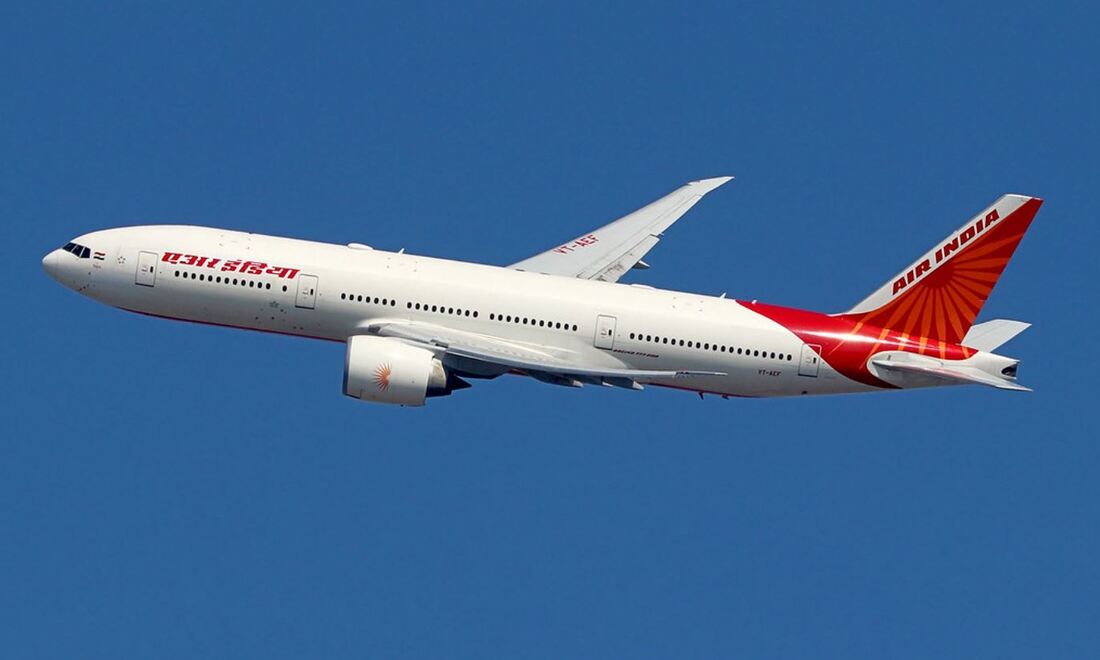
A Boeing 777-200LR aircraft belonging to Air India. The aircraft shown here [registered VT-AEF and named Vehaan] is leased from Delta Air Lines and is affected by the safety issues: Photo Copyright Mark Kwiatkowski
Whistleblower Illegally Fired
As far as I am aware, Air India have refused to comment any further and said their foremost priority is the safety of the airline's passengers and crew, and there is no compromise on that safety. If that is the case, then why have they fired the experienced pilot? What have they got to hide if the facts are there? You would assume that if someone within a company has reported an error or some issue to their superiors, that they would be highly praised for that rather than being made an outcast and punished for challenging unsafe procedures. That too, without a proper enquiry.
Instead of discussing and correcting the safety issue they chose to cover it up and terminate the services of the pilot. In a novel I once read, one character says to another "...if you get on the wrong side of senior officers, they take it out of you in other ways." He was referring to the army, but I guess it is true anywhere, sadly. Deployed with Newly Leased Boeing 777-200LR Aircraft
It seems, going by what quite a lot of aviation experts have said, and the amount of data I have at hand - including aircraft manuals I have seen - that every aircraft has a certification for its supplementary passenger oxygen systems. Every aircraft has oxygen systems designed to provide oxygen to overhead masks in the event of cabin depressurization. For the Boeing 777-200LR aircraft, oxygen can be supplied for approximately 12 minutes, per passenger, as it is chemically generated. During the descent process, due to the depressurization event, the aircraft must descend to 10,000 feet within this 12-minute period. At this altitude, the ambient environment becomes acceptable under those given conditions just for survival.
Nevertheless, when aircraft are normally flying at their cruise altitudes over vast stretches of mountainous terrain, which are usually above 8,000 feet in elevation, they need to commence their descent to 10,000 feet as soon as the depressurization event occurs. However, they can descend to an altitude of 10,000 feet or below once they have passed beyond the mountainous terrain and reach areas of obstacles with elevation of 8,000 feet or below. Therefore, for certain routes, more than 12 minutes of oxygen is required to be supplied to the passengers and crew to clear the mountainous terrain. 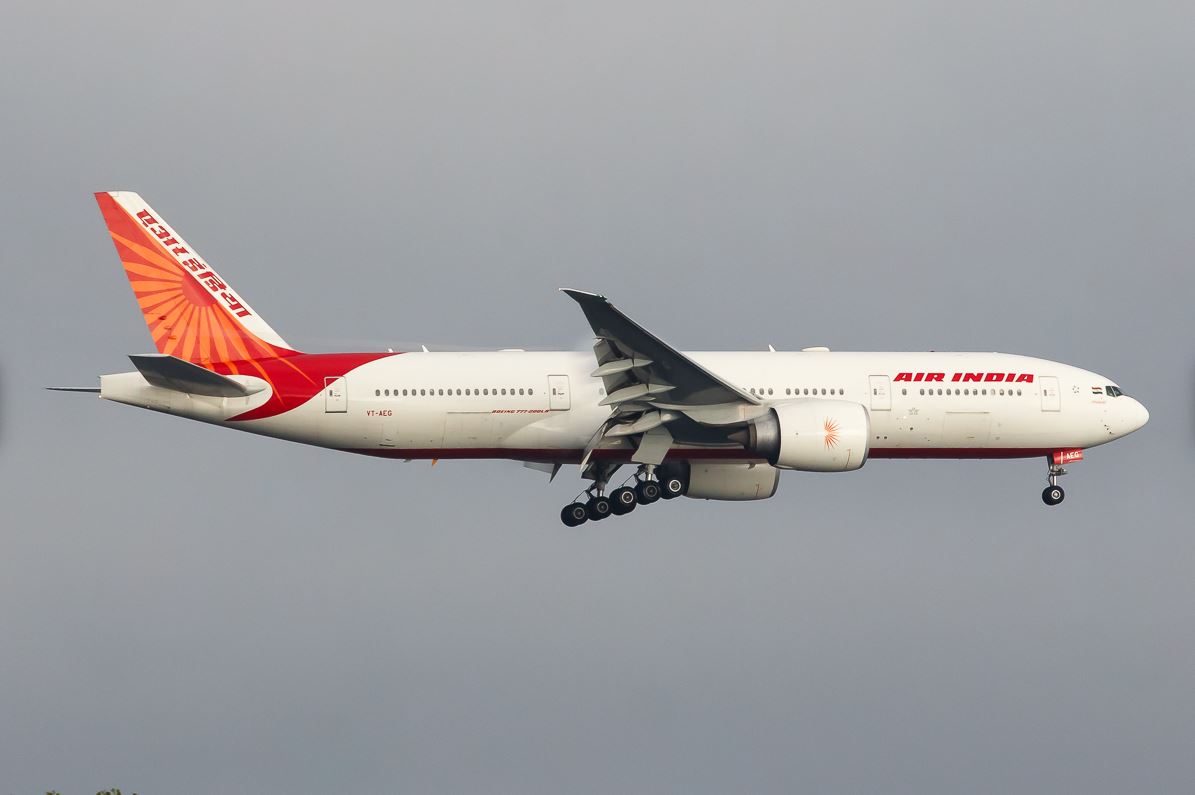
A Boeing 777-200LR aircraft belonging to Air India, leased from Delta Air Lines, seen landing at London Heathrow Airport's runway 27R [ex registration N706DN].
The airline's older Boeing 777 aircraft are equipped with an oxygen system, which is of a gaseous type to supply the passengers, and these aircraft are routinely deployed on routes to Europe and most routes to the US. However, the concern is that more recently, Air India has introduced additional Boeing 777-200LR aircraft, leased from Delta Air Lines, that are equipped with chemically generated oxygen systems which last approximately 12 minutes and these are not suitable for certain segments of the routes regularly flown between India and San Francisco [SFO]. Five Boeing 777-200LR aircraft were leased by Air India, and the registrations of these affected aircraft are:
VT-AEG [Named Kerala. Shown in the image above. MSN 30440. Ex reg N706DN] VT-AEE [MSN 29739. Ex. reg N704DK] VT-AEF [Named Jharkhand. MSN 29741. Ex reg N702DN] VT-AEH [Named Alok. MSN 39091. Ex reg N707DN] VT-AEI [Named Uday. MSN 39254. Ex reg N708DN] These five aircraft have been flying for well over a year and are still flying on routes which legally require more stored breathing oxygen supply. Since the whistleblower pilot has been illegally terminated and a precedent has been set therefore the learned captains are knowingly piloting these flights on the India-SFO routes which turn into 'flying coffins' on certain segments, all because of the fear of getting terminated. The Law of the Land
Besides this, it breaks the law of the land, as per the DGCA's CIVIL AVIATION REQUIREMENTS, SECTION 8 -, SERIES'O', PART II, dated 30.10.2018, each time one of those leased Boeing 777-200LR aircraft takes flight between India and SFO. I wouldn't want to hear of a plane landing with more than 350 dead passengers from the lack of oxygen.
According to the above mentioned DGCA Civil Aviation Requirement [CAR], on paragraph 4.3.9.2 it clearly states [I quote]: "A flight to be operated with a pressurised aeroplane shall not be commenced unless a sufficient quantity of stored breathing oxygen is carried to supply all the crew members and passengers as is appropriate to the circumstances of the flight being undertaken, in the event of loss of pressurisation, for any period that the atmospheric pressure in any compartment occupied by them would be less than 700hPa." The law of the land clearly necessitates that in case of a depressurization event while the aircraft is descending to 10,000 feet, as per the procedure prescribed in the manuals and standard operating procedure, there should be enough stored breathing oxygen. This should be continuously supplied to all passengers and crew members until the aircraft reaches an altitude of 10,000 feet, which corresponds to pressure level of 700hpa in the International Standard Atmosphere [ISA]. Danger of Hypoxia
This is a very serious matter because if the aircraft experiences a rapid depressurisation over mountainous terrain, then passengers will instantly get into a state of hypoxia, once the 12 minutes supply of oxygen depletes before the aircraft can reach 10,000 feet above sea level. The caution by the whistleblower pilot if ignored endangers the life of approximately 350 passengers and the crew in the cabin of the aircraft on a daily basis.
We should never see a situation where safety is compromised, and profits are seen as priority because that can have catastrophic consequences. Air India, an airline that is desperately trying its best to reimagine and transform its image globally to become a truly world-class airline that can rival the likes of Emirates, Qatar, Singapore Airlines etc. should take note of this quite seriously. Surely any leader of an airline should not be resting on their laurels, knowing that there are flights operating at this very moment which lack vital safety equipment for passengers and are violating the privileges of the license given by the government known as Air Operators Certificate on a daily basis just to improve their company's profits. Therefore, it would be one of the worst disasters waiting to happen in aviation history. In a developed country, with good democratic practices supported by pilots' unions this would have resulted in the grounding of the aircraft fleet or a change of the routes rather than shooting the messenger who should have been rewarded for bringing out a safety lapse. With the exponential growth Indian aviation is slated to record in this decade, I hope better sense prevails with the aviation authorities and the airline. Another example we have seen recently is on January 11 when an Air Cote d'Ivoire flight turned around just minutes after leaving the Gambian capital Banjul. The Gambia football team travelling to Ivory Coast for the upcoming 2023 Africa Cup of Nations "could have died" during a flight that was aborted, claimed coach Tom Saintfiet. Saintfiet believes there was a lack of oxygen, saying conditions prompted many of the delegation to fall asleep. The coach praised quick thinking by the pilot for keeping his team safe. Saintfiet told BBC Sport Africa: "The local crew said there was a problem with the air conditioning before we took off but that it would be all fine when we took off. After a few minutes, it was very hot in the plane. We all fell asleep because there was a lack of oxygen - some of the players couldn't be woken up. The pilot noticed and we had to return." "People got headaches and if the flight had gone on for another 30 minutes, the whole team would have died. The strange thing is that the oxygen masks didn't come out - it's good that the pilot realised that this was a deadly situation and so turned back. But we are still in shock." This lack of oxygen can lead to fatalities in seconds. The airline's management will need to take quick decisions to rectify and make sure that such an incident does not occur on those long-haul flights operated by the Boeing 777. I shudder to think of a nation whose aviation industry is experiencing the fastest growth percentage in the world at 20% per year is playing with fire.  From diagnosis of brain tumor to death only 8 weeks [!]...so scary and so so sad. RIP Benjamin Zephaniah. Only 65. An absolute legend of the poetry circuit who influenced so many, including me during my student days. A firm believer in what was right, what was wrong and a leader on championing the rights of the oppressed. Thank you and good night  How long will this sofa last at this rate?! Jasper [2.5] enjoying his makeshift trampoline at home. Photo Copyright Navjot Singh  A very familiar sight for those of us who are fortunate enough to travel on a regular basis to Dubai. This is the view of the Atlantis Palm while in the holding pattern waiting to land. Quite spectacular and never fails to impress! Photo Copyright Navjot Singh  Holding to my son Jasper as tight as I can before my one week business trip to Saudi Arabia...he just thought I was going to get his favorite yoghurt! Photo Copyright Navjot Singh 2024  Today I was deeply saddened and pained to hear about the death of The Queen, Britain's longest-serving monarch, who away earlier this afternoon at the age of 96 after 70 years on the throne. Buckingham Palace said the Queen “died peacefully” this afternoon at Balmoral. The Queen's eldest son, Charles, who has now ascended the throne and will be known as King Charles III, paid tribute to his much-loved mother. Her Majesty Queen Elizabeth II will be remembered as a stalwart of our times. She provided inspiring leadership to her nation and people. The King and Camilla, now the Queen Consort, will remain at Balmoral on Thursday night and return to London on Friday. Buckingham Palace had confirmed on Thursday lunchtime that Queen Elizabeth II had been under medical supervision after her doctors had become "concerned" about her health. Tributes poured in following the death of the Queen earlier this afternoon on a dark, gloomy, and rainy day in the UK. Listening to the bulletins as rain pours down felt fitting. Feels as if even god is crying. She served the country so dutifully all the way to the end. My thoughts are with her family at this time. Her Majesty’s decades of dedication and service have been unwavering, and your legacy will live on. This is an end of a great era in global history, and I am not sure anyone can quite match the long service and dedication that she gave. Ma’am, thank you for everything. We will be forever indebted to you. 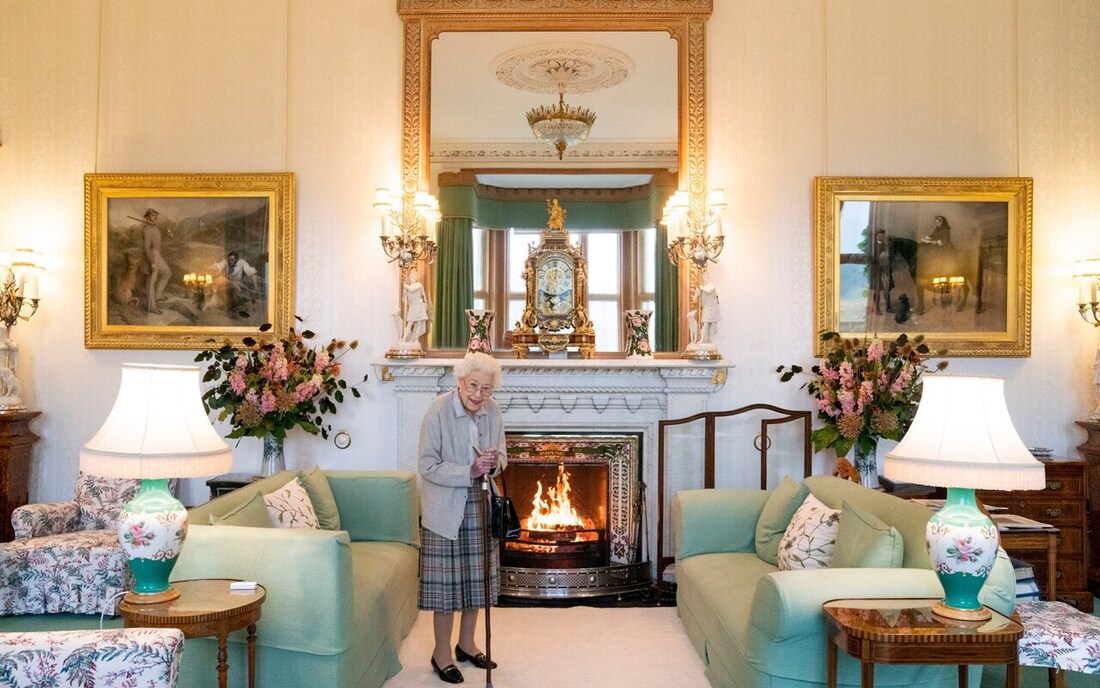 The last ever portrait of the Queen, at the place where she said she was never happier, her home Balmoral CREDIT: JANE BARLOW/PA 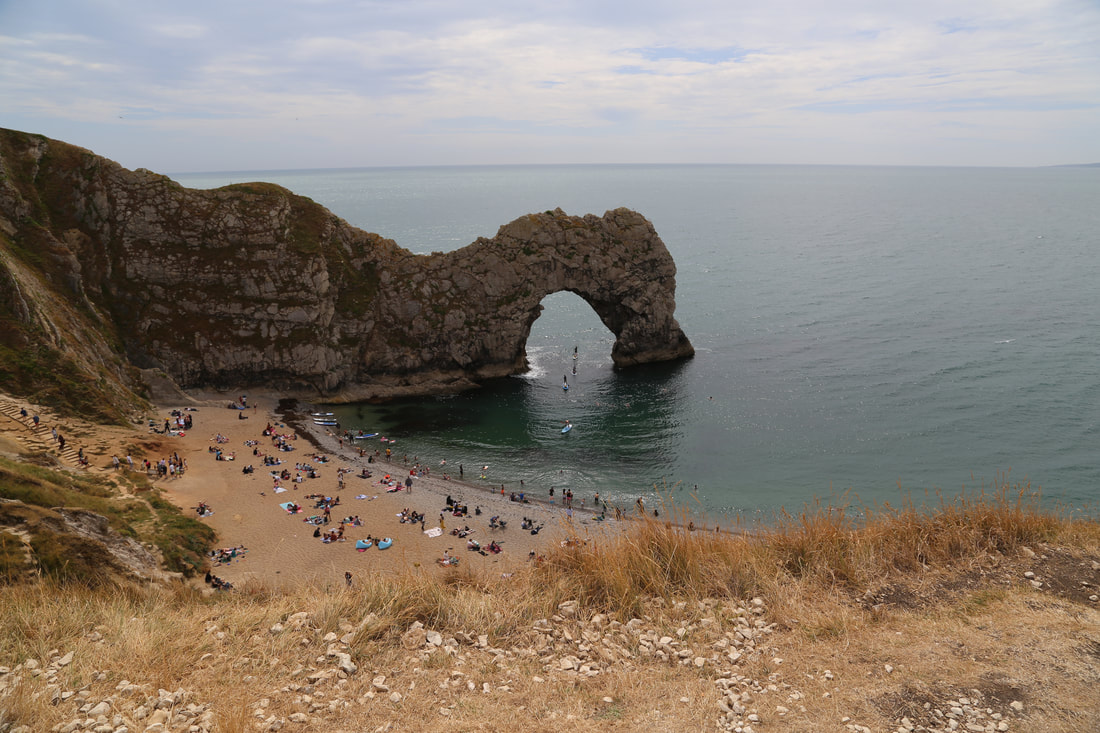 Durdle Door in Dorset: Photo Copyright Navjot Singh You need a holiday to recover from your holiday because holidays are exhausting. You may have just returned from somewhere really amazing, like we did from a week in Dorset, and with two young kids in tow (1 and 4), and where you had the best time. However, after a week or two of "What shall we eat?", "Whatever you want", "Daddy, can I have this/that?", "Daddy/Mummy, I want to go back home...", "Meh, you need a holiday!".
When I was single, I used to get exhausted when travelling because of my annoying need to only have the most authentic experience, and to stay away from multi-national brands like KFC, Starbucks, MacDonald's etc. everywhere, and sometimes, sadly it never comes true because the world has become too small, connected, congested, and globalized. Now, as a father to two adorable yet very demanding and attention-seeking toddlers, as a parent it is natural for me and my wife to become exhausted just because of a lack of sleep and because of the "always-on" mode with kids. But one thing is for sure, when I travel, with my family on holidays or even on business, I want to know that I have experienced the same food and lifestyle as the locals, and not the over-priced and under-valued rubbish they serve tourists. The internet has no doubt made holidays even more exhausting because it is somewhat full of great insider tips that will lead me to the best local food. Nevertheless when I get to the restaurant, I discover it's the usual tourist rubbish and then I wonder why I even trusted any celeb or influencer to know anything about the destination. Don't trust them, I say. Go and get lost in the place and discover the undiscovered yourself, I say. Occasionally, I do stumble onto the authentic experience like I did on my trips to Nepal or Malta for example. Generally if you are looking for an authentic and genuine food experience then, as most Brits know, a long queue or a large crowd is often a good sign. In the UK you can find two identical restaurants right next to each other where one is packed and the other is more or less empty, and nobody really knows why but the vide is different between the two. 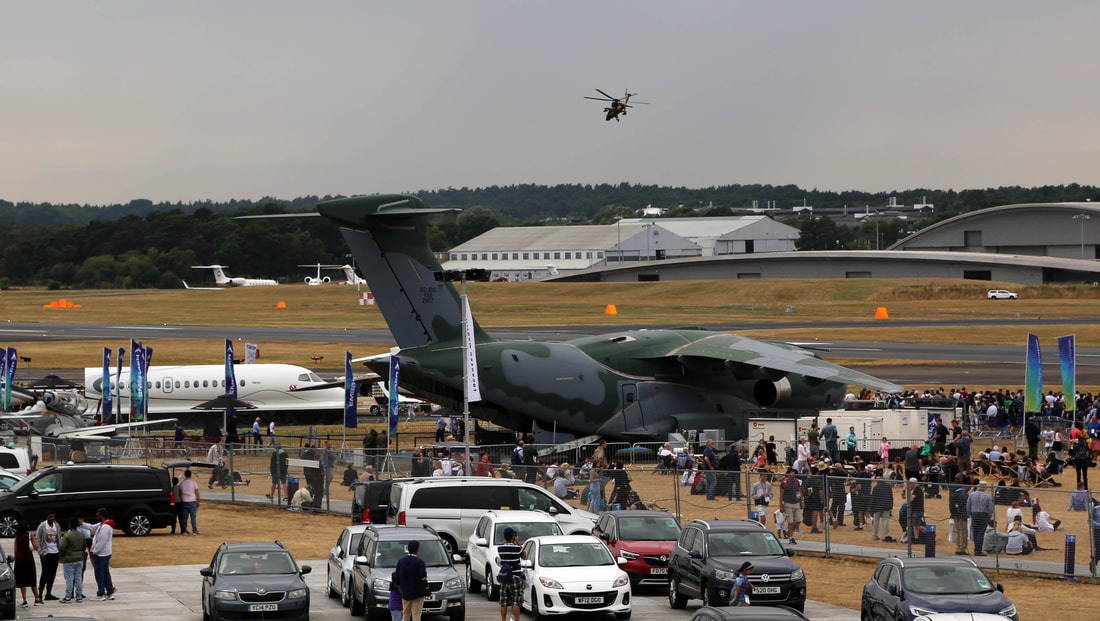
Farnborough Airshow 2022: Photo Copyright Navjot Singh
The air show was delayed for two years during the pandemic
This week saw the welcome return of the Farnborough Air Show. Running from 18-22 July, visitors were treated to displays, press releases, panel roundtables, exhibitions from the aviation industry, including aerospace, defense. Issues such as Environmental, Governance and Sustainability (ESG) were high on the agenda, with aircraft manufacturers and airlines promising smarter technology, cleaner fuel, and greener business. This means more room for highly fuel efficient and quieter aircraft, and hopefully less expensive to operate.
As an example, Airbus and CFM International are collaborating to flight test CFM’s cutting-edge open fan engine architecture on board an Airbus A380. The Flight Test Demonstrator is aimed to mature and accelerate the development of advanced propulsion technologies, as part of CFM’s Revolutionary Innovation for Sustainable Engine (RISE) demonstration programme. “New propulsion technologies will play an important role in achieving aviation’s net-zero objectives, along with new aircraft designs and sustainable energy sources,” said Sabine Klauke, Airbus Chief Technical Officer. British Prime Minister Boris Johnson, astronaut Tim Peake, and British Transport Secretary Grant Shapps visited the show in the first two days. The Prime Minister met some of the 1,500 exhibitors at one of the world’s biggest aerospace and defense trade shows. In a speech, Mr Johnson said: "I’m glad that I finally made it to Farnborough, this famous air show, in the climactic weeks of my time as Prime Minister." The photos in this blog were taken over the five days, in a period in which we experienced the hottest day ever in the history of records in the UK (40.2C) on Tuesday July 19, followed by the obligatory rain showers. Hence why you seen a blue sky in some photos and a dark grey in others. 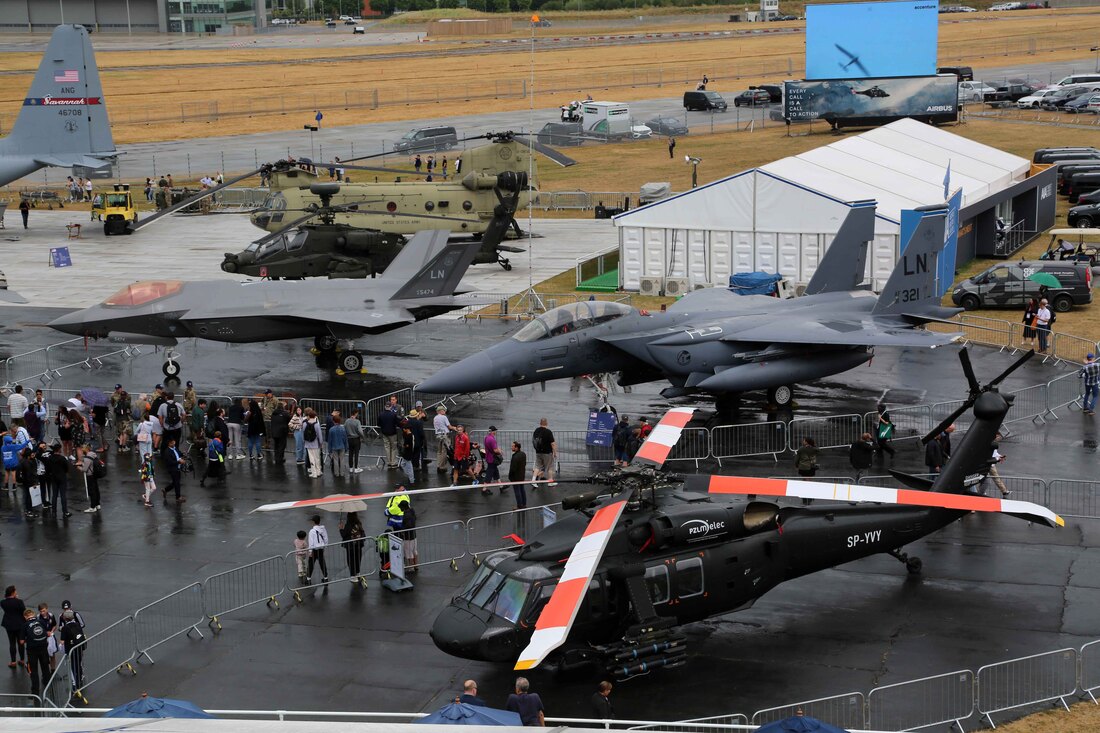
Farnborough Airshow 2022: Photo Copyright Navjot Singh
Were there many orders?
With this being the first show in four years (and with a delay due to the Pandemic), it seemed and came across as a quieter affair compared to previous shows. There wasn't the much anticipated fanfare that happened in previous years. But one thing was clear: Boeing seemed to do quite well in terms of orders. Though Airbus, meanwhile, managed to conduct just two sales on the premises of the airshow, one for the A220 and one for the A321neo. However, it had secured a big win just ahead of Farnborough, with China’s top three carriers ordering almost 300 A320 family aircraft on 1 July, 2022. This chart from AeroTime shows a breakdown of the orders made in this year's show, and Boeing has certainly made more orders in 2022:
The Boeing 737 MAX 10
The largest of the 737 MAX family, the Boeing 737 MAX 10, made its international debut at the Farnborough International Airshow 2022. During the show, the aircraft ran on a blend of sustainable aviation fuel. Before the show, Boeing had already received more than 3,300 net orders for 737 MAX narrow bodies, and kicked off the Farnborough Airshow with firm order signings with Delta Air Lines, Inc. for at least 100 Boeing 737 MAX 10 jets and with All Nippon Airways parent ANA Holdings for twenty 737 MAX 8s, along with two Boeing 777-8F cargo variants.
Also, Qatar Airways made official an order for 25 Boeing 737 MAX 10 aircraft, with options for a further 25 of the type. "We are honored that Qatar Airways has decided to add Boeing’s single-aisle family to its fleet, deepening our relationship with this world-class airline," said Stan Deal, President and CEO of Boeing Commercial Airplanes. "The 737 MAX 10 is ideally suited for Qatar Airways’ regional network and will provide the carrier with the most capable, most fuel-efficient airplane in its class," he added. The order, worth $3.4 billion at list prices, capped a largely one-sided show dominated by Boeing's efforts to shore up the MAX 10, whose future lies partly in the hands of regulators and Congress. Qatar Airways displayed its Boeing 777-300ER (FIFA World Cup 2022 Livery), 787-9 Dreamliner and Qatar Executive Gulfstream at the airshow. 
The Boeing 737 MAX 10 at Farnborough. The B737 MAX 10 incorporates the latest technology CFM International LEAP-1B engines, Advanced Technology winglets, Boeing Sky Interior, large flight deck displays, and other improvements to deliver the highest efficiency. Photo Copyright Navjot Singh
Stanley A Deal, Executive Vice President, President and Chief Executive Officer at Boeing Commercial Airplanes with Akbar Al Baker, Group CEO of Qatar Airways and Secretary-General of Qatar Tourism at the Farnborough Airshow: Photo Copyright Boeing Company
The Boeing 737 MAX 10 at Farnborough. Photo Copyright Navjot Singh
The Boeing 737 MAX 10 winglet is the most efficient winglet on any airplane: Photo Copyright Navjot Singh
The Boeing 737 MAX 10 leaves Farnborough after the show back to Seattle via Reykjavik. The 737 MAX 10 will continue test flights and obtain its type certificate before it can begin scheduled operations. The delay, caused by the problems of the 737 MAX 8 and the extended scrutiny of the U.S. Federal Aviation Administration (FAA), is a major stumbling block in its commercialization. Photo Copyright Navjot Singh
The Boeing 777X
One of the highlights of 2022’s edition of the show was the huge Boeing 777X, the world’s largest and most efficient twin-engine jet, which the manufacturer showed off in both static and flying displays. With new breakthroughs in aerodynamics and engines, the 777X will deliver 10 percent lower fuel use and emissions and 10 percent lower operating costs than the competition. The 777X is based on the original 777, but is much larger, more powerful, and is ready to serve the next generation of long-haul air travel, and generally passengers prefer large aircraft, and this will not disappoint!
Even though the 777X has been delayed by over five years, we are in this interesting period where the airlines that were affected by the delay have almost got over that part now. The COVID-19 Pandemic, if anything, has helped that cause. With any new aircraft, airlines are usually cautious. It is going to be great for the passengers and great for the airlines, too! 
With the wingtips extended, the 777X has a wingspan of 71.75 meters (235 feet and 5 inches). On the ground and when the wingtips are folded, the aircraft has a wingspan of 64.82m (212’ 8”): Photo Copyright Navjot Singh
So far 8 customers have confirmed orders for the Boeing 777X: Photo Copyright Navjot Singh
The Boeing 777X during a display at the Farnborough 2022 Airshow: Photo Copyright Navjot Singh
Warm champagne anyone?
The show also saw the introduction of some interesting features that we may see. Thanks to the team at Turningleftforless for taking this video of a "Champagne on Demand" as demonstrated by Adient collaborating with Boeing to explore improved comfort, functionality of commercial aircraft seating and interiors. My mate, James Nixon (ex- A380 captain), queried "Why does any airline exec think passengers want to drink warm champagne?".
Airbus A350-900 XWB and the Airbus A220-300
Airbus brought its A350 test aircraft for display flights throughout the show. Also, Airbus showcased an ITA Airways A350-900 and an Air Baltic A220-300 aircraft on the ground.

Airbus A350-900 XWB displaying at Farnborough: Photo Copyright Navjot Singh
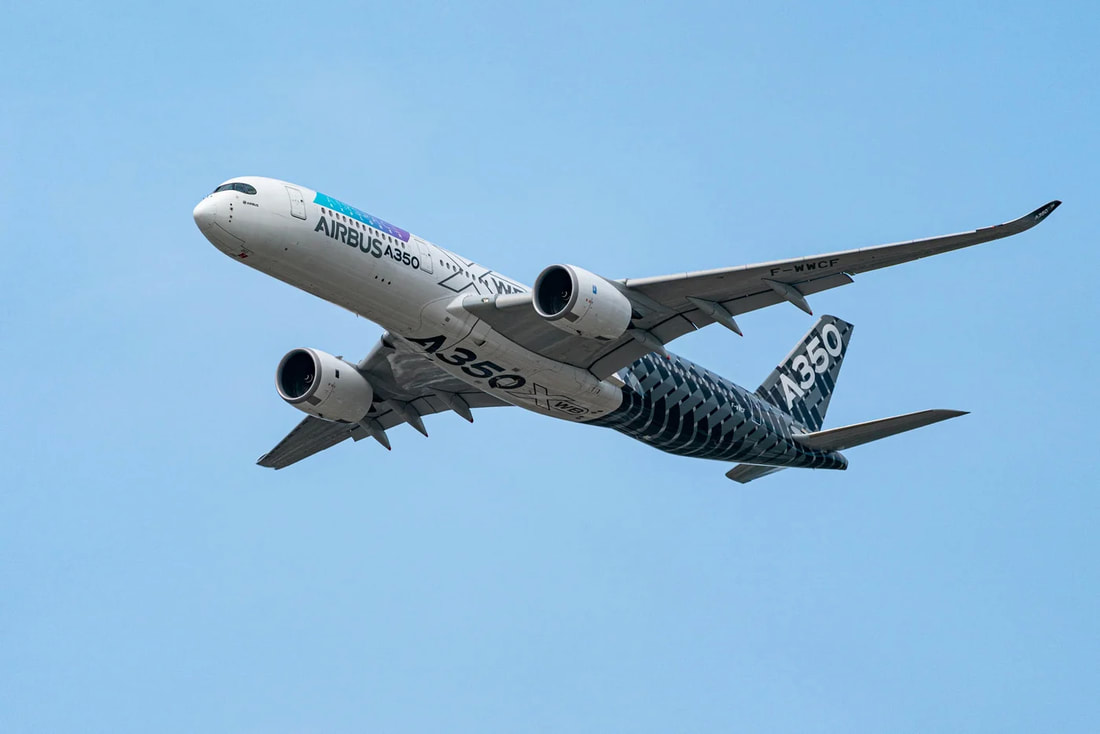
Airbus A350-900 XWB displaying at Farnborough: Photo Copyright Navjot Singh

Airbus A350-900 XWB displaying at Farnborough: Photo Copyright Navjot Singh
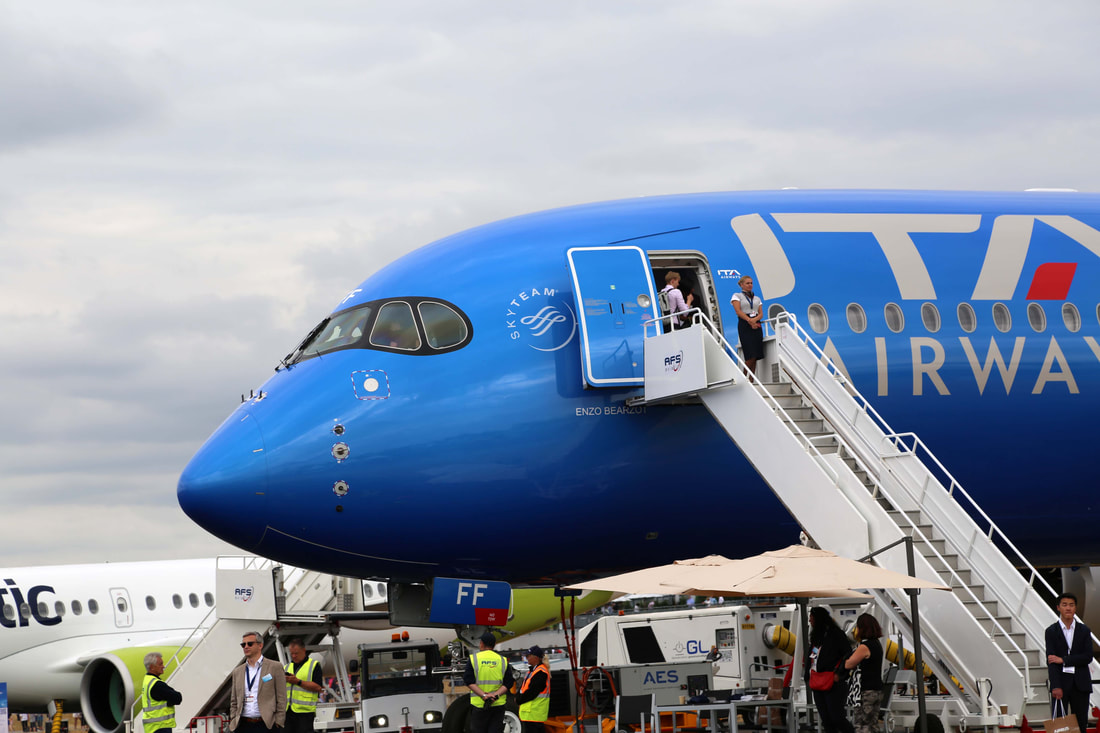
Italy's ITA Airways showcased their brand new Airbus A350-900 XWB, registered EI-IFF: Photo Copyright Navjot Singh
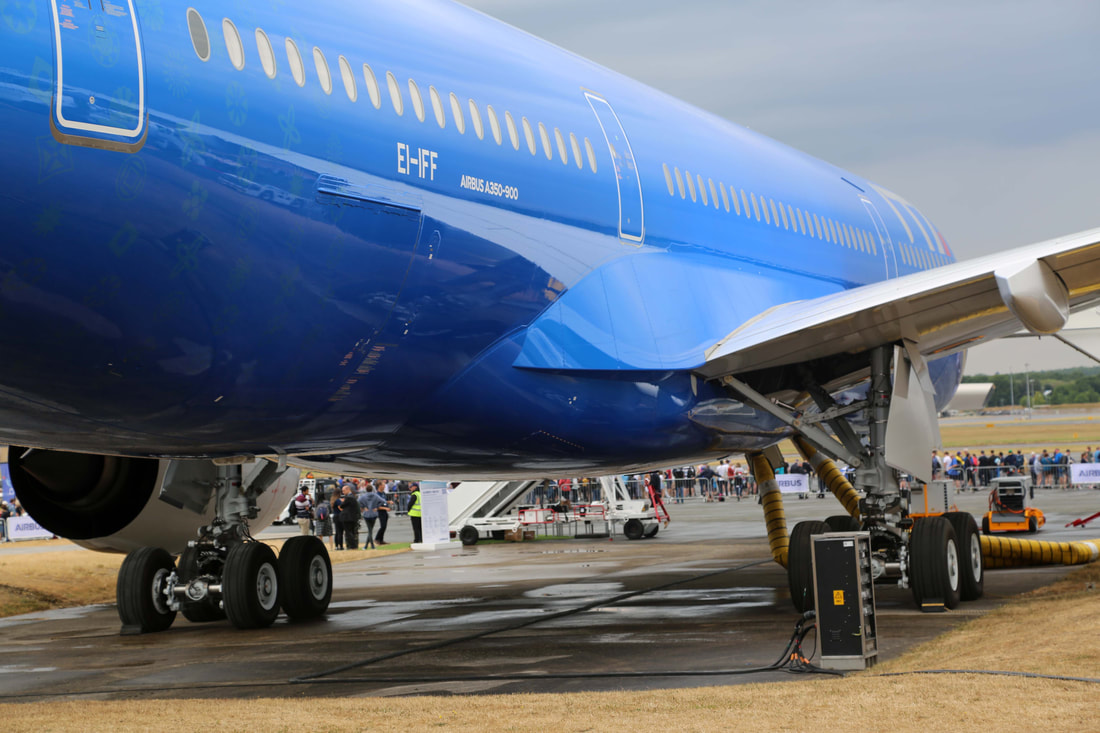
Italy's ITA Airways showcased their brand new Airbus A350-900 XWB, registered EI-IFF: Photo Copyright Navjot Singh
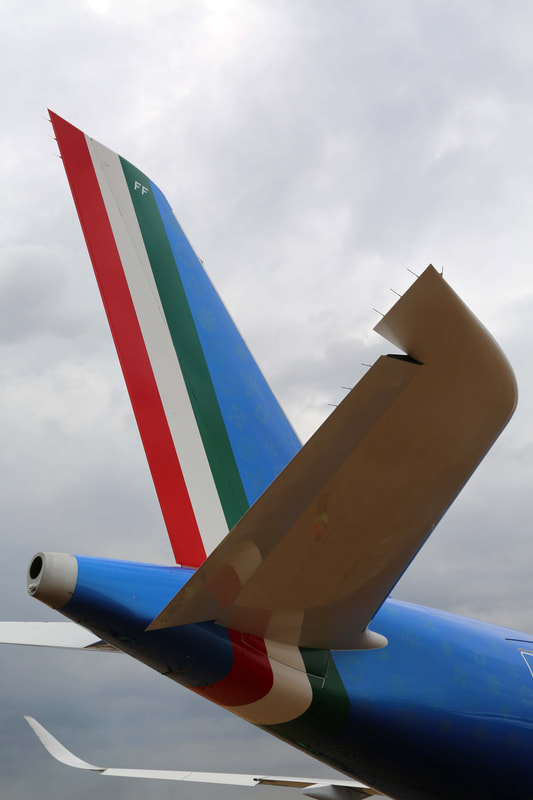
Italy's ITA Airways showcased their brand new Airbus A350-900 XWB, registered EI-IFF: Photo Copyright Navjot Singh
Italy's A350-900 and Air Baltic's A220: Photo Copyright Navjot Singh
The APU of Italy's ITA Airways brand new Airbus A350-900 XWB, registered EI-IFF: Photo Copyright Navjot Singh
Italy's ITA Airways showcased their brand new Airbus A350-900 XWB, registered EI-IFF: Photo Copyright Navjot Singh
Air Baltic's A220. One of the biggest orders for the aircraft came from Delta Air Lines, Inc. Delta Air Lines firmed up orders for 12 A220-300 aircraft, bringing Delta’s total firm order for A220s to 107 aircraft – 45 A220-100s and 62 A220-300s. The A220s will be powered by Pratt & Whitney GTF™ engines. Photo Copyright Navjot Singh
New British Airline: Hans Airways
Start-up carrier Hans Airways moved a step closer to launching flights between the UK and India, with the lease of an A330-200 aircraft and the start of crew training. According to the CEO, Satnam S. Saini, the aircraft is weeks away from launch.
The airline plans to launch flights between Birmingham airport and Amritsar as a key destination using an ex-Air Europa A330 and with a two class configuration – economy (branded Anand Class) with 274 seats and a seat pitch of 31 inches, and premium economy (Anand Plus) with 24 seats and a seat pitch of 56 inches. Updating the media on progress Barry Humphries, CBE, Hans Airways’ board director and former head of air services policy at the UK Civil Aviation Authority, said: “With the loss of flights operated by India’s Jet Airways and British inclusive tour operators Thomas Cook and Monarch Airlines, there is room for a third UK airline flying between UK and India (complementing British Airways and Virgin Atlantic.) All of us are working exceptionally hard and on schedule to be that third UK designated carrier.” Supernal's eVTOL vehicle cabin
Supernal's eVTOL vehicle cabin concept was on display at the Farnborough International Airshow, and provided the first look at how Hyundai Motor Group (the Group) is integrating automotive capabilities to develop the Advanced Air Mobility (AAM) market. Photo Copyright Navjot Singh
Black Eagles and the Boeing Stearman (Aerosuperbatics Wingwalkers)
South Korean Air Force's finest - the Black Eagles: Photo Copyright Navjot Singh
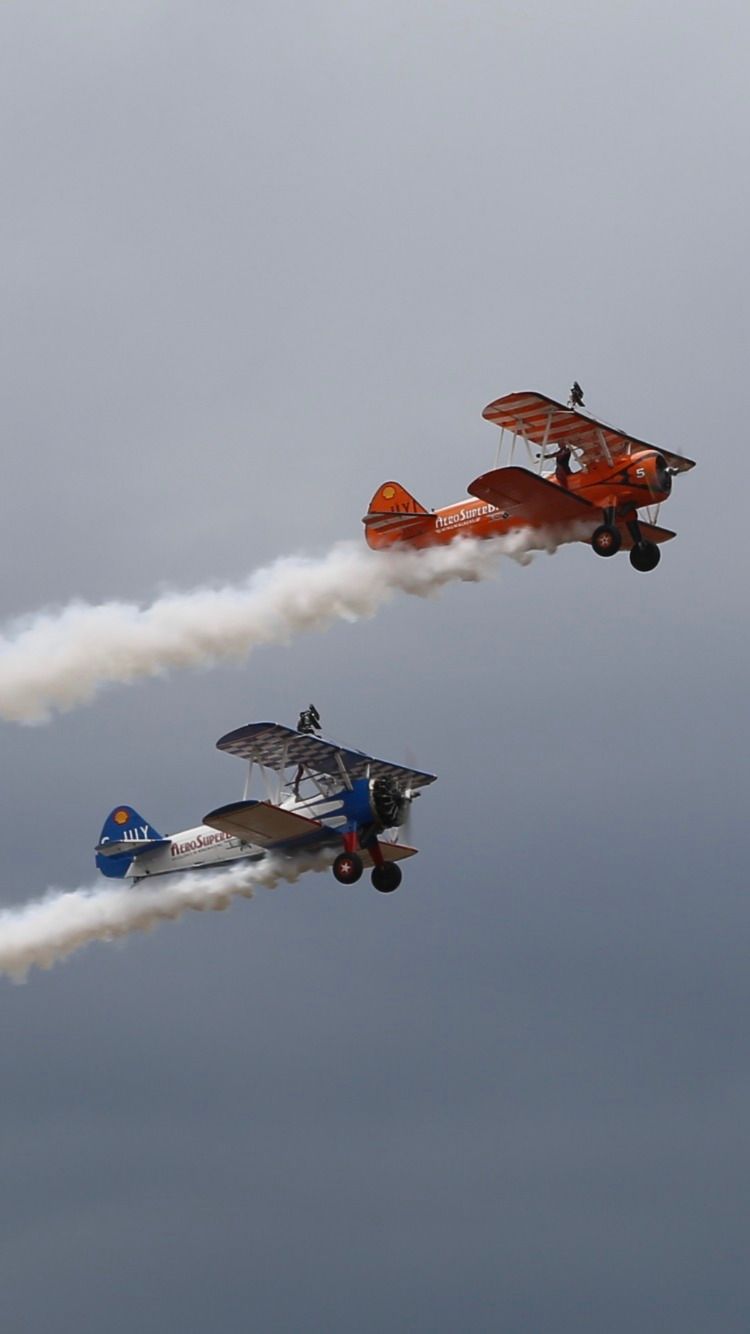
Boeing Stearman (Aerosuperbatics Wingwalkers): Photo Copyright Navjot Singh
Future is Boom?
Boom Supersonic announced the updated design of Overture with 4 engines. Carrying 65–80 passengers at twice the speed of today’s airliners, Overture will fly Mach 1.7 over water with a range of 4,250 nautical miles.
Boom further said that the new design is the culmination of 26 million core hours of simulated software designs, five wind tunnel tests, and the careful evaluation of 51 full design iterations resulting in an economically and environmentally sustainable supersonic airliner. Boom also announced a market-expanding alliance with Northrop Grumman to develop special mission variants for the U.S. Government and its allies. The question here is, will it better what Concorde achieved and will passengers pay for and enjoy the experience? United Airlines have already proudly stated that they plan to offer services on Boom. But will it be a success? We shall see. Maybe a debut at future Farnborough Airshows? 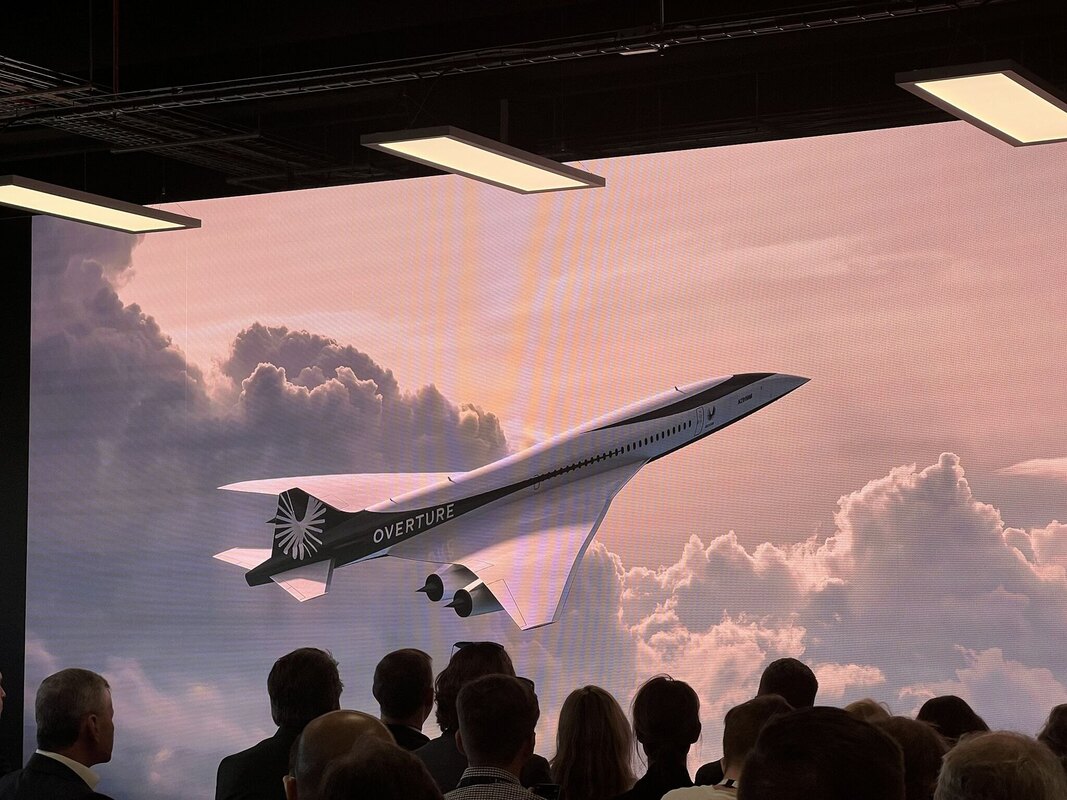
Boom Supersonic during a demo video at Farnborough: Photo Copyright Navjot Singh
Aircraft on display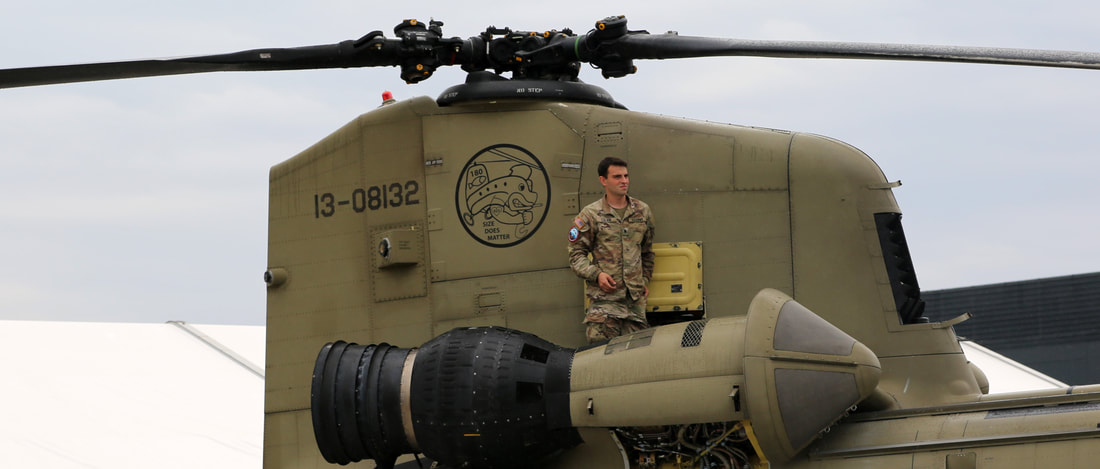
USAF CH-47 Chinook at the Farnborough Airshow 2022: Photo Copyright Navjot Singh
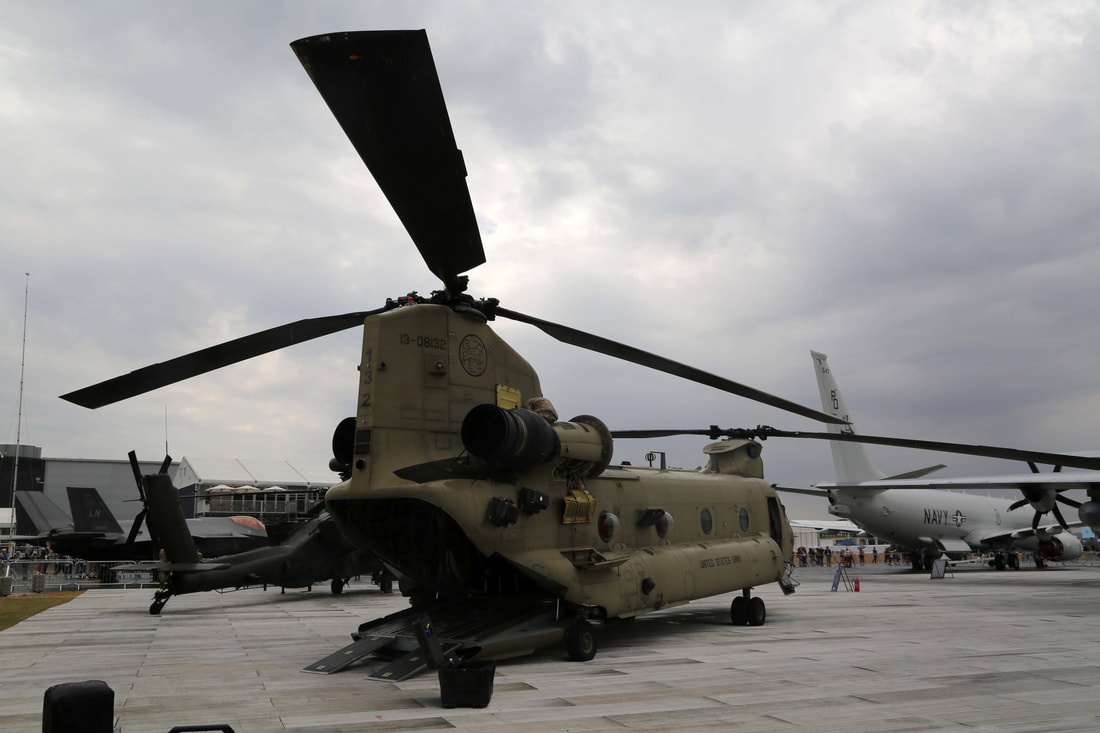
USAF CH-47 Chinook at the Farnborough Airshow 2022: Photo Copyright Navjot Singh
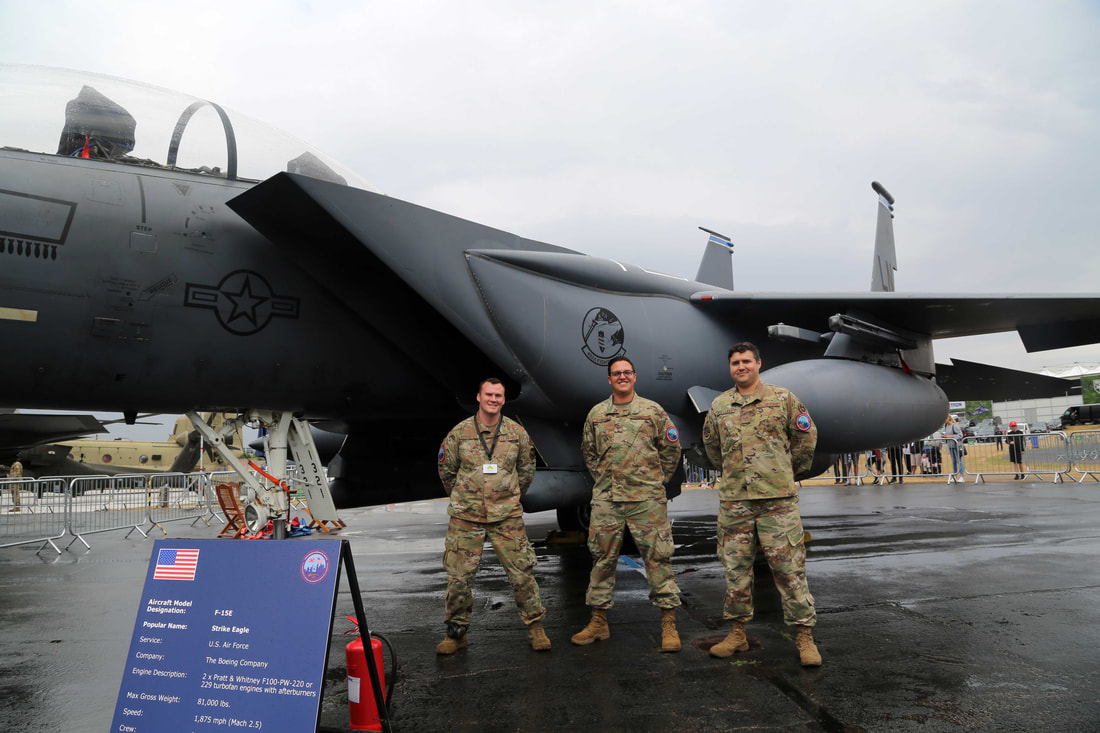
USAF's finest: Photo Copyright Navjot Singh
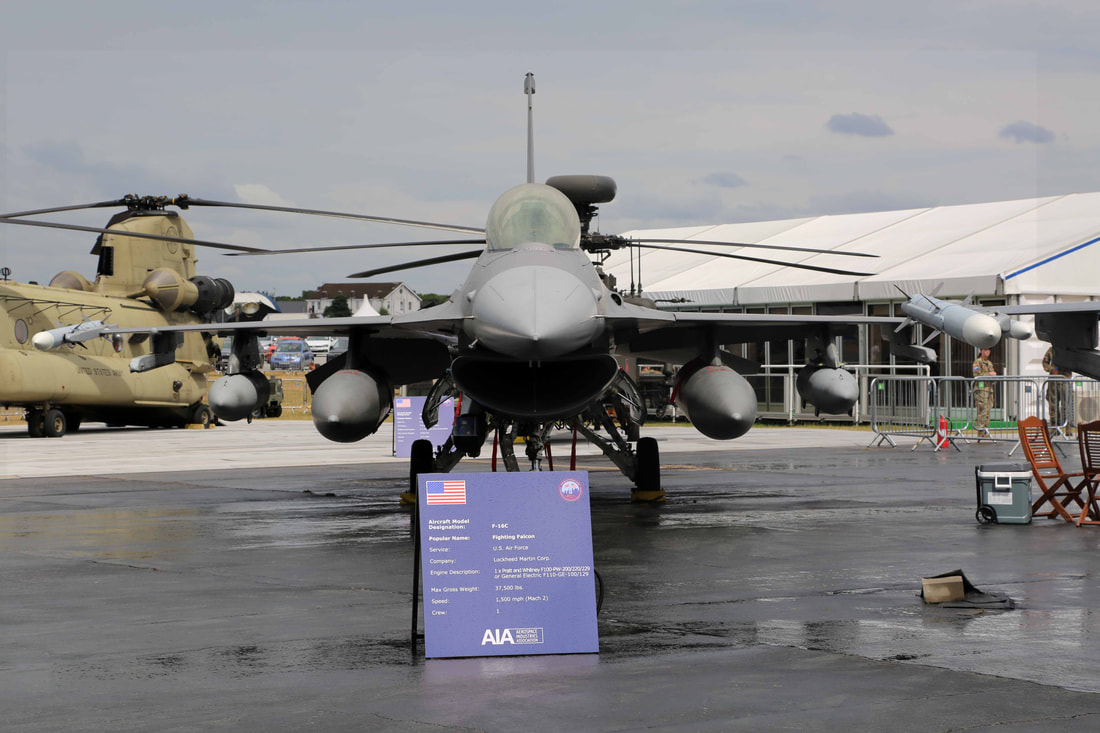
This view could easily be confused with a US military base: Photo Copyright Navjot Singh
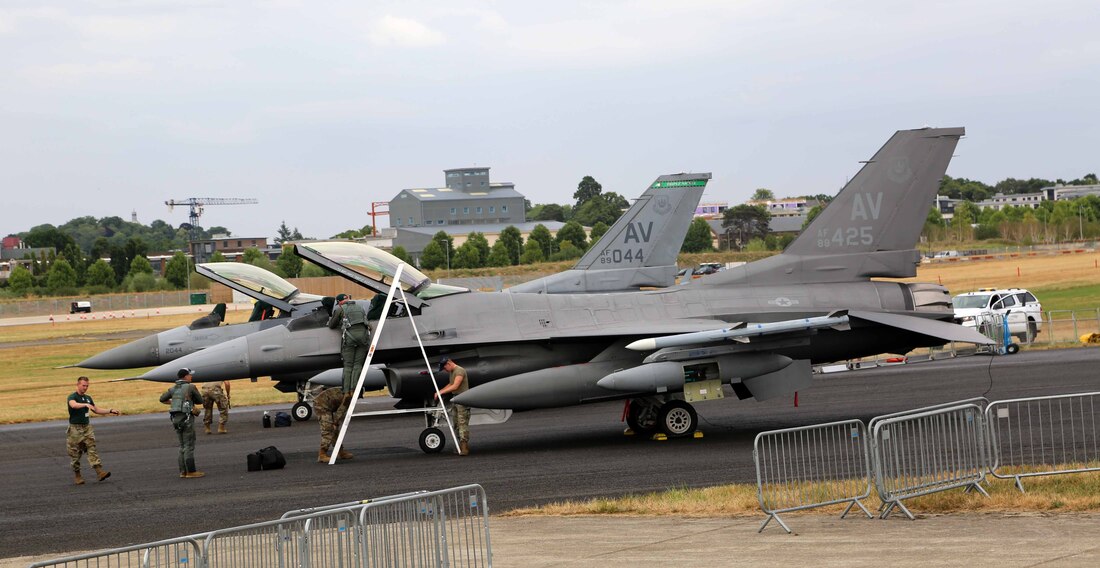
F-15E Strike Eagles: Photo Copyright Navjot Singh
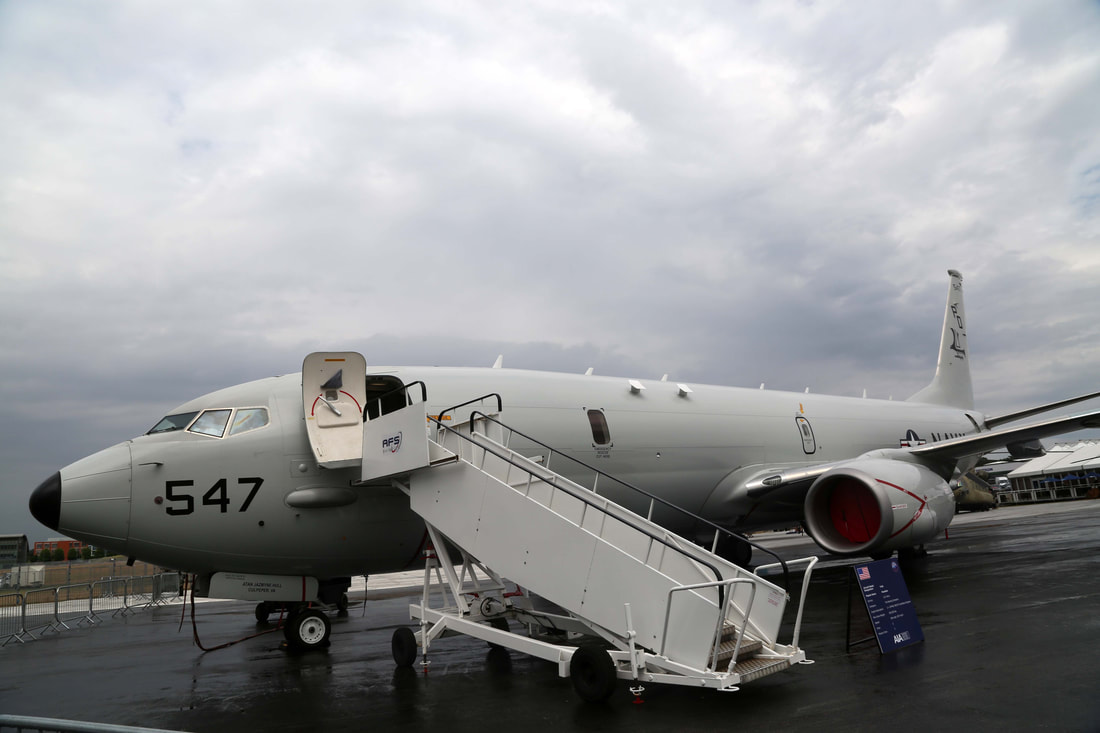
USAF P-5A - a 737 converted for military usage: Photo Copyright Navjot Singh
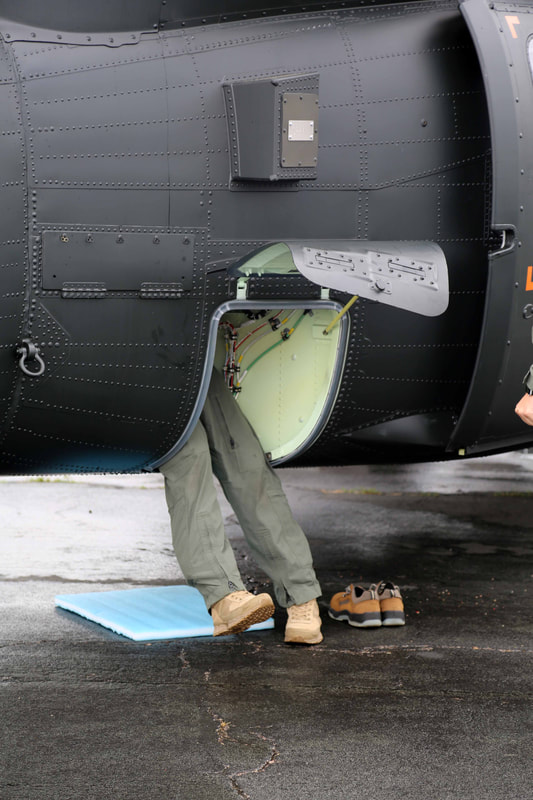
Stuck inside the S-70M Black Hawk!: Photo Copyright Navjot Singh
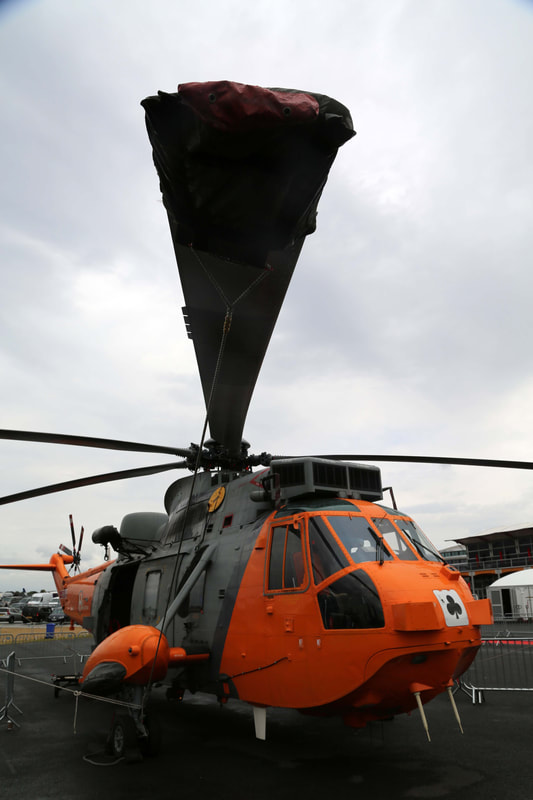
RAF Westland Sea King: Photo Copyright Navjot Singh
 We are the British-Indian-Chinese family (or else they call us the Chindians!). Selfie time in beautiful Canterbury.  Last week at #nursery for our daughter. School runs never been so much fun (and good exercise for daddy!). She starts reception primary in September. Not sure I understand what is going on...only yesterday she was in my arms as a baby. #parenting #Prouddad 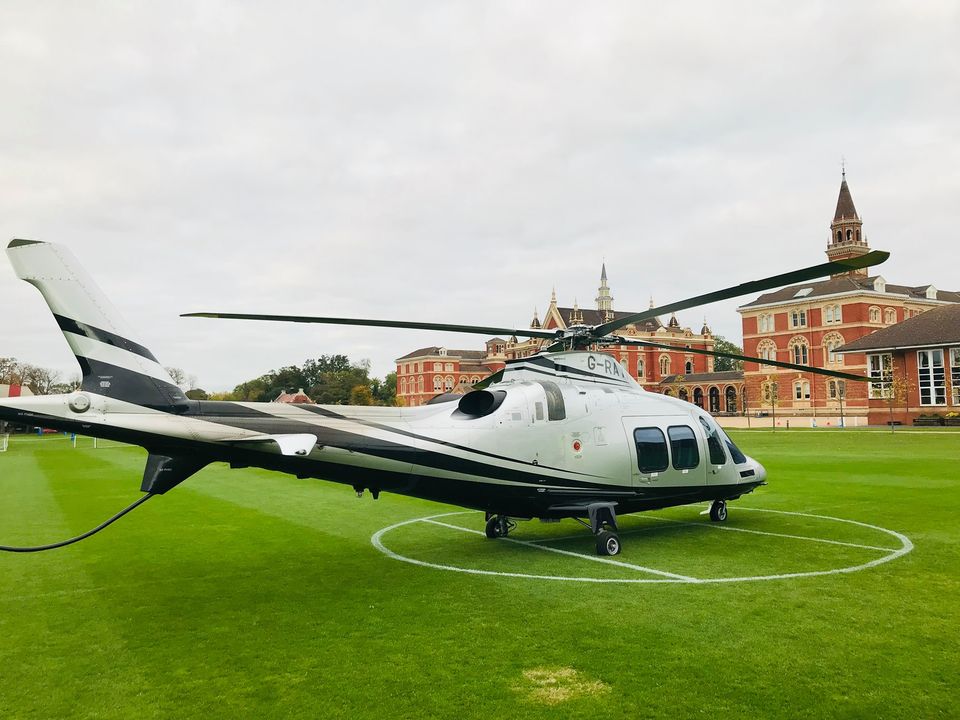 Did someone mention climate change?! So, this happened to be a football manager who came to support their team at nearby Crystal Palace: Photo Copyright Navjot Singh  British seaside resorts are not too bad, and especially not in Dorset. Weymouth is worth a visit for a day or two in the Summer. Nice family friendly place: Photo Copyright Navjot Singh 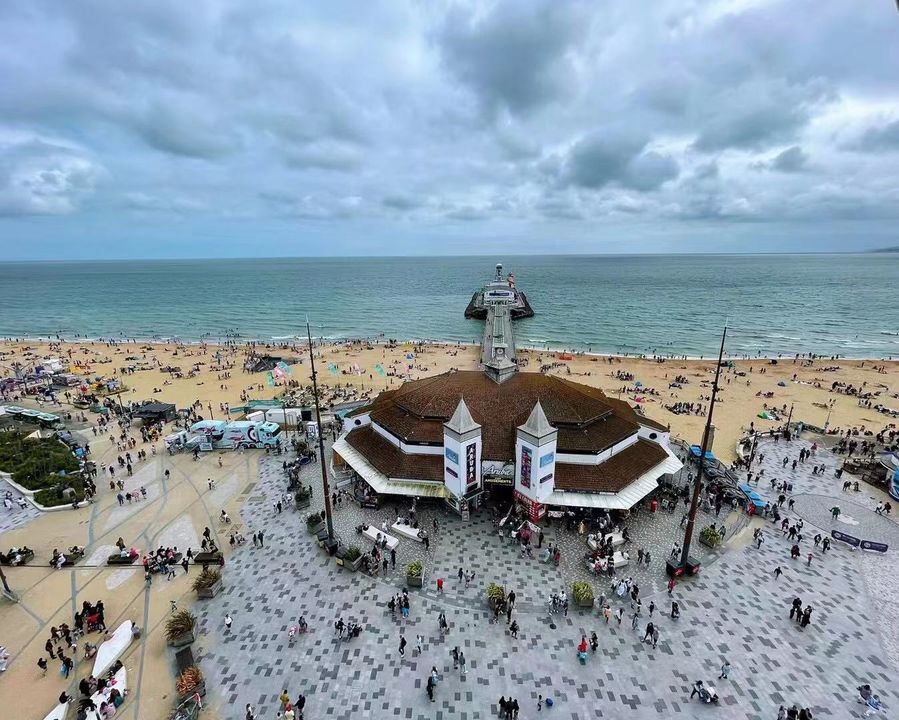 The lovely Bournemouth Beach and Pier. Worth a visit for a day or two!: Photo Copyright Navjot Singh 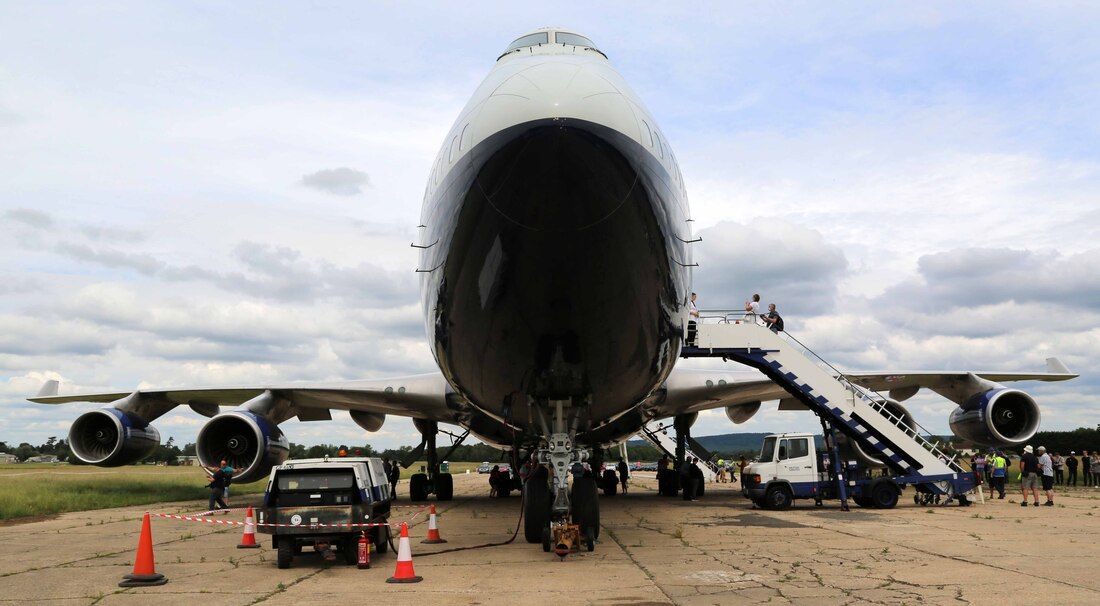 G-BNLY parked at Dunsfold Aerodrome: Copyright Navjot Singh My daughter and I were fortunate enough to spend around four hours touring the "Landor" livery Boeing 747-400, G-BNLY, belonging to British Airways on the Experience Day, 26th of June, 2021. No parts of the aircraft were out of bounds, so although subject to strict numbers on board at any time to comply with COVID and safety regulations, it was great to get the chance to see everything close up. This was a rare chance to get close and personal with the 'Queen of the Skies' (or any aircraft for that matter) because if you want to take photos of aircraft at airports, then it is usually all rushed and not an enjoyable experience (especially for us aviation enthusiasts, and even airline crew after 9/11 are banned from taking photos with some airlines.). We boarded adjacent to the Club World cabin, and we then see Club World and the World Traveller cabins, going towards the back of the aircraft. It was an added bonus to get to go up the ladder into the crew rest area, right at the back of the aircraft! With the aircraft being in storage since March 2020, and with limited amount of air conditioning or refurbishment/cleaning of the seats etc., so there was a slight pungent smell inside the cabin (similar to something you may have in a stuffy garage on a hot day.). But, never the less, the experience was priceless. Then back to the main door and up the stairs to the upper deck - and a walk through to the Cockpit. Though we were not allowed to sit in the cockpit seats because the aircraft is still technically 'active' (i.e. it can be taxied and towed to other parts of the aerodrome etc., and also for insurance purposes.), it was still an amazing and rare experience to be able to spend quality time without being rushed (as you usually are when flying.). There was also a chance to do a walkaround and get close to the under belly as well as the undercarriage bays - parts that passengers never get to see up close. This experience day was only open to the public for one day, and so this may be the last time I may get to be close to a 747 ever. You rarely see a 747 these days at airports (except for the occasional cargo aircraft, and even they are becoming rare.). So this was a very special day indeed and one that will go down in history. It was a great experience - and I hope these photos provide some insights and maybe even bring back lovely memories for some! 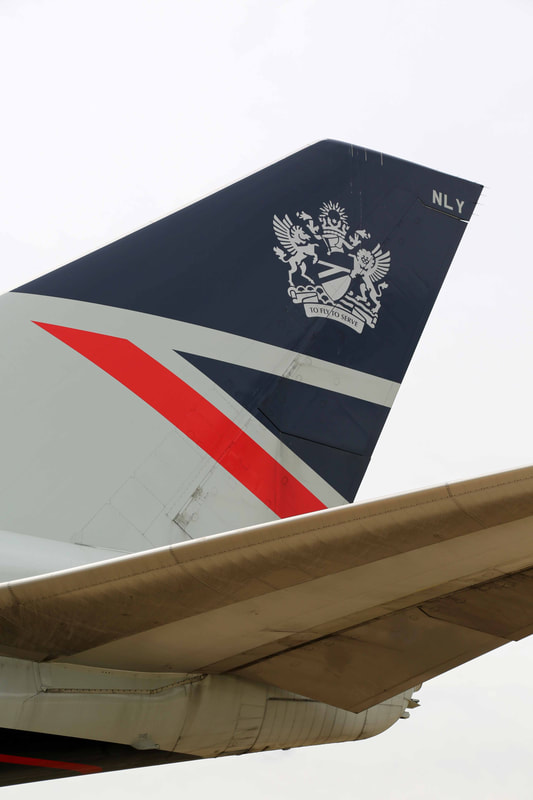 The tailfin of the Boeing 747-400 is height of 63 ft 6 in (19.35 m) and only when you get close to it the sheer size hits you: Photo Copyright Navjot Singh  A 747 has five turbine engines! Hiding inside the tail (shown here) is an extra engine called an Auxiliary Power Unit (APU). During on-ground operation, it provides bleed air for cabin conditioning from a low spool-driven load compressor, and electrical power from two gearbox-mounted 90kVA generators: Photo Copyright Navjot Singh 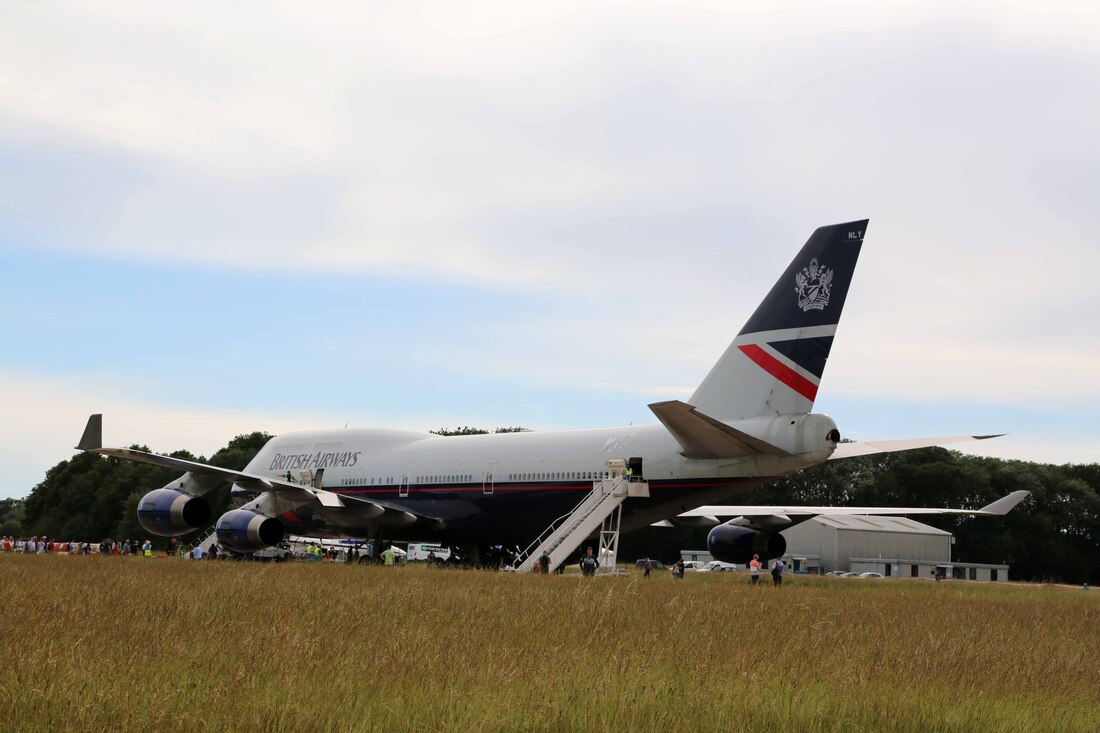 G-BNLY parked at Dunsfold Aerodrome: Photo Copyright Navjot Singh 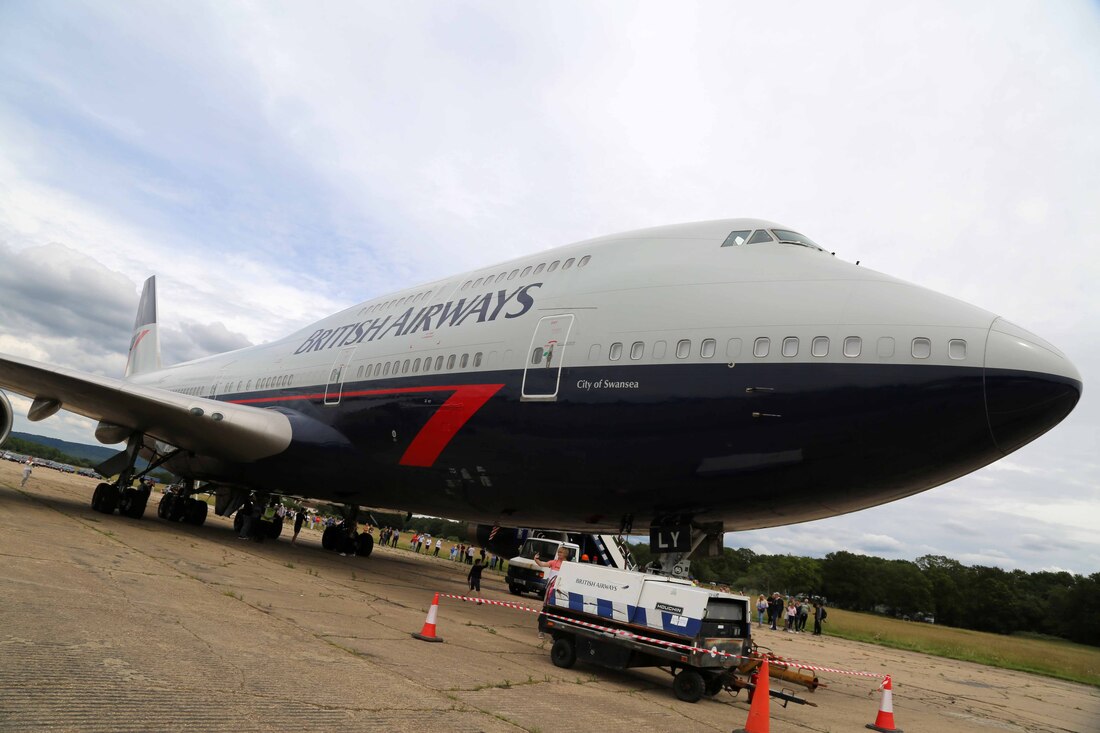 Boeing 747-400 G-BNLY at Dunsfold Aerodrome: Photo Copyright Navjot Singh 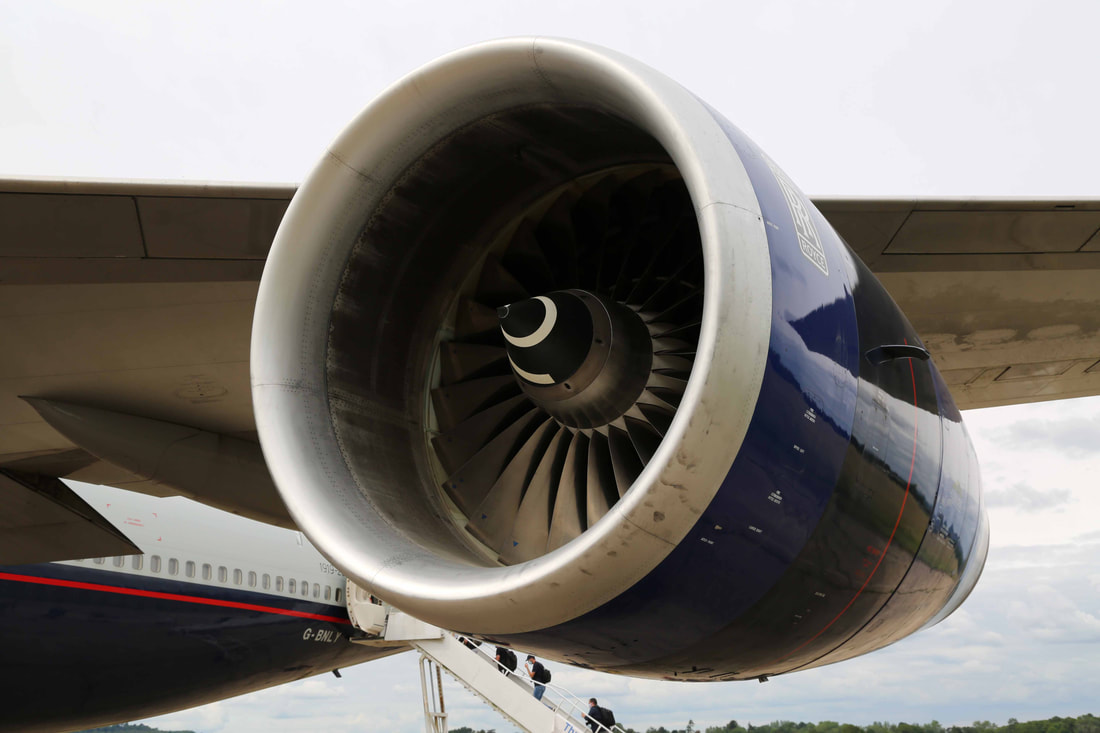 Up, close, and personal. The Boeing 747-400 has four engines, and British Airways chose the Rolls-Royce RB211 engine. Each engine is capable of generating 41,030 to 59,450 lbf of thrust.: Photo Copyright Navjot Singh  Human vs machine: Photo Copyright Navjot Singh 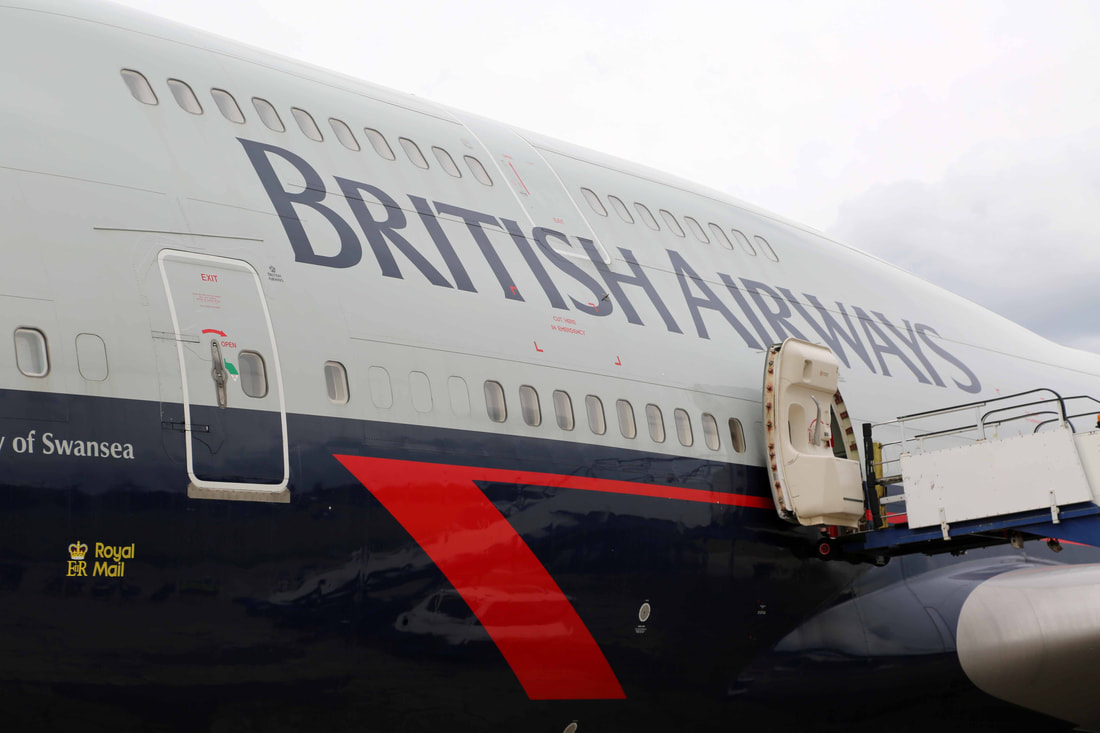 G-BNLY British Airways 747-400: Photo Copyright Navjot Singh 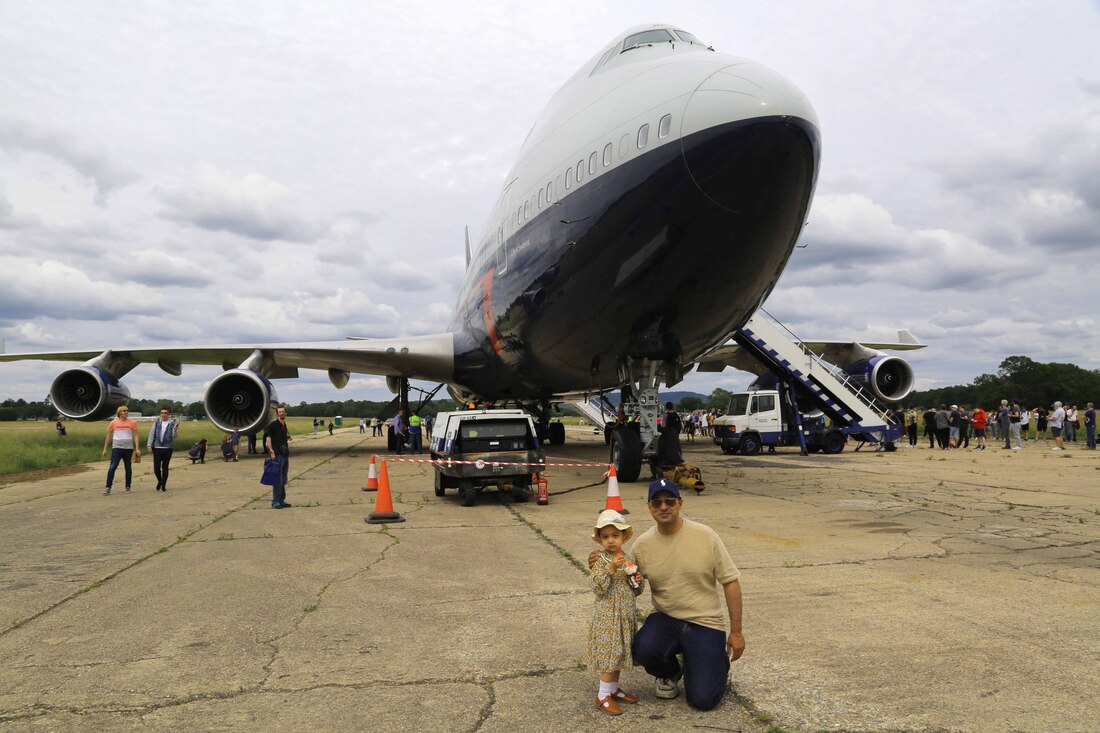 Posing in front of the "Queen of the Skies": Photo Copyright Navjot Singh 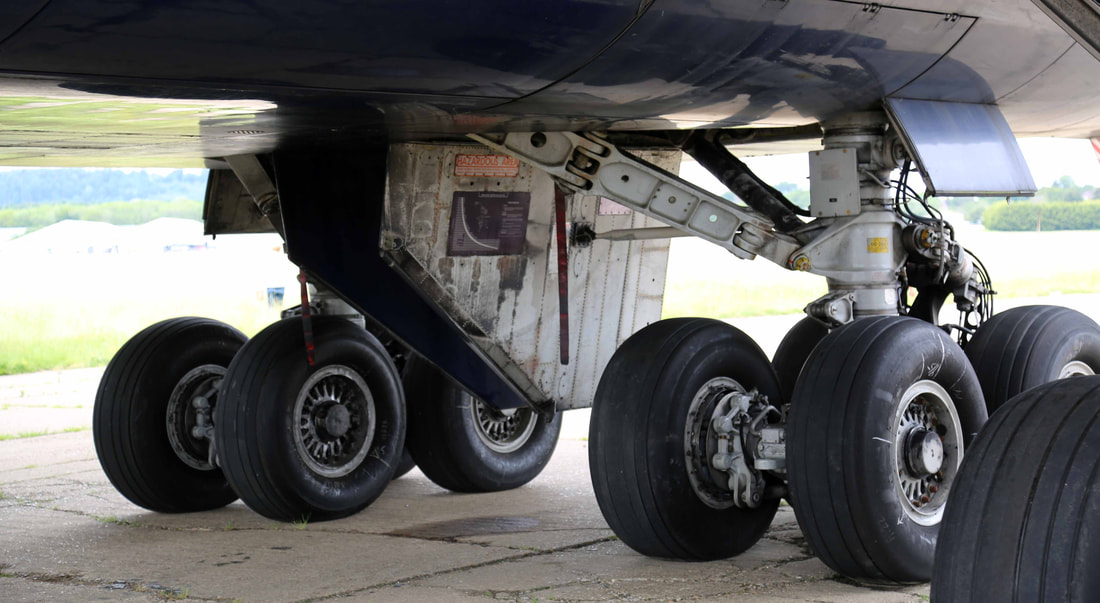 Well travelled tyres: Photo Copyright Navjot Singh 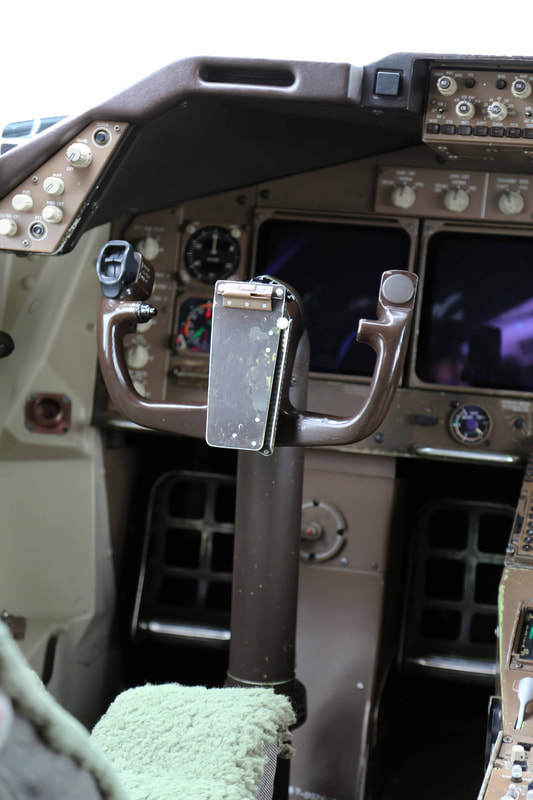 Boeing 747-400 Yoke Stick - Captain's side: Photo Copyright Navjot Singh 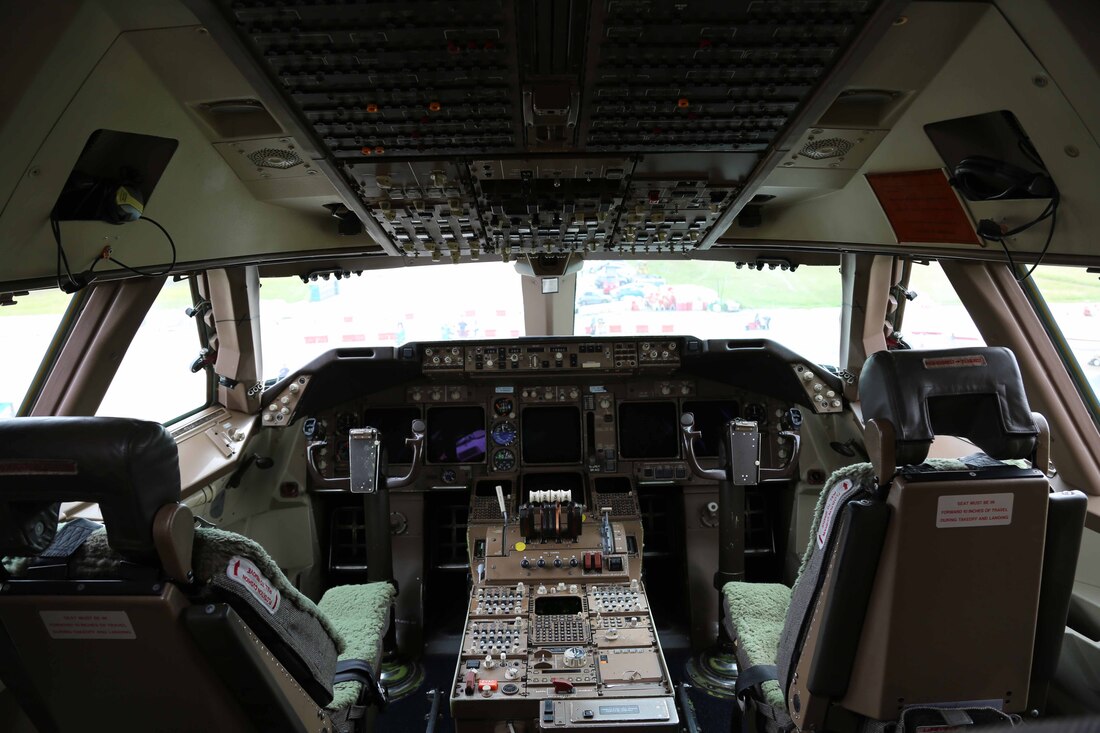 Cockpit of G-BNLY: Photo Copyright Navjot Singh 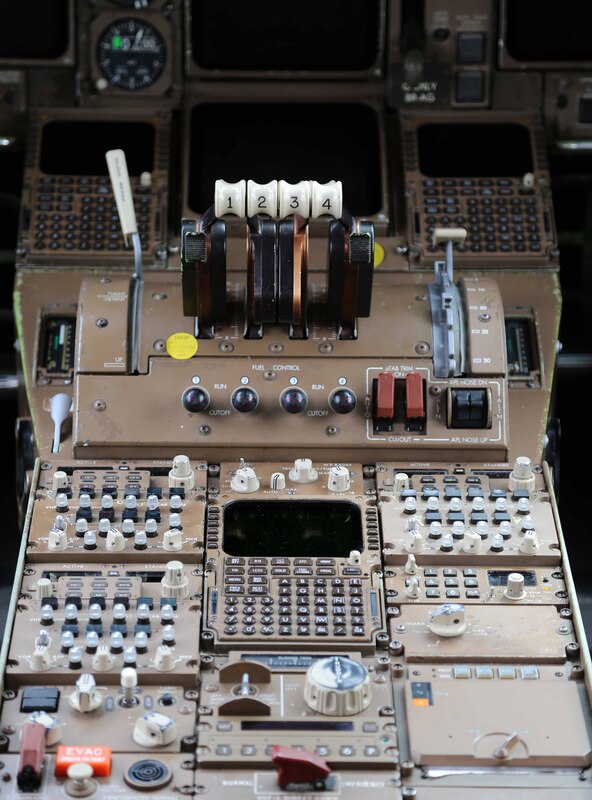 G-BNLY cockpit central console: Photo Copyright Navjot Singh 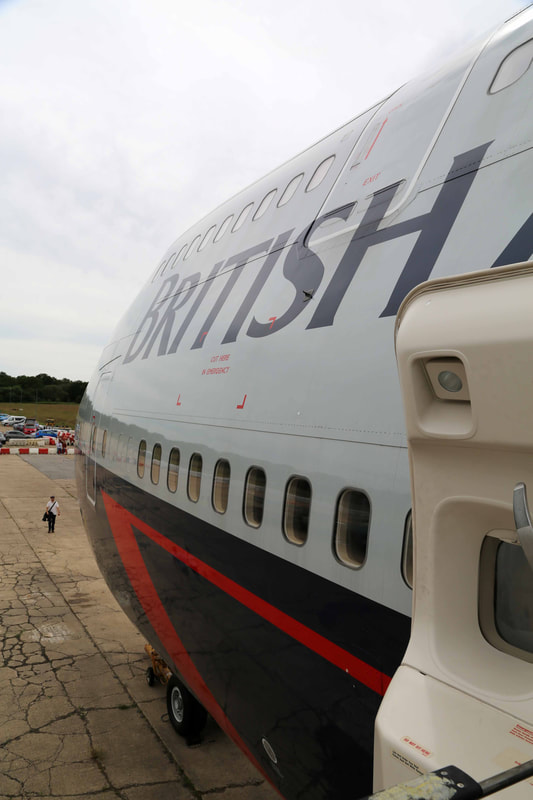 G-BNLY British Airways at Dunsfold: Photo Copyright Navjot Singh 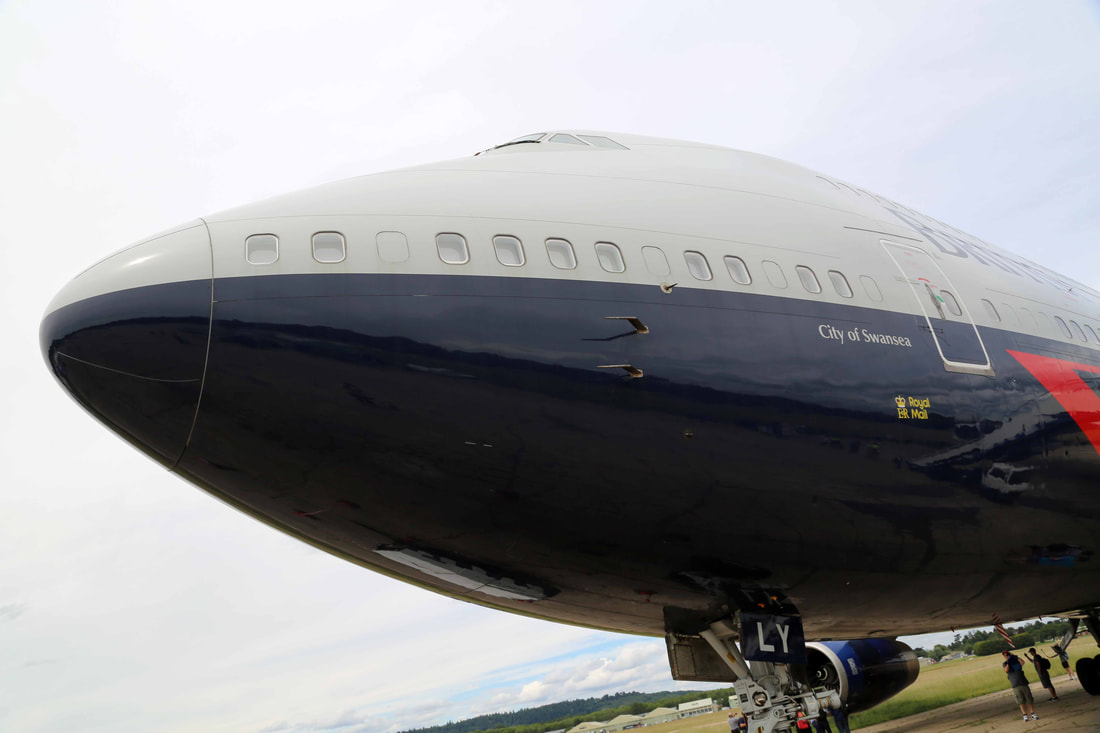 G-BNLY at Dunsfold: Photo Copyright Navjot Singh When the news of the COVID-19 coronavirus outbreak was first broadcast in the UK, a lot of the media were using Chinese faces, people wearing masks, and this created a stereotypical and wrong image in some peoples minds, effectively fueling anti-Asian racism and xenophobia. Because my wife is Chinese, and so my daughter is of mixed race heritage, as I was walking back from the school run with her, I happened to experience something unpleasant. I shared my experience in an interview with China's CCTV national news. Here is the link and below is the video. It was also published on Twitter. |
Get in Touch:LIFE MATTERSHere I share my thoughts
and experiences during my travels, and how some things have affected my life as an expat and world traveller. Travelling is about capturing that moment in life. Every word, view and opinion on this page is that of Navjot Singh - except where indicated. The most recent is at the top. Scroll down to read the archive. Or search using CTRL+F (COMMAND + F) and enter a keyword to search the page. Just some of the stories you never heard before. The NAVJOT-SINGH.COM web blog is separate to this web site....Click blog, which may not be visible in some countries due to local firewall restrictions, so in those cases this weblog may be read. The weblog also includes some of my press trip reports- most of which are not published on the official blog because of copyright issues. The weblog also contains articles that may be associated directly with a PR trip for a country, airline or a hotel. These are PR reviews done in relations with various companies. If you are an investor or a trend watcher then you may find this website useful as investing has a lot to do with personal observations and finding the ideal trend or next big thing. The average human on the street frequently knows far more about the state of the economy than politicians, university professors, subject matter experts, and financial analysts who seldom travel, or if they do so, only from one hotel to another hotel! The pulse and vibrancy of an economy is nowhere more visible than on a country's streets. 
All photos and words are © Navjot Singh unless stated. Photos taken by others or by agencies are appropriately copyrighted under the respective name. No photo or word/s may be taken without the prior written permission by the author (i.e. Navjot Singh). All Rights Reserved. 

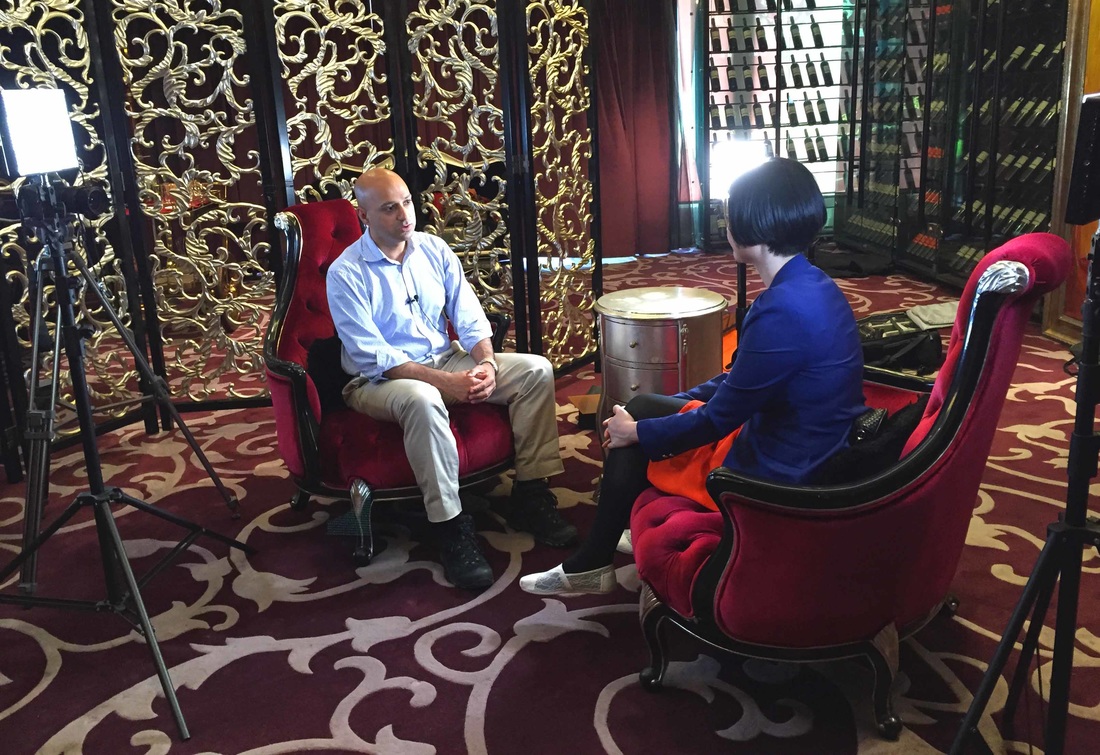
Navjot being interviewed by Cecila Lu at GDTV.
Archives
February 2024
Categories
All
|
 RSS Feed